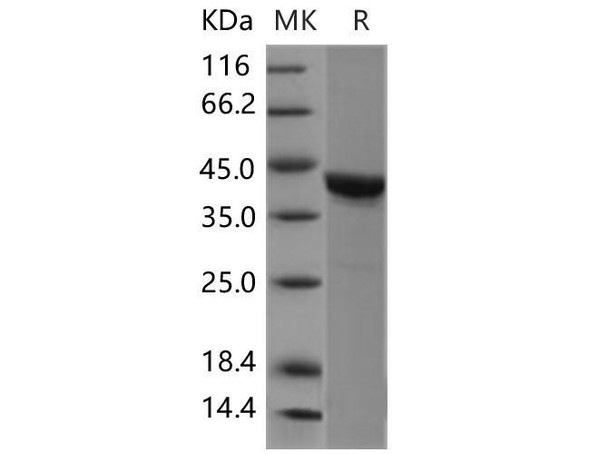
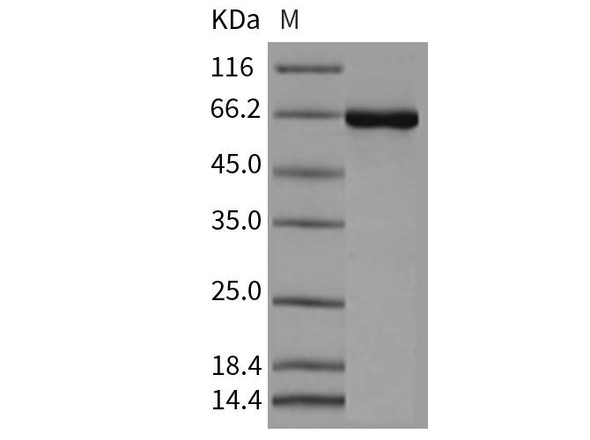
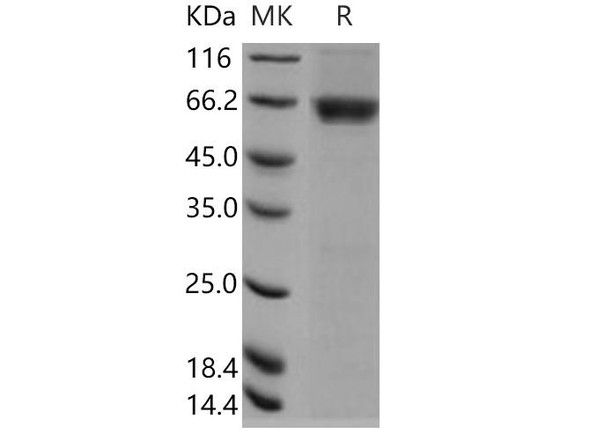
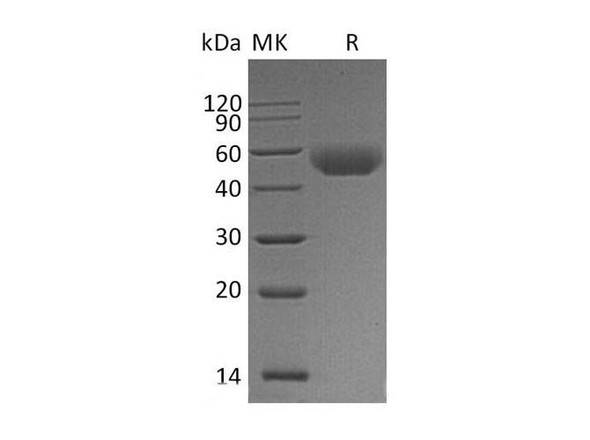
Casein kinase II subunit alpha, also known as CK II alpha, CSNK2A1 and CK2A1, is a member of the protein kinase superfamily, Ser / Thr protein kinase family and CK2 subfamily. Casein kinase II (CSNK2A1) is a serine / threonine protein kinase that phosphorylates acidic proteins such as casein. This kinase is composed of an alpha, an alpha-prime, and two beta subunits. The alpha subunits contain the catalytic activity while the beta subunits undergo autophosphorylation. Casein kinase II (CSNK2A1) is a constitutively active, ubiquitously expressed serine / threonine protein kinase that is thought to have a regulatory function in cell proliferation, cell differentiation and apoptosis. CSNK2A1 functions as a tetrameric complex consisting of two regulatory beta-subunits and two catalytic units (alpha and alpha') in a homomeric or heteromeric conformation. Whilst the alpha- and alpha'-subunits are catalytically identical, proteins that regulate CSNK2A1, such as cdc2 and Hsp90, preferentially bind to the alpha and not the alpha'-subunit. CSNK2A1 can phosphorylate a number of key intracellular signaling proteins implicated in tumor suppression (p53 and PTEN) and tumorigenesis (myc, jun, NF-kappaB). CSNK2A1 is also thought to influence Wnt signaling via beta-catenin phosphorylation and the PI 3-K signaling pathway via th phosphorylation of Akt.
Product Name:
Mouse CSNK2A1/CK2A1 Recombinant Protein (RPES1566)
Product Code:
RPES1566
Size:
50 µg
Species:
Mouse
Expressed Host:
Baculovirus-Insect Cells
Synonyms:
Csnk2a1-rs4
Accession:
Q60737
Sequence:
Met1-Gln391
Activity:
Kinase activity untested
Endotoxin:
<1.0 EU per µg of the protein as determined by the LAL method.
Protein Construction:
A DNA sequence encoding the mouse CAMK4 CSNK2A1 (Q60737) (Met1-Gln391) was expressed and purified with two additional amino acids (Gly & Pro) at the N-terminus.
This product is provided as lyophilized powder which is shipped with ice packs.
Stability and Storage:
Lyophilized proteins are stable for up to 12 months when stored at -20 to -80°C. Reconstituted protein solution can be stored at 4-8°C for 2-7 days. Aliquots of reconstituted samples are stable at < -20°C for 3 months.