Nicastrin (NCST, or NCT), a single-pass membrane glycoprotein that harbors a large extracellular domain, is an essential component of the gamma-secretase complex. Several lines of evidence indicate that the members of these complexes could also contribute to the control of cell death. NCT controls cell death via phosphoinositide 3-kinase/Akt and p53-dependent pathways and that this function remains independent of the activity and molecular integrity of the gamma-secretase complexes. Increasing evidences have shown that Nicastrin/NCSTN plays a crucial role in gamma-cleavage of the amyloid precursor protein (APP). The glycoprotein Nicastrin is an essential component of the gamma-secretase complex, a high molecular weight complex which also contains the presenilin proteins, Aph-1 and Pen-2. The gamma-secretase complex is not only involved in APP processing but also in the processing of an increasing number of other type I integral membrane proteins. As the largest subunit of the gamma-secretase complex, Nicastrin plays a crucial role in its activation. Inhibition of NCSTN demonstrated an altered gamma-cleavage activity, suggesting its potential implication in developing Alzheimer's disease (AD). In addition, Nicastrin can function to maintain epithelial to mesenchymal transition during breast cancer progression. Anti-nicastrin polyclonal and monoclonal antibodies were able to decrease notch1 and vimentin expression and reduced the invasive capacity of breast cancer cells in vitro.
Product Name:
Mouse Nicastrin/NCSTN Recombinant Protein (RPES3732)
<1.0 EU per µg of the protein as determined by the LAL method.
Protein Construction:
A DNA sequence encoding the mouse NCSTN (P57716) (Met1-Gln668) was expressed with a C-terminal polyhistidine tag.
Purity:
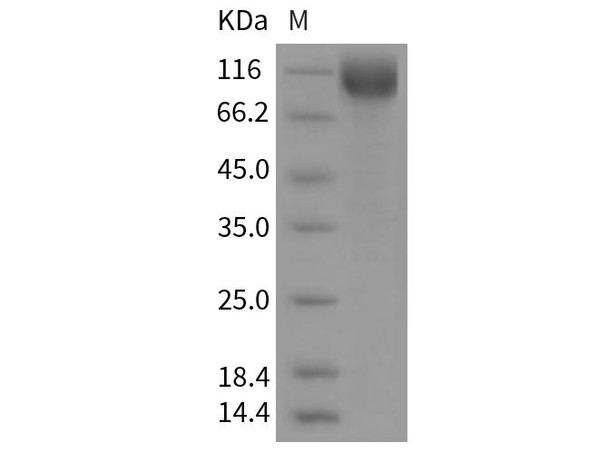
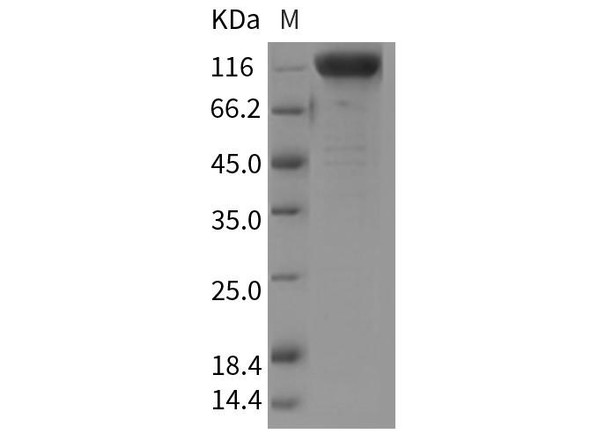
> 99 % as determined by SDS-PAGE
Mol Mass:
73 kDa
AP Mol Mass:
95-99 kDa
Formulation:
Lyophilized from sterile PBS, pH 7.4
Shipping:
This product is provided as lyophilized powder which is shipped with ice packs.
Stability and Storage:
Lyophilized proteins are stable for up to 12 months when stored at -20 to -80°C. Reconstituted protein solution can be stored at 4-8°C for 2-7 days. Aliquots of reconstituted samples are stable at < -20°C for 3 months.