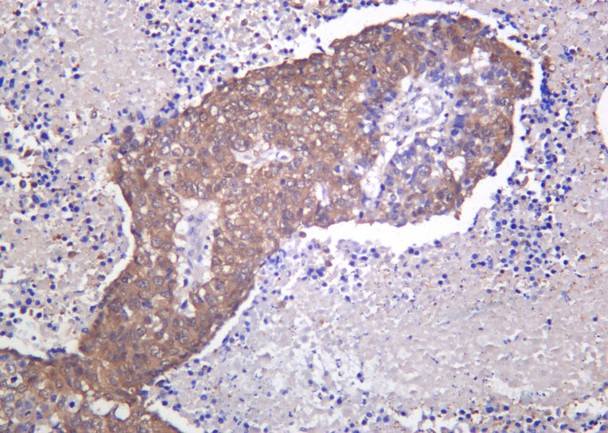
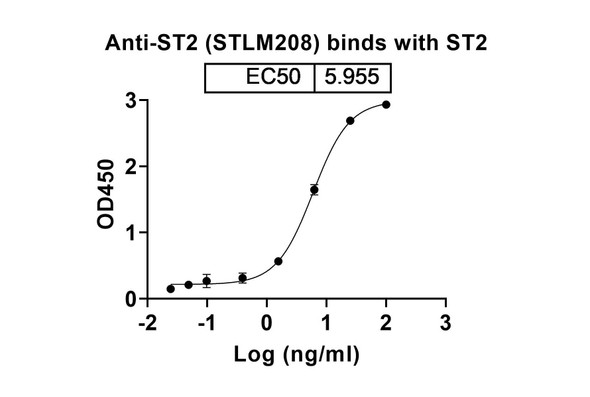
The Recombinant PARK7 Monoclonal Antibody is a recombinant rabbit monoclonal antibody (clone C110908) against PARK7. The product of this gene belongs to the peptidase C56 family of proteins. It acts as a positive regulator of androgen receptor-dependent transcription. It may also function as a redox-sensitive chaperone, as a sensor for oxidative stress, and it apparently protects neurons against oxidative stress and cell death. Produced by recombinant technology in Rabbit hosts and purified by Protein A affinity chromatography, this Rabbit IgG antibody is reactive against Human, Mouse and Rat samples.
This antibody is suitable for WB, IHC, IF, IP and ELISA applications. It has been validated by IHC analysis of Human lung cancer. The target is localized to the cell membrane, lipid-anchor, cytoplasm, nucleus, membrane raft, mitochondrion, endoplasmic reticulum, under normal conditions, located predominantly in the cytoplasm and, to a lesser extent, in the nucleus and mitochondrion. Translocates to the mitochondrion and subsequently to the nucleus in response to oxidative stress and exerts an increased cytoprotective effect against oxidative damage (PubMed:18711745). Detected in tau inclusions in brains from neurodegenerative disease patients (PubMed:14705119). Membrane raft localization in astrocytes and neuronal cells requires palmitoylation.
Product Name:
Recombinant PARK7 Monoclonal Antibody
SKU:
AGEL6214
Size:
50 µL, 100 µL
Antibody Type:
Recombinant Monoclonal Antibody
Synonyms:
DJ-1, DJ1, GATD, GATD2, HEL-S-67p, PARK, PARK7
Reactivity:
Human, Mouse, Rat
Immunogen:
Recombinant Human PARK7 protein
Applications:
WBIHCIFIPELISA
Clonality:
Recombinant Monoclonal
Clone No:
C110908
Host:
Rabbit
Isotype:
Rabbit IgG
Target:
PARK7
Conjugation:
Unconjugated
Recommended Dilution:
IHC 1:4000-20000; WB 1:2000-10000; IF 1:200-1000; ELISA 1:5000-20000; IP 1:50-200
UniProt:
Q99497
Purification:
Protein A
Concentration:
0.2 mg/mL
Buffer:
PBS, 50% glycerol, 0.05% Proclin 300, 0.05% protein protectant.
Storage:
Store at -20°C valid for 12 months. Avoid freeze / thaw cycles.