Tumor necrosis factor receptor superfamily, member 13C (TNFRSF13C) also known as B-cell-activating factor receptor (BAFFR) and CD268 antigen, is a member of the tumor necrosis factor receptor superfamily. A tumor necrosis factor receptor (TNFR), or death receptor, is a trimeric cytokine receptor that binds tumor necrosis factors (TNF). The receptor cooperates with an adaptor protein which is important in determining the outcome of the response. Members of the TNF receptor superfamily (TNFRSF) have crucial roles in both innate and adaptive immunity and in cellular apoptosis process. Apoptosis is a cell suicide mechanism that enables metazoans to control cell number in tissues and to eliminate individual cells that threaten the animal's survival. Certain cells have unique sensors, termed death receptors or tumour necrosis factor (TNFR), on their surface. Tumour necrosis factors (TNFR) detect the presence of extracellular death signals and, in response, they rapidly ignite the cell's intrinsic apoptosis machinery. It has been proposed that abnormally high levels of BAFFR/TNFRSF13C (CD268) may contribute to the pathogenesis of autoimmune diseases by enhancing the survival of autoreactive B cells.
Product Name:
Rat BAFFR/TNFRSF13C Recombinant Protein (RPES5049)
Product Code:
RPES5049
Size:
100 µg
Species:
Rat
Expressed Host:
HEK293 Cells
Synonyms:
TNFRSF13C
Accession:
D3ZNT3
Sequence:
Ser10-Ala71
Fusion tag:
C-His
Endotoxin:
<1.0 EU per µg of the protein as determined by the LAL method
Protein Construction:
A DNA sequence encoding the rat TNFRSF13C (D3ZNT3) (Ser10-Ala71) was expressed with a polyhistidine tag at the C-terminus.
Purity:
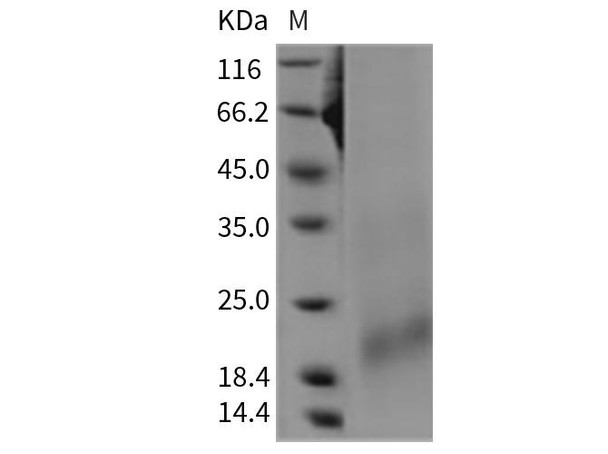
> 85 % as determined by SDS-PAGE
Mol Mass:
8.3 kDa
AP Mol Mass:
20 kDa
Formulation:
Lyophilized from sterile PBS, pH 7.4
Shipping:
This product is provided as lyophilized powder which is shipped with ice packs.
Stability and Storage:
Lyophilized proteins are stable for up to 12 months when stored at -20 to -80°C. Reconstituted protein solution can be stored at 4-8°C for 2-7 days. Aliquots of reconstituted samples are stable at < -20°C for 3 months.