The Recombinant STK3 Monoclonal Antibody is a recombinant rabbit monoclonal antibody (clone C110813) against STK3. This gene encodes a serine/threonine protein kinase activated by proapoptotic molecules indicating the encoded protein functions as a growth suppressor. Cleavage of the protein product by caspase removes the inhibitory C-terminal portion. The N-terminal portion is transported to the nucleus where it homodimerizes to form the active kinase which promotes the condensation of chromatin during apoptosis. Produced by recombinant technology in Rabbit hosts and purified by Protein A affinity chromatography, this Rabbit IgG antibody is reactive against Human, Mouse and Rat samples.
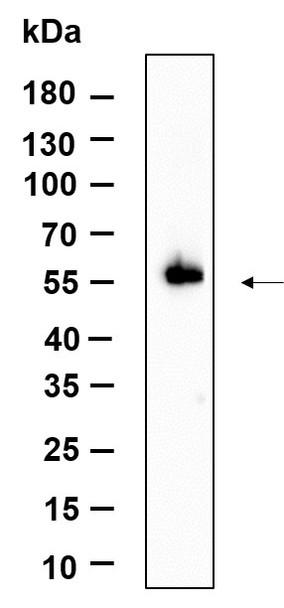
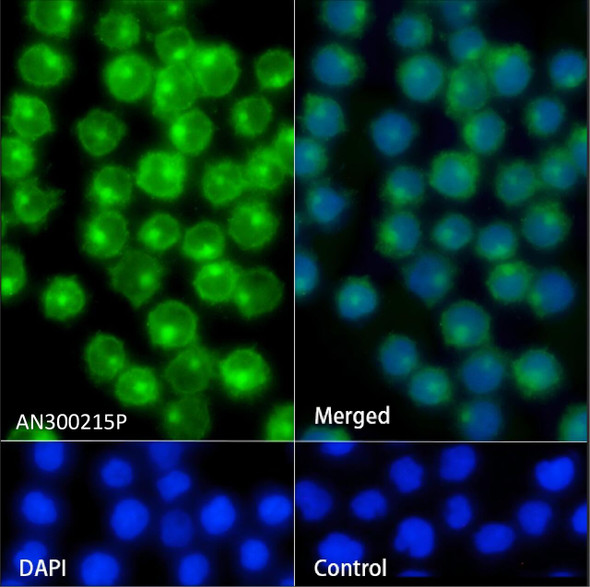
This antibody is suitable for WB, IHC, IF, IP and ELISA applications. It has been validated by WB analysis of C6 and IHC analysis of Human placenta. The target is localized to the cytoplasm, nucleus, The caspase-cleaved form cycles between nucleus and cytoplasm (PubMed:19525978, PubMed:11278283). Phosphorylation at Thr-117 leads to inhibition of nuclear translocation (PubMed:19525978).
Product Name:
Recombinant STK3 Monoclonal Antibody
SKU:
AGEL6119
Size:
50 µL, 100 µL
Antibody Type:
Recombinant Monoclonal Antibody
Synonyms:
KRS, KRS1, MST, MST2, STK, STK3
Reactivity:
Human, Mouse, Rat
Immunogen:
Recombinant Human STK3 protein
Applications:
WBIHCIFIPELISA
Clonality:
Recombinant Monoclonal
Clone No:
C110813
Host:
Rabbit
Isotype:
Rabbit IgG
Target:
STK3
Conjugation:
Unconjugated
Observed MW:
56 kDa
Calculated MW:
56 kDa
Recommended Dilution:
IHC 1:100-500; WB 1:2000-10000; IF 1:200-1000; ELISA 1:5000-20000; IP 1:50-200
UniProt:
Q13188
Purification:
Protein A
Concentration:
0.2 mg/mL
Buffer:
PBS, 50% glycerol, 0.05% Proclin 300, 0.05% protein protectant.
Storage:
Store at -20°C valid for 12 months. Avoid freeze / thaw cycles.