The UCP1 Monoclonal Antibody (CAB21979) is a high-quality antibody developed for reliable detection and analysis of target proteins. This monoclonal antibody, produced using hybridoma technology, is highly specific to UCP1 and has been validated for use in various applications, including immunohistochemistry and flow cytometry.UCP1, also known as the uncoupling protein 1, is a key regulator of thermogenesis by allowing the dissipation of energy as heat. This unique function makes UCP1 a promising target for research into metabolic disorders, obesity, and diabetes. By using the UCP1 Monoclonal Antibody, researchers can accurately detect and quantify UCP1 expression in different cell types and tissues, aiding in the understanding of its role in energy metabolism and potential therapeutic interventions.
This antibody is validated for use in WB, IHC-P, ELISA, IF-P applications and has demonstrated reactivity against Mouse, Rat samples.
Product Name:
UCP1 Monoclonal Antibody
SKU:
CAB21979
Size:
20μL, 100μL
Reactivity:
Mouse, Rat
Clone Number:
ARC54141
Conjugate:
Unconjugated
Immunogen:
Synthetic peptide. This information is considered to be commercially sensitive.
Mitochondrial uncoupling proteins (UCP) are members of the family of mitochondrial anion carrier proteins (MACP). UCPs separate oxidative phosphorylation from ATP synthesis with energy dissipated as heat, also referred to as the mitochondrial proton leak. UCPs facilitate the transfer of anions from the inner to the outer mitochondrial membrane and the return transfer of protons from the outer to the inner mitochondrial membrane. They also reduce the mitochondrial membrane potential in mammalian cells. Tissue specificity occurs for the different UCPs and the exact methods of how UCPs transfer H+/OH- are not known. UCPs contain the three homologous protein domains of MACPs. This gene is expressed only in brown adipose tissue, a specialized tissue which functions to produce heat.
Purification Method
Affinity purification
Gene ID
7350
Buffer Information
Store at -20℃. Avoid freeze / thaw cycles. Buffer: PBS containing 50% glycerol and 0.05% BSA, preserved with proclin300 or sodium azide, pH 7.3.
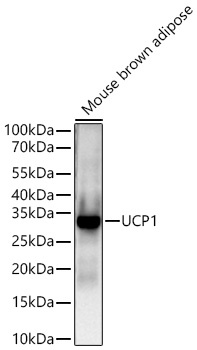
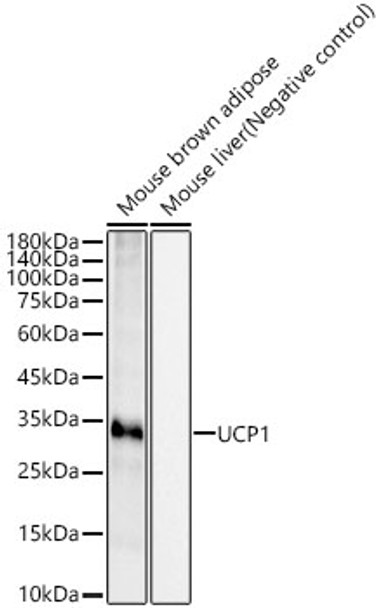
Western blot analysis of various lysates using UCP1 Rabbit mAb (CAB21979) at 1:5000 dilution incubated overnight at 4℃. Secondary antibody: HRP-conjugated Goat anti-Rabbit IgG (H+L) (CABS014) at 1:10000 dilution. Lysates/proteins: 25 μg per lane. Blocking buffer: 3% nonfat dry milk in TBST. Detection: ECL Basic Kit (AbGn00020). Negative control (NC): Mouse liver Exposure time: 20s.
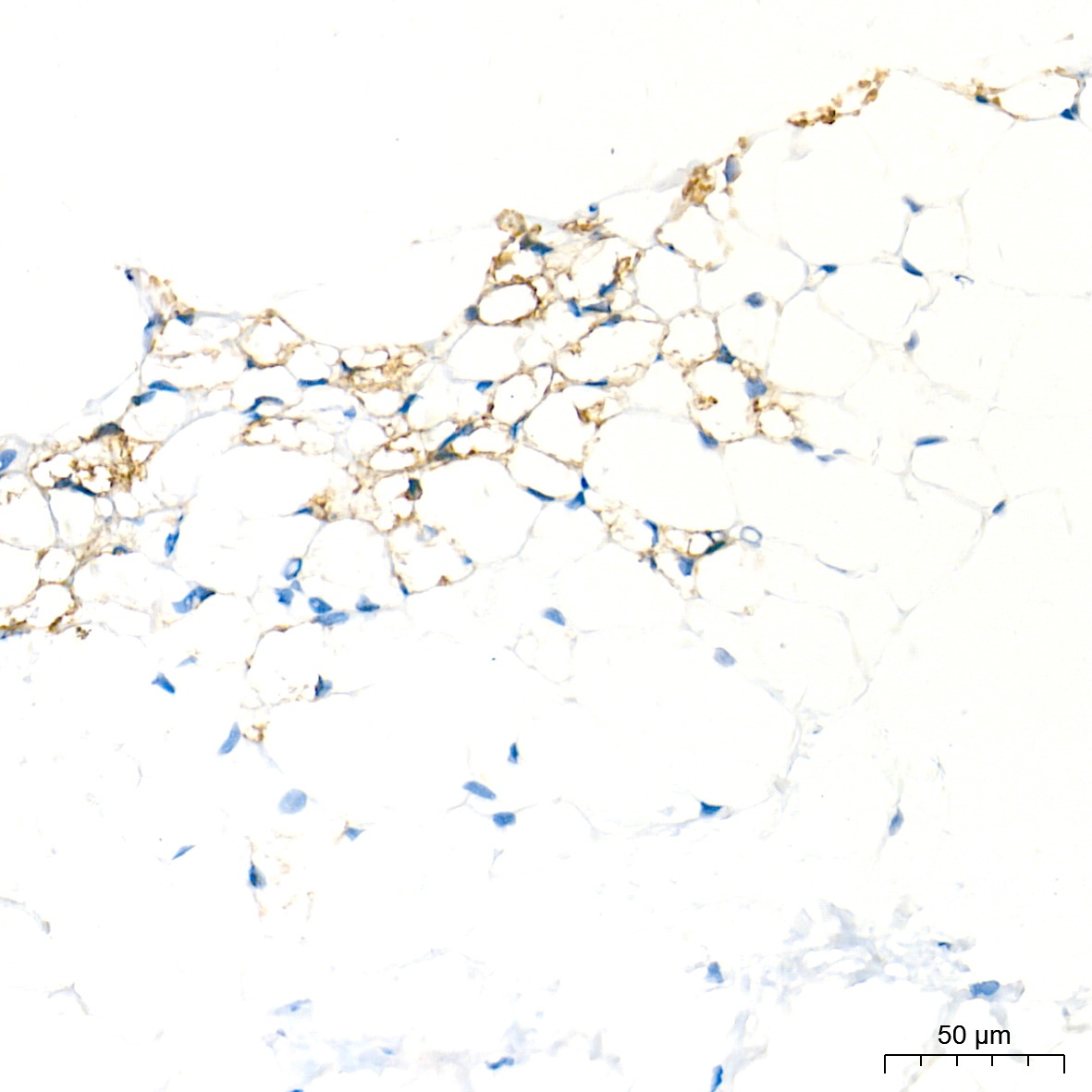
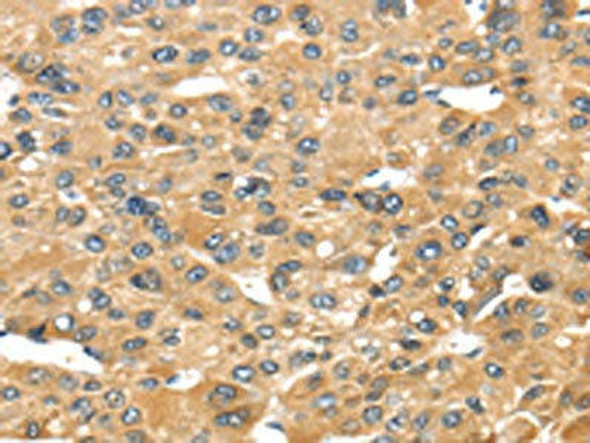
Immunohistochemistry analysis of paraffin-embedded Rat brown adipose tissue using UCP1 Rabbit mAb (CAB21979) at a dilution of 1:400 (40x lens). High pressure antigen retrieval performed with 0.01M Tris-EDTA Buffer (pH 9.0) prior to IHC staining.
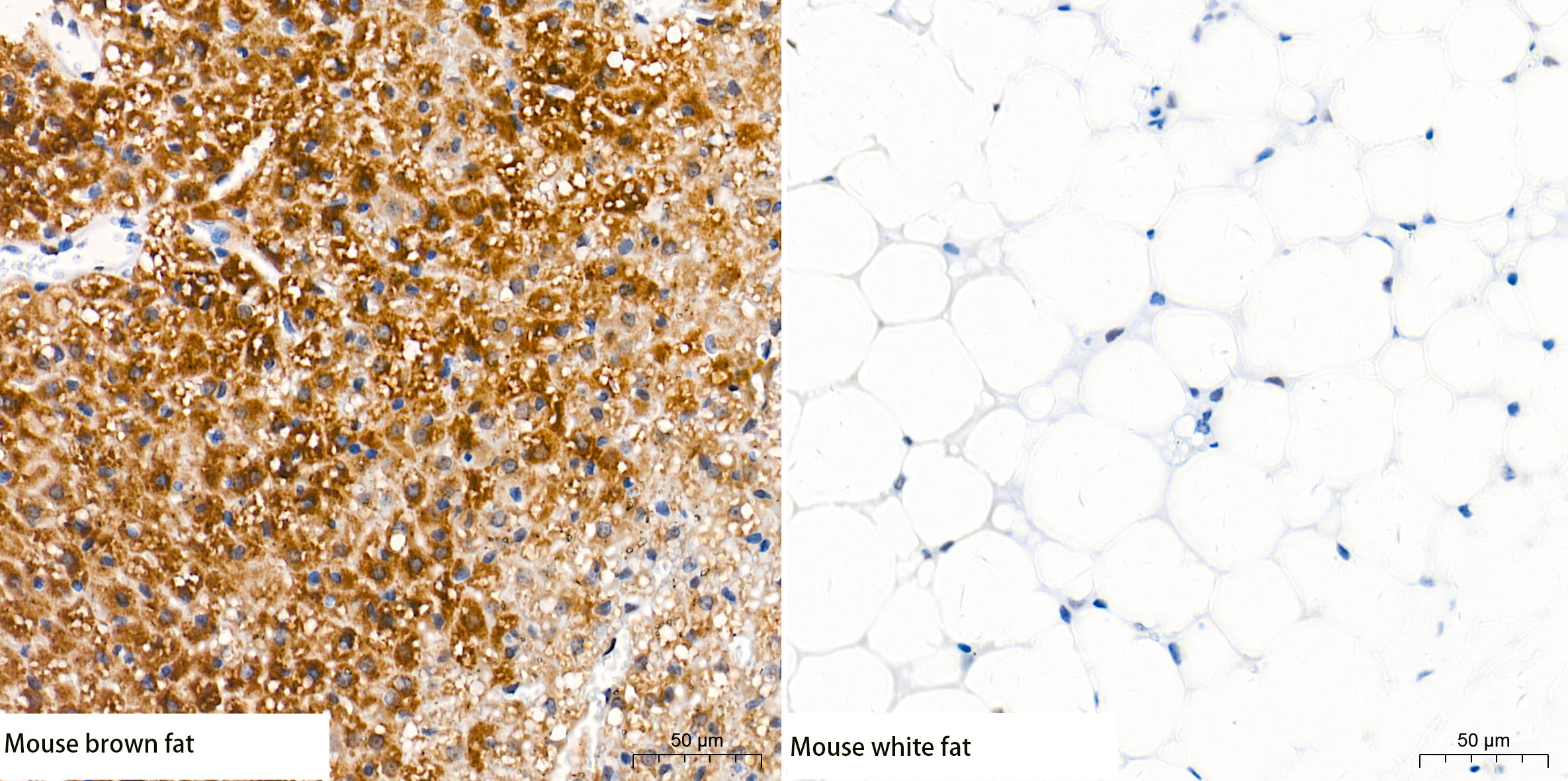
Immunohistochemistry analysis of paraffin-embedded Mouse brown adipose and white adipose tissue using UCP1 Rabbit mAb (CAB21979) at a dilution of 1:400 (40x lens). High pressure antigen retrieval performed with 0.01M Tris-EDTA Buffer (pH 9.0) prior to IHC staining.
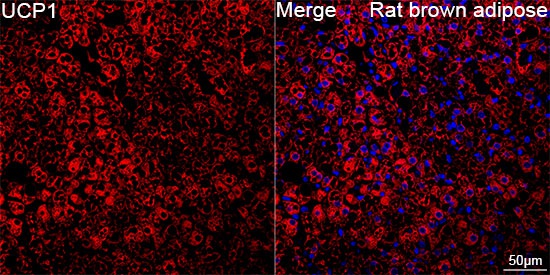
Confocal imaging of paraffin-embedded Rat brown adipos tissue using UCP1 Rabbit mAb (CAB21979, dilution 1:200) followed by a further incubation with Cy3 Goat Anti-Rabbit IgG (H+L) (CABS007, dilution 1:500) (Red). DAPI was used for nuclear staining (Blue). High pressure antigen retrieval performed with 0.01M Citrate Buffer (pH 6.0) prior to IF staining. Objective: 40x.