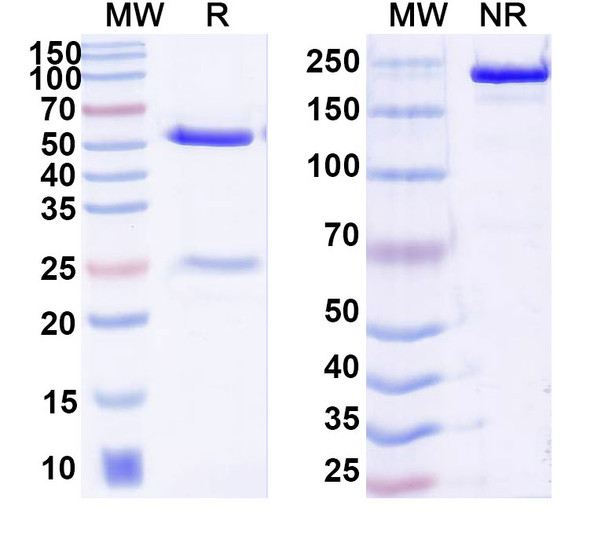
Velaglucerase Beta (Research-Grade) is a research-grade biosimilar monoclonal antibody. Format: Human lysosomal acid glucosylceramidase. Reactivity: Human. Supplied as a liquid in 0.01M PBS pH 7.4. Applications: ELISA, functional assays and in vivo research. Endotoxin: < 10 EU/mg. Purity: >95% purity as determined by SDS-PAGE. For research use only.
Lysosomal acid glucosylceramidase (GBA) is a ~59 kDa protein. Glucosylceramidase that catalyzes, within the lysosomal compartment, the hydrolysis of glucosylceramides/GlcCers (such as beta-D-glucosyl-(1<->1')-N-acylsphing-4-enine) into free ceramides (such as N-acylsphing-4-enine) and glucose. Plays a central role in the degradation of complex lipids and the turnover of cellular membranes. Through the production of ceramides, participates in the PKC-activated salvage pathway of ceramide formation. Catalyzes the glucosylation of cholesterol, through a transglucosylation reaction where glucose is transferred from GlcCer to cholesterol. GlcCer containing mono-unsaturated fatty acids (such as beta-D-glucosyl-N-(9Z-octadecenoyl)-sphing-4-enine) are preferred as glucose donors for cholesterol glucosylation when compared with GlcCer containing same chain length of saturated fatty acids (such as beta-D-glucosyl-N-octadecanoyl-sphing-4-enine).
Product Name:
Velaglucerase Beta (Research-Grade)
SKU:
GXBS02362
Size:
100 µg, 1 mg
Antibody Type:
Monoclonal Antibody
Target:
SGTase
Isotype:
Human lysosomal acid glucosylceramidase
Reactivity:
Human
Applications:
ELISA, Functional assay, Research in vivo
Expression Host:
Mammalian cells
Synonyms:
2725857-55-4
Purity:
>95% as determined by SDS-PAGE.
Endotoxin Level:
< 10 EU/mg
Formulation:
0.01M PBS pH 7.4.
State of Matter:
Liquid
Regulatory Status:
For research use only. Not suitable for clinical or therapeutic use.
Product Preparation:
Protein A/G purified from cell culture supernatant.
Storage and Handling:
Store at 2 to 8°C for frequent use. Store at -20 to -80°C for twelve months from the date of receipt.