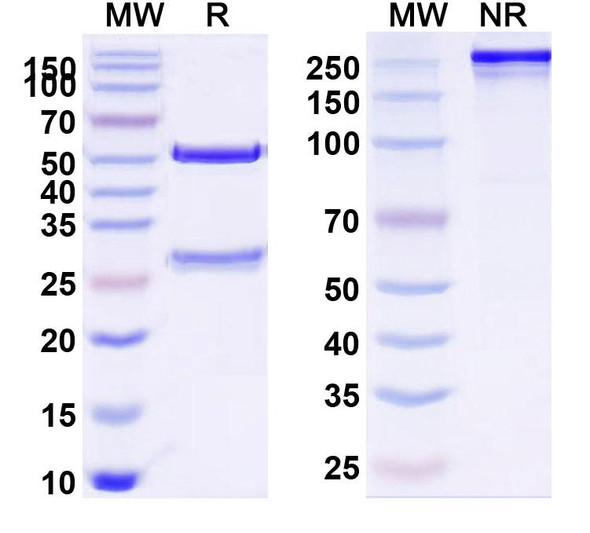
Anti-Human CD8A Monoclonal Antibody (1A482) is a mouse monoclonal antibody of isotype IgG. Immunogen: E. coli - derived recombinant human CD8A (Ser22-Asp182). Target: T-cell surface glycoprotein CD8 alpha chain, T-lymphocyte differentiation antigen T8/Leu-2, CD8a, CD8A. Species reactivity: Human. Applications: ELISA, IHC, WB. Protein A/G purified from cell culture supernatant. Supplied as a liquid in 0.01M PBS, pH 7.4.
T-cell surface glycoprotein CD8 alpha chain (CD8A) is a ~25 kDa protein. Integral membrane glycoprotein that plays an essential role in the immune response and serves multiple functions in responses against both external and internal offenses. In T-cells, functions primarily as a coreceptor for MHC class I molecule:peptide complex. The antigens presented by class I peptides are derived from cytosolic proteins while class II derived from extracellular proteins. Interacts simultaneously with the T-cell receptor (TCR) and the MHC class I proteins presented by antigen presenting cells (APCs). In turn, recruits the Src kinase LCK to the vicinity of the TCR-CD3 complex.
Product Name:
Anti-Human CD8A Monoclonal Antibody (1A482)
Size:
50 µg, 100 µg
Product SKU:
GXMA00456
Target:
CD8a
Host Species:
Mouse
Antibody Type:
Monoclonal
Clone ID:
1A482
Reactivity:
Human
Buffer:
0.01M PBS pH 7.4.
Storage & Shipping:
Store at 2 to 8°C for frequent use. Store at -20 to -80°C for twelve months from the date of receipt.
Format:
Liquid
Applications:
ELISA, IHC, WB
Antibody Isotype:
IgG
Purity:
>90% as determined by SDS-PAGE.
Purification:
Protein A/G purified from cell culture supernatant.
Guarantee:
12 months
Immunogen:
E. coli - derived recombinant human CD8A (Ser22-Asp182).