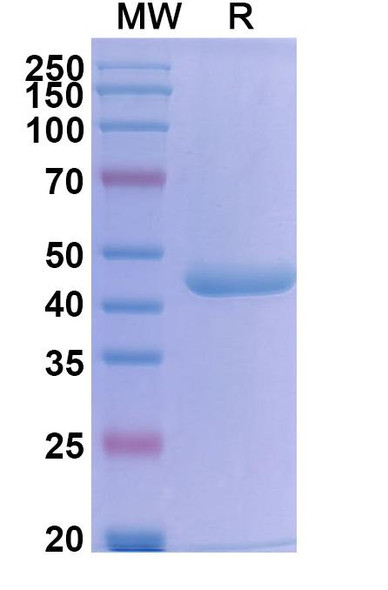
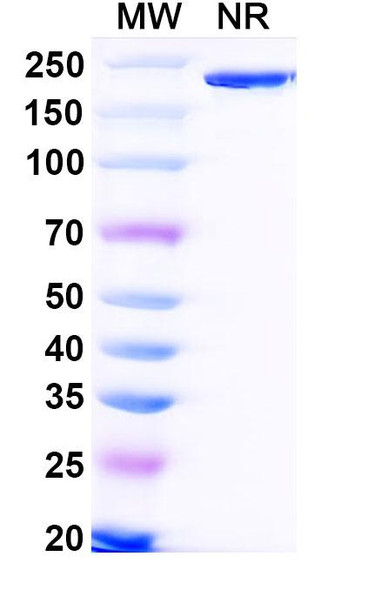
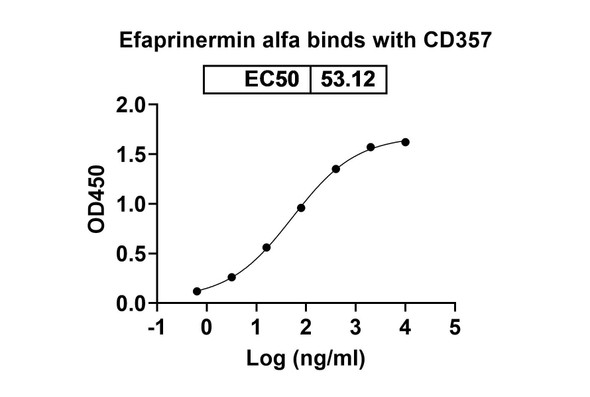
Efitazanamivir alfa (Research-Grade) is a research-grade biosimilar monoclonal antibody targeting Fc fragment of human immunoglobulin G1. Format: Fc fragment of human immunoglobulin G1. Reactivity: Human. Supplied as a liquid in 0.01M PBS pH 7.4. Applications: ELISA, functional assays and in vivo research. Endotoxin: < 10 EU/mg. Purity: >95% as determined by SDS-PAGE. For research use only.
Immunoglobulin heavy constant gamma 1 (Fc fragment of human immunoglobulin G1) is a ~43 kDa protein. Constant region of immunoglobulin (Ig) heavy chains. Igs are membrane-bound or secreted glycoproteins produced by B lymphocytes. In the recognition phase of humoral immunity, the membrane-bound Igs serve as receptors, which upon binding to a specific antigen trigger the clonal expansion and differentiation of B lymphocytes into Ig-secreting plasma cells. Secreted Igs known as antibodies mediate the effector phase of humoral immunity by blocking the interaction of infectious antigens with cellular receptors (via the antigen-binding region) and eliciting effector mechanisms that lead to pathogen neutralization (via the constant region). The antigen-binding region is formed by the variable domain of one heavy chain paired with the variable domain of its associated light chain.
Product Name:
Efitazanamivir alfa (Research-Grade)
SKU:
GXBS02498
Size:
100 µg, 1 mg
Antibody Type:
Monoclonal Antibody
Target:
IGHG1
Isotype:
Fc fragment of human immunoglobulin G1
Reactivity:
Human
Applications:
ELISA, Functional assay, Research in vivo
Synonyms:
2781830-14-4
Purity:
>95% as determined by SDS-PAGE.
Endotoxin Level:
< 10 EU/mg
Formulation:
0.01M PBS pH 7.4.
State of Matter:
Liquid
Regulatory Status:
For research use only. Not suitable for clinical or therapeutic use.
Storage and Handling:
Store at 2 to 8°C for frequent use. Store at -20 to -80°C for twelve months from the date of receipt.
Human hyaluronidase isozyme-5/HYAL5 fragment engineered variant with the structural domain replaced by the corresponding region of human hyaluronidase isozyme-1/HYAL1.