The FITC Anti-Human CD31 Antibody (158-2B3) offered by Assay Genie is a vital tool for researchers studying CD31, a cell surface protein involved in endothelial cell adhesion and signaling pathways. Derived from mouse monoclonal antibodies, this FITC-conjugated antibody specifically targets human CD31 samples and is validated for use in flow cytometry applications.CD31, also known as platelet endothelial cell adhesion molecule (PECAM-1), plays a crucial role in various cellular processes, including leukocyte migration, platelet function, and angiogenesis. Its expression on endothelial cells makes it a key marker for studying vascular biology and immune response in both normal and pathological conditions.
By utilizing the FITC Anti-Human CD31 Antibody (158-2B3), researchers can effectively label and detect CD31 in human samples, enabling detailed analysis of endothelial cell behavior and function. This antibody is a valuable tool for investigating the role of CD31 in processes such as inflammation, angiogenesis, and thrombosis, with potential applications in cardiovascular research, cancer biology, and immunology studies.
Each lot of this antibody is quality control tested by flow cytometric analysis. The amount of the reagent is suggested to be used 5 µL of antibody per test (million cells in 100 µL staining volume or per 100 µL of whole blood). Please check your vial before the experiment. Since applications vary, the appropriate dilutions must be determined for individual use.
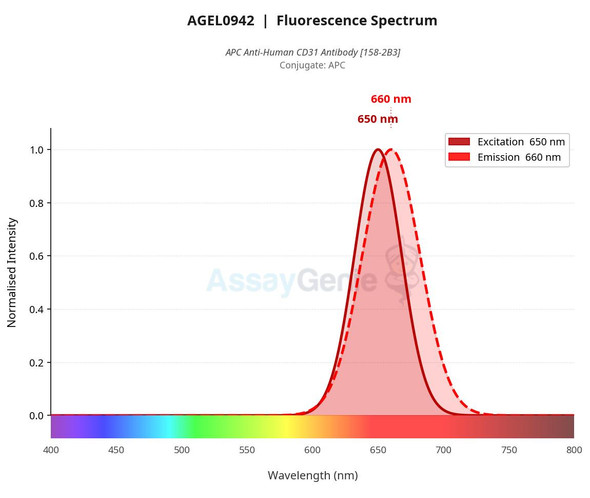
Spectrum:
Swissprot:
P16284
Gene ID:
5175
Storage Buffer:
Phosphate buffered solution, pH 7.2, containing 0.09% stabilizer and 1% protein protectant.
Stability & Storage:
Keep as concentrated solution. Store at 2~8°C and protected from prolonged exposure to light. Do not freeze. Centrifuge before opening to ensure complete recovery of vial contents. This product is guaranteed up to one year from purchase.
Background:
CD31 is a 130-140 kD type I transmembrane glycoprotein also known as platelet endothelial cell adhesion molecule-1 (PECAM-1) or Endocam. It is expressed on monocytes, platelets, granulocytes, endothelial cells and lymphocyte subsets. CD31 has been reported to bind CD38 and be involved in wound healing, angiogenesis, and cellular migration in an inflammatory situation.