The FITC Anti-Mouse IL-17A Antibody (17F3) is a highly specific tool designed for researchers studying the cytokine IL-17A in mouse models. This antibody, labeled with fluorescein isothiocyanate (FITC), offers exceptional sensitivity and accuracy in detecting IL-17A expression in mouse samples. IL-17A is a key player in the immune response, particularly in inflammation and autoimmune diseases. By targeting IL-17A with this antibody, researchers can gain insights into the role of this cytokine in various biological processes.
The FITC Anti-Mouse IL-17A Antibody (17F3) is ideal for applications such as flow cytometry, immunofluorescence, and immunohistochemistry, allowing for precise visualization and quantification of IL-17A-expressing cells in experimental settings.With its reliability and specificity, the FITC Anti-Mouse IL-17A Antibody (17F3) is a valuable tool for immunology research, offering the opportunity to deepen understanding of IL-17A function and its implications in immune-mediated diseases.
Product Title:
FITC Anti-Mouse IL-17A Antibody [17F3]
SKU:
AGEL3102
Size:
50 Tests, 100 Tests, 200 Tests
Clone No:
17F3
Synonyms:
Interleukin-17A;Il17a;Ctla8;
Host Species:
Mouse
Reactivity:
Mouse
Application:
ICFCM
Isotype:
Mouse IgG1, κ
Isotype Control:
FITC Mouse IgG1, κ Isotype Control[MOPC-21]
Form:
Liquid
Conjugation:
FITC
Recommended Use:
Each lot of this antibody is quality control tested by flow cytometric analysis. The amount of the reagent is suggested to be used 5 µL of antibody per test (million cells in 100 µL staining volume or per 100 µL of whole blood). Please check your vial before the experiment. Since applications vary, the appropriate dilutions must be determined for individual use.
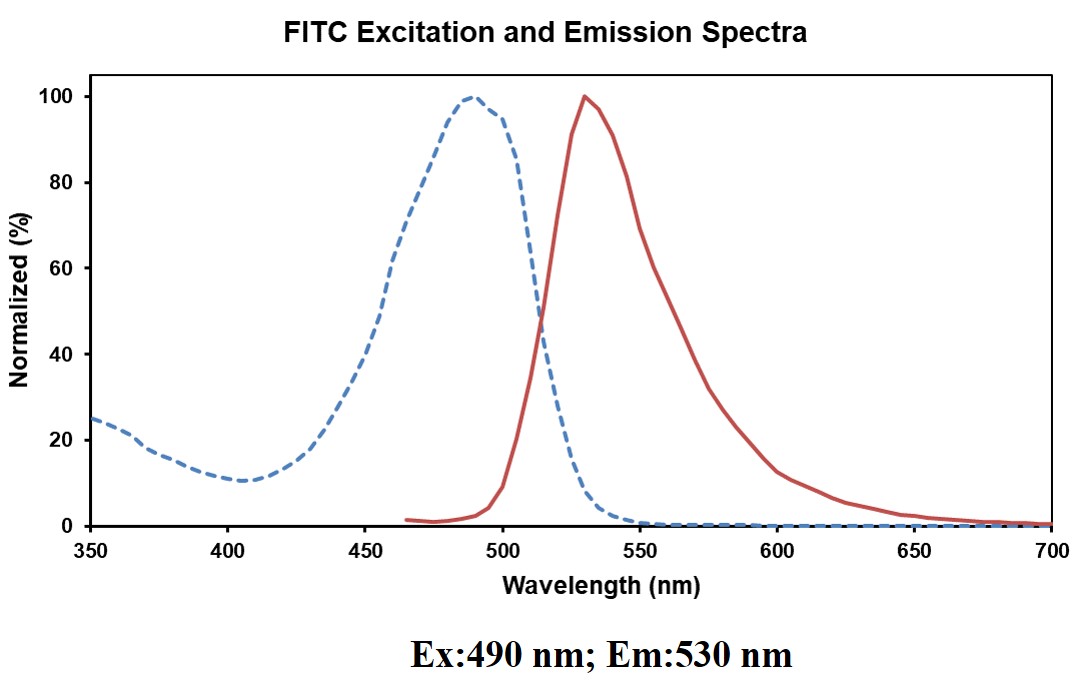
Spectrum:
Swissprot:
Q62386
Gene ID:
16171
Storage Buffer:
Phosphate buffered solution, pH 7.2, containing 0.09% stabilizer and 1% protein protectant.
Stability & Storage:
Keep as concentrated solution. Store at 2~8°C and protected from prolonged exposure to light. Do not freeze. Centrifuge before opening to ensure complete recovery of vial contents. This product is guaranteed up to one year from purchase.
Background:
The 17F3 monoclonal antibody reacts with mouse IL-17A a 15-20 kDa cytokine expressed by Th17 cells, γδ T cells, iNKT cells, NK cells, LTi cells, neutrophils, and intestinal Paneth cells. IL-17A has pleiotropic effects in immunoregulation and inflammation. It plays an important role in anti-microbial and chronic inflammation by inducing cytokine and chemokine production, neutrophil influx, and the production of antibacterial peptides but it is also an inflammatory mediator in the development of autoimmune diseases including rheumatoid arthritis, asthma, multiple sclerosis, and psoriasis. The 17F3 antibody has been shown to neutralize IL-20A in vivo.

![FITC Anti-Mouse IL-17A Antibody [17F3] (AGEL3102)](https://cdn11.bigcommerce.com/s-h68l9z2lnx/images/stencil/1280x1280/products/229565/602907/fitc-anti-mouse-il-17a-antibody-17f3-agel3102__09718.1706286183.jpg?c=2?imbypass=on "FITC Anti-Mouse IL-17A Antibody [17F3] (AGEL3102)")
![FITC Anti-Mouse IL-17A Antibody [17F3] (AGEL3102)](https://cdn11.bigcommerce.com/s-h68l9z2lnx/images/stencil/608x608/products/229565/602907/fitc-anti-mouse-il-17a-antibody-17f3-agel3102__09718.1706286183.jpg?c=2 "FITC Anti-Mouse IL-17A Antibody [17F3] (AGEL3102)")
![FITC Anti-Mouse IL-17A Antibody [17F3] (AGEL3125)](https://cdn11.bigcommerce.com/s-h68l9z2lnx/images/stencil/590x590/products/229587/602251/fitc-anti-mouse-il-17a-antibody-17f3-agel3125__21784.1706284124.jpg?c=2 "FITC Anti-Mouse IL-17A Antibody [17F3] (AGEL3125)")
![PE Anti-Mouse IL-17A Antibody [17F3] (AGEL3126)](https://cdn11.bigcommerce.com/s-h68l9z2lnx/images/stencil/590x590/products/229588/604939/pe-anti-mouse-il-17a-antibody-17f3-agel3126__07792.1706888822.jpg?c=2 "PE Anti-Mouse IL-17A Antibody [17F3] (AGEL3126)")
![Purified Anti-Mouse IL-17A Antibody [17F3] (AGEL3512)](https://cdn11.bigcommerce.com/s-h68l9z2lnx/images/stencil/590x590/products/221633/606638/anti-mouse-il-17a-antibody-17f3-agel3512__57296.1707498669.jpg?c=2 "Purified Anti-Mouse IL-17A Antibody [17F3] (AGEL3512)")
![APC Anti-Mouse IL-17A Antibody [17F3] (AGEL3127)](https://cdn11.bigcommerce.com/s-h68l9z2lnx/images/stencil/590x590/products/229589/605013/apc-anti-mouse-il-17a-antibody-17f3-agel3127__61020.1706889059.jpg?c=2 "APC Anti-Mouse IL-17A Antibody [17F3] (AGEL3127)")
![APC Anti-Mouse IL-17A Antibody [17F3] (AGEL3104)](https://cdn11.bigcommerce.com/s-h68l9z2lnx/images/stencil/590x590/products/229567/605143/apc-anti-mouse-il-17a-antibody-17f3-agel3104__96591.1706889434.jpg?c=2 "APC Anti-Mouse IL-17A Antibody [17F3] (AGEL3104)")