GenieKine Recombinant Human IL-7 Protein (GKRP0018)
GenieKine Recombinant Human IL-7 Protein is expressed in E. coli. IL-7 is essential for T and B lymphocyte development and supports the survival and homeostatic expansion of naive and memory T cells. Supplied as a lyophilized powder with purity of >98% by SDS-PAGE and endotoxin below 0.002 EU/µg by LAL assay. Suitable for immune cell culture and stem cell culture. For research use only.
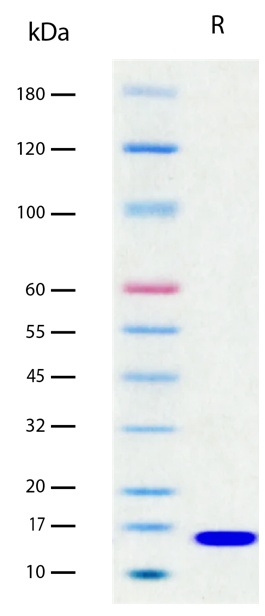
This product (SKU: GKRP0018) is expressed in E. coli and is supplied unconjugated. It has a calculated molecular weight of 17.5 kDa and an observed molecular weight of 17 kDa (reducing) on SDS-PAGE. Purity is >98% by SDS-PAGE and endotoxin is <0.002 EU/µg by the LAL method.
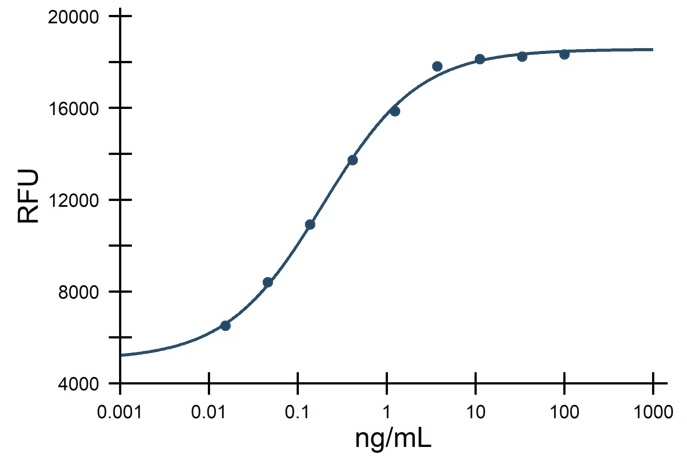
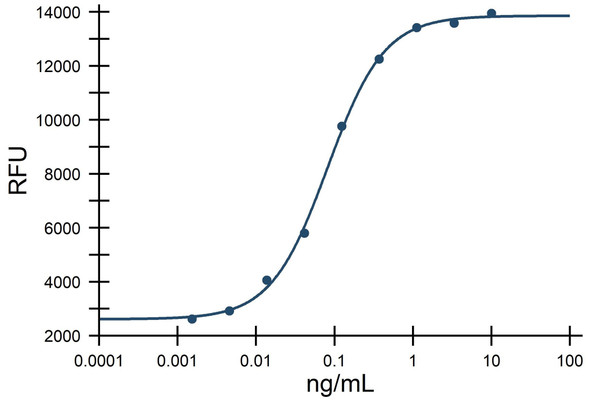
Determined by a cell proliferation assay using 2E8 mouse cells. The ED50 for this effect is typically <0.5 ng/mL.
Endotoxin:
<0.002 EU/µg of protein, as determined by the LAL method.
Purity:
>98% by SDS-PAGE and quantitative densitometry by Coomassie Blue staining.
Formulation:
Lyophilized from sterile PBS with Trehalose, pH 7.4.
Reconstitution:
Reconstitute at 100 µg/mL in sterile PBS. If desired, 5% Trehalose or 0.1% BSA may be added.
Storage:
12 months from date of receipt at -20°C to -70°C, lyophilized powder. 3 months at -20°C to -70°C under sterile conditions after reconstitution. Avoid repeated freeze-thaw cycles.
Interleukin 7 (IL-7) functions in regulating hematopoeitic stem cell differentiation into lymphoid progenitor cells. IL-7 also plays a role in the proliferation and survival of B cells, T cells and NK cells in the lymphoid lineage. This is led to further developments in applying IL-7 in cell culture and manufacturing strategies in cancer immunotherapy approaches, such as adoptive cell therapy (ACT) and chimeric antigen receptor (CAR) T cell therapy.
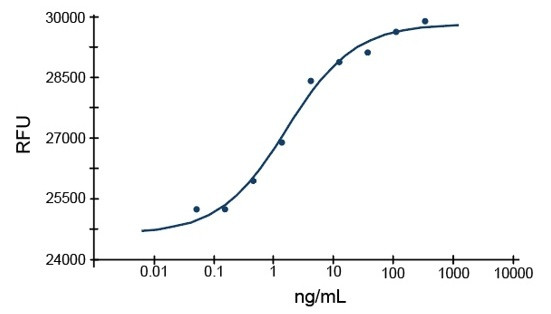
Determined by a cell proliferation assay using 2E8 mouse cells. The ED50 for this effect is typically <0.75 ng/mL.
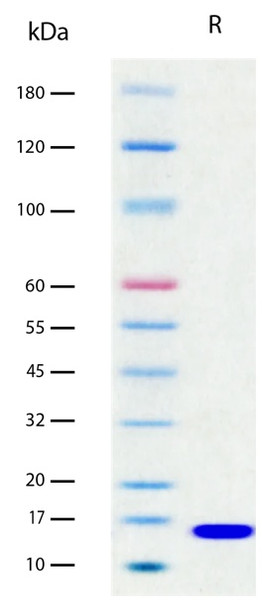
Recombinant Human IL-7 (2 µg/lane) on SDS-PAGE under reducing (R) conditions. The gel was stained using Coomassie Blue showing a single band at ~17 kDa and purity greater than 98%.