Description
Chloroform-free RNA extraction reagent
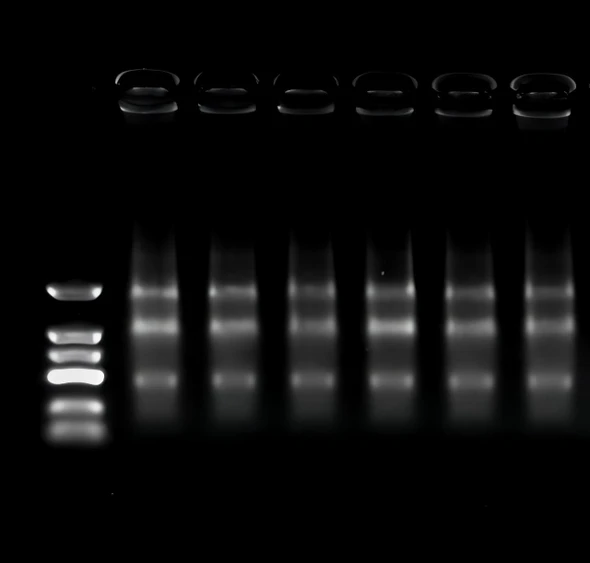
GenieZol Free Reagent extracts total RNA from cultured cells, animal tissues and simple plant tissues. Unlike conventional phenol–chloroform phase-separation methods, it works in a single monophasic system at room temperature with no need for chloroform. The procedure takes about 1 hour and yields high-purity, intact total RNA at a yield comparable to conventional methods.
Proteins, DNA, polysaccharides and other impurities are precipitated into the organic phase while RNA stays in the upper aqueous phase, preserving RNA purity and integrity. Each extraction uses 500 μl of reagent for 20–50 mg of animal or plant tissue or 1 × 10⁶ - 1 × 10⁷ cells. The RNA can be used directly for RT-PCR, qRT-PCR, Northern blot, dot blot, in vitro translation, NGS and other molecular biology applications. The method is safer and less toxic, with no chloroform or β-mercaptoethanol required, and has been validated across 129 sample types, including cells, tissues, plants and bacteria. For research use only.
Key Features
| Safe and low toxicity | No chloroform or β-mercaptoethanol required. | |
| Easy to use | Monophasic extraction with no phase separation, performed entirely at room temperature. | |
| High RNA quality | High purity and integrity at a yield comparable to conventional phenol–chloroform methods. | |
| Fast | The whole procedure is completed in about 1 h. |
Specifications
| Method | Monophasic, chloroform-free extraction at room temperature |
| Samples | Animal/plant tissues (20–50 mg); cells (1 × 10⁶ - 1 × 10⁷) |
| Processing time | About 1 h |
| Downstream applications | RT-PCR, qRT-PCR, Northern blot, dot blot, in vitro translation, NGS |
| Shelf life | 2 years |
Components
| Components | 200 rxns | 400 rxns |
| GenieZol Free Reagent | 100 ml | 200 ml |
| Dilution Buffer | 40 ml | 80 ml |
Not supplied: isopropanol, 75% ethanol (prepared with RNase-free ddH2O) and RNase-free ddH2O.
Storage
Store at 2 ~ 8°C.
- Process the sample
Animal/plant tissues
- Flash-freeze fresh tissue in liquid nitrogen, transfer to a mortar pre-cooled with liquid nitrogen and grind with a pestle, adding liquid nitrogen, to a fine powder with no visible granules. Insufficient grinding reduces RNA yield and quality.
- Transfer the powder to a centrifuge tube, add 500 μl of GenieZol Free Reagent per 50 mg of tissue and vortex until fully lysed. Incubate at room temperature for 5 min.
- Do not exceed 50 mg of tissue per 500 μl of reagent. Overloading causes incomplete lysis and lower purity; for DNA/RNA-rich tissues such as liver, spleen and kidney, excess input leads to residual gDNA or low RNA yield.
- If liquid-nitrogen grinding is not possible, mince fresh tissue finely, immerse it in the reagent and homogenise with a high-speed electric homogeniser until fully lysed. Alternatively, first immerse the tissue in an RNA tissue stabilisation reagent to inactivate RNase.
- (Optional) Centrifuge at 11,200 rpm (12,000 × g) for 5 min at room temperature and transfer the supernatant to a new 1.5 ml tube without disturbing the pellet. Use this step for samples rich in protein, fat, polysaccharides, myofibres or plant tubers; for fatty tissues, remove any oily top layer.
Suspension cells
- Pellet the cells, discard the supernatant and add 500 μl of reagent per 1 × 10⁶ - 1 × 10⁷ cells.
- Vortex or pipette until fully lysed and incubate at room temperature for 5 min. Vortex frozen cells immediately after adding reagent to avoid incomplete lysis.
Adherent cells
- Discard the medium and rinse once with 1× PBS.
- Add 500 μl of reagent per well of a 6-well plate or per 3.5 cm dish (about 10 cm2), cover the cell layer and detach the cells by pipetting. For firmly attached cells or clumps, use a cell scraper or pipette tip, increase the reagent to 1 ml, or trypsinise first and follow the suspension-cell steps.
- Transfer to a 1.5 ml tube, vortex or pipette until fully lysed and incubate at room temperature for 5 min.
- Add Dilution Buffer
- Per 500 μl of reagent, add 100 μl of Dilution Buffer for animal or plant tissues, or 150 μl for cells.
- Cap tightly and vortex until the solution forms a homogeneous emulsion (insufficient mixing reduces extraction efficiency and impurity removal). Incubate at room temperature for 5 min.
- Remove impurities
- Centrifuge at 11,200 rpm (12,000 × g) for 15 min at room temperature.
- Carefully transfer the supernatant (about 500 μl) to a new tube without taking up the pellet. The upper aqueous phase is about 90% of the total volume (about 550 μl with 500 μl of reagent). With 50 mg of tissue input, take only 450 μl. A slightly turbid or coloured supernatant does not affect yield or purity.
- Precipitate the RNA
- Add an equal volume of isopropanol, mix by inversion and incubate at room temperature for 10 min.
- Centrifuge at 11,200 rpm (12,000 × g) for 10 min at room temperature. A white, gel-like pellet forms on the side and bottom of the tube. Carefully discard as much supernatant as possible without losing the pellet.
- Wash
- Add 1 ml of 75% ethanol (prepared with RNase-free ddH2O), flick gently to resuspend the pellet and invert a few times.
- Centrifuge at 9,100 rpm (8,000 × g) for 3 min at room temperature and discard the supernatant.
- Repeat the wash once. Remove as much liquid as possible: discard most of the supernatant, spin briefly and remove the rest with a pipette without disturbing the pellet.
- Dissolve the RNA
- Air-dry the pellet at room temperature for 2–3 min. Do not over-dry, as fully dried RNA is hard to dissolve.
- Add 20–100 μl of RNase-free ddH2O and vortex at room temperature for 3 min (or pipette) until completely dissolved, so quantification is accurate.
- Aliquot and store at -85 ~ -65°C long term or -30 ~ -15°C short term.
Q1: Why does my RNA not dissolve completely?
- Over-drying after the 75% ethanol wash, too much RNA or too many impurities. Avoid excessive drying; increase the volume of RNase-free ddH2O or the dissolving time, or incubate in a 55–60°C water bath for 2–3 min; and after complete lysis, centrifuge the sample and continue with the supernatant.
Q2: What causes RNA degradation and how can I prevent it?
- Common causes are RNase contamination, improper or prolonged sample storage, repeated freeze-thaw and electrophoresis issues. Keep all tubes, tips and solutions RNase-free and wear a mask and sterile gloves in a separate clean area; use fresh samples or samples flash-frozen in liquid nitrogen and stored at -85 ~ -65°C; store samples in aliquots; add reagent immediately to samples taken from liquid nitrogen and mix thoroughly. Before running a gel, soak the tank in 3% hydrogen peroxide for 20 min or treat it with RNase, RNA and DNA Remover for 5 min, rinse with RNase-free ddH2O, prepare the running buffer with RNase-free ddH2O and use fresh loading buffer.
Q3: What should I do if purity is low or downstream reactions are inhibited?
- For protein contamination, reduce the sample input and increase the volume of reagent. For polysaccharide or fat contamination, reduce the sample input and, after the optional centrifugation in sample processing, transfer the clear intermediate layer for the next step. For residual salt, increase the number of 75% ethanol washes.
Q4: How can I reduce genomic DNA contamination?
- This is usually caused by excessive sample input. Reduce the input or increase the volume of reagent; add HAc during lysis (5 μl per 500 μl of reagent); use a reverse transcription reagent with a genomic DNA removal step; and design intron-spanning primers so gDNA is not amplified.
Q5: Why can't I see a pellet after adding isopropanol and centrifuging?
- With low sample input or RNA content, incubate at 2–8°C or -30 ~ -15°C for 10–30 min after adding isopropanol and before centrifuging. Remove the supernatant by pipetting rather than decanting to avoid losing the pellet. Samples rich in metabolites can leave the pellet dispersed on the tube wall, so withdraw the supernatant slowly along the liquid surface.
Q6: Can I pause the procedure?
- Yes. After mixing the sample with the reagent, store at 4°C for 12 h or -20°C for one week. After adding 75% ethanol, store at 4°C for 12 h or -20°C for 72 h.