HSP90 alpha/beta Antibody [Hyb-K41220A] is a mouse monoclonal antibody directed against HSP90 alpha/beta, offered by Assay Genie for research applications. Reported applications include WB, IHC, ICC/IF and ELISA. Reported reactivity: Human, Mouse, Rat, Yeast, Yeast (Saccharomyces cerevisiae) and Fisson Yeast (Schizosaccharomyces pombe). Supplied as IgG2a, purified by Protein G.
HSP90α and HSP90β are the two major cytosolic isoforms of the highly conserved heat shock protein 90 (HSP90) family, essential for maintaining protein homeostasis in all eukaryotic cells. While they share 85% amino acid sequence identity, the isoforms differ in structure and function: HSP90α primarily forms homodimers and is stress-inducible, whereas HSP90β exists mainly as a monomer and is constitutively expressed. Both isoforms are abundantly expressed in the brain and play critical roles in the folding, maturation, and stabilization of a wide range of client proteins involved in neuronal signaling, synaptic plasticity, and cellular stress responses. These include kinases (e.g., c-Raf), transcription factors (e.g., p53), and hormone receptors—many of which are implicated in neurodegenerative diseases such as Alzheimer’s, Parkinson’s, and Huntington’s disease. HSP90α and HSP90β function as part of dynamic chaperone complexes, interacting with co-chaperones like Cdc37 and p23. ATP binding drives conformational changes that enable these complexes to stabilize client proteins and prevent their degradation. However, in disease contexts, this protective mechanism can inadvertently preserve toxic protein species, contributing to pathogenesis. By recognizing both HSP90α and HSP90β, this antibody provides a powerful tool for researchers exploring the dual roles of HSP90 in neuronal health and disease. This antibody is also available conjugated to ATTO 390, ATTO 488, ATTO 594, Biotin and FITC. Supplied in 100 µg. For research use only; not for diagnostic or therapeutic procedures.


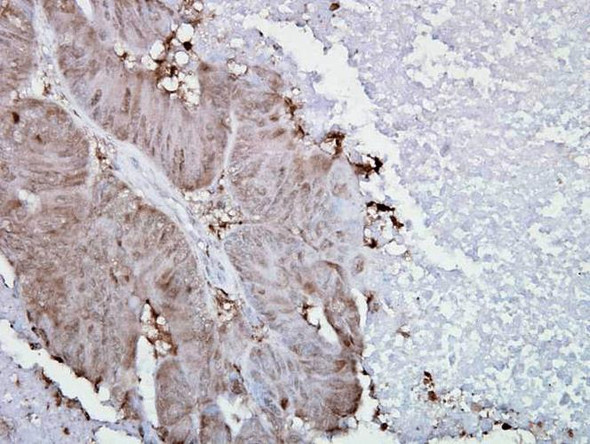

![Anti-Hsp90 alpha/beta [R08-8A1] Monoclonal Antibody (AGMB02177)](https://cdn11.bigcommerce.com/s-h68l9z2lnx/images/stencil/590x590/products/273466/676278/anti-hsp90-alphabeta-r08-8a1-monoclonal-antibody-agmb02177__90898.1773028942.jpg?c=2 "Anti-Hsp90 alpha/beta [R08-8A1] Monoclonal Antibody (AGMB02177)")
![Anti-Hsp90 alpha/beta (4B6) [4B6-G2-H6] Monoclonal Antibody (AGMB04541)](https://cdn11.bigcommerce.com/s-h68l9z2lnx/images/stencil/590x590/products/275829/678110/anti-hsp90-alphabeta-4b6-4b6-g2-h6-monoclonal-antibody-agmb04541__53120.1773034711.jpg?c=2 "Anti-Hsp90 alpha/beta (4B6) [4B6-G2-H6] Monoclonal Antibody (AGMB04541)")
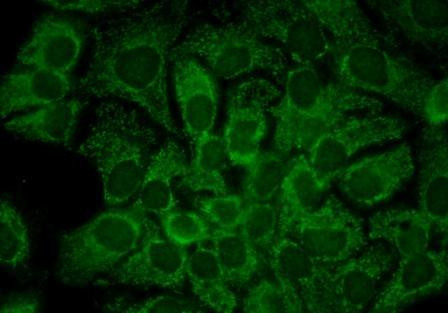

![Anti-Hsp90 beta [R03-8F1] Monoclonal Antibody (AGMB02497)](https://cdn11.bigcommerce.com/s-h68l9z2lnx/images/stencil/590x590/products/273786/680277/anti-hsp90-beta-r03-8f1-monoclonal-antibody-agmb02497__87213.1773041553.jpg?c=2 "Anti-Hsp90 beta [R03-8F1] Monoclonal Antibody (AGMB02497)")