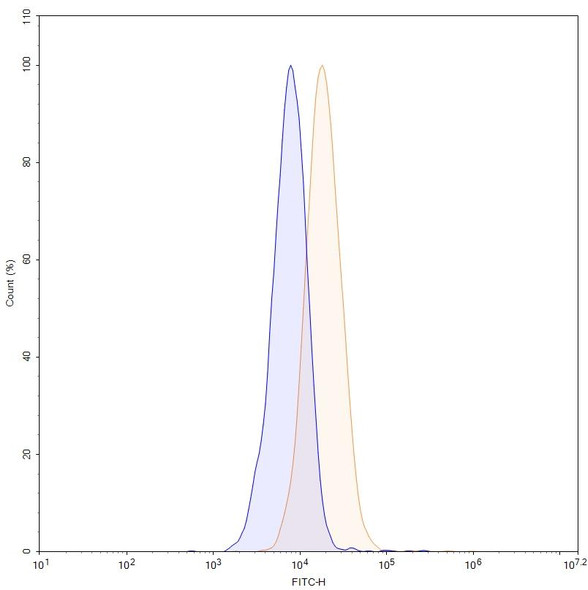
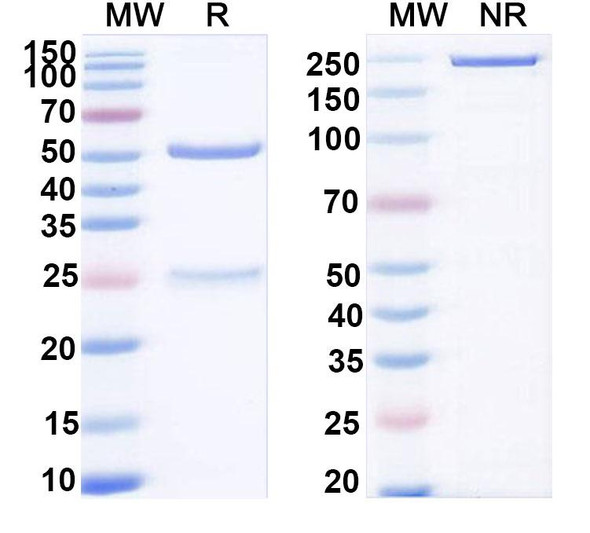
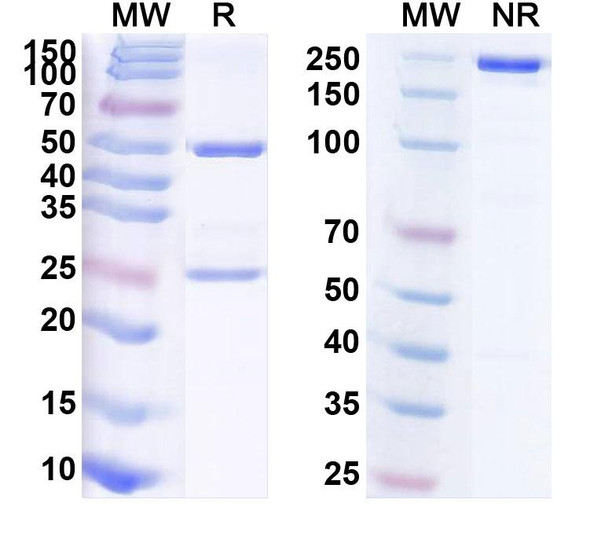
Human CD46 Antibody (FOR46) (ADC, Payload-Free) is a research-grade biosimilar monoclonal antibody targeting CD46. It is a human IgG antibody. Reactivity: Human. Supplied as a liquid in 0.01M PBS pH 7.4. Supplied as the antibody component without the cytotoxic payload. Applications: ELISA, flow cytometry, functional assays and in vivo research. Endotoxin: < 10 EU/mg. Purity: >95% purity as determined by SDS-PAGE. For research use only.
Membrane cofactor protein (CD46) is a ~43 kDa protein. Acts as a cofactor for complement factor I, a serine protease which protects autologous cells against complement-mediated injury by cleaving C3b and C4b deposited on host tissue. May be involved in the fusion of the spermatozoa with the oocyte during fertilization. Also acts as a costimulatory factor for T-cells which induces the differentiation of CD4+ into T-regulatory 1 cells. T-regulatory 1 cells suppress immune responses by secreting interleukin-10, and therefore are thought to prevent autoimmunity.
Product Name:
Human CD46 Antibody (FOR46) (ADC, Payload-Free)
SKU:
GXBS02374
Size:
100 µg, 1 mg
Antibody Type:
Monoclonal Antibody
Clone:
FOR46
Target:
Trophoblast leukocyte common antigen
Isotype:
IgG
Host Species:
Human
Reactivity:
Human
Applications:
ELISA, FCM, Functional assay, Research in vivo
Expression Host:
Mammalian cells
Synonyms:
FOR46, FOR46, FOR-46
Purity:
>95% as determined by SDS-PAGE.
Endotoxin Level:
< 10 EU/mg
Formulation:
0.01M PBS pH 7.4.
State of Matter:
Liquid
Regulatory Status:
For research use only. Not suitable for clinical or therapeutic use.
Product Preparation:
Protein A/G purified from cell culture supernatant.
Storage and Handling:
Store at 2 to 8°C for frequent use. Store at -20 to -80°C for twelve months from the date of receipt.