Description
Human CTSL Recombinant Protein (C-His)
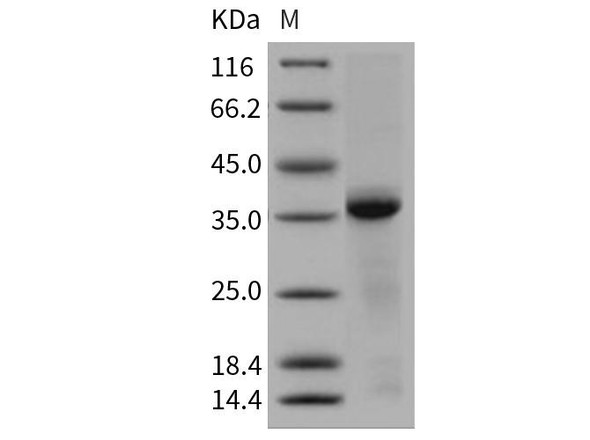
Human CTSL Recombinant Protein (C-His) is a recombinant protein expressed in mammalian cells, spanning Met1-Val333, with a C-terminal His tag. Predicted molecular weight: 39.08 kDa. Purity: >90% as determined by SDS-PAGE. Supplied lyophilized from a solution in PBS pH 7.4, 1 mM EDTA, 4% Trehalose, 1% Mannitol. Applications: ELISA, immunogen, SDS-PAGE and Western blot. Procathepsin L (CTSL) is a ~37 kDa protein. Thiol protease important for the overall degradation of proteins in lysosomes (Probable). For research use only.
Plays a critical for normal cellular functions such as general protein turnover, antigen processing and bone remodeling. Involved in the solubilization of cross-linked TG/thyroglobulin and in the subsequent release of thyroid hormone thyroxine (T4) by limited proteolysis of TG/thyroglobulin in the thyroid follicle lumen. In neuroendocrine chromaffin cells secretory vesicles, catalyzes the prohormone proenkephalin processing to the active enkephalin peptide neurotransmitter. In thymus, regulates CD4(+) T cell positive selection by generating the major histocompatibility complex class II (MHCII) bound peptide ligands presented by cortical thymic epithelial cells.
| Product Name: | Human CTSL Recombinant Protein (C-His) |
| SKU: | GXRP06020 |
| Size: | 50 µg, 100 µg, 1 mg |
| Species: | Human |
| Synonyms: | Procathepsin L, 3.4.22.15, Cathepsin L1, Major excreted protein, MEP, Cathepsin L, Cathepsin L heavy chain, Cathepsin L light chain, CTSL, CTSL1 |
| Tag: | C-His |
| Expression Host: | Mammalian cells |
| Protein Length: | Met1-Val333 |
| Calculated MW: | 39.08 kDa |
| UniProt: | P07711 |
| Applications: | ELISA, Immunogen, SDS-PAGE, WB |
| Purity: | >90% as determined by SDS-PAGE. |
| Form: | Lyophilized |
| Formulation: | Lyophilized from a solution in PBS pH 7.4, 1 mM EDTA, 4% Trehalose, 1% Mannitol. |
| Reconstitution: | Reconstitute in sterile water for a stock solution. Adjust the volume of sterile water so that, after reconstitution, the final stock concentration matches the value indicated on the product label or datasheet. |
| Storage: | Store at 2 to 8°C for frequent use. Store at -20 to -80°C for twelve months from the date of receipt. |
| Shipping: | In general, proteins are provided as lyophilized powder/frozen liquid. They are shipped out with dry ice/blue ice unless customers require otherwise. |
| Note: | For research use only. |