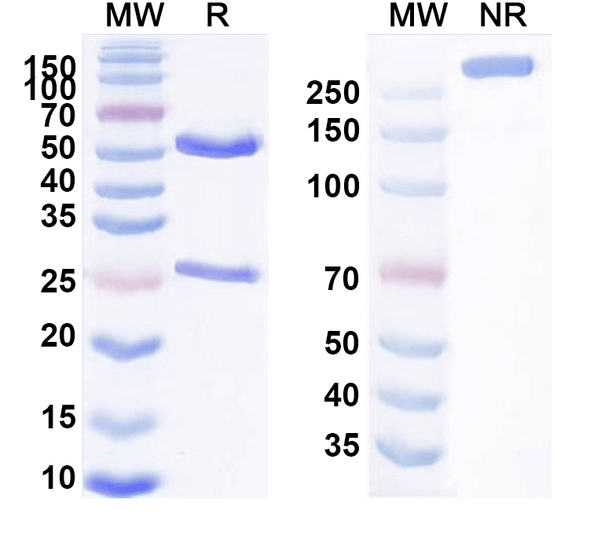
Human GP88/GRN (AG1) Antibody is a research-grade biosimilar monoclonal antibody targeting PC cell-derived growth factor. It is a human IgG antibody. Reactivity: Human. Supplied as a liquid in 0.01M PBS pH 7.4. Applications: ELISA, flow cytometry, functional assays and in vivo research. Endotoxin: < 10 EU/mg. Purity: >95% purity as determined by SDS-PAGE. For research use only.
Progranulin (GP88/GRN) is a ~63 kDa protein. Secreted protein that acts as a key regulator of lysosomal function and as a growth factor involved in inflammation, wound healing and cell proliferation. Regulates protein trafficking to lysosomes, and also the activity of lysosomal enzymes. Also facilitates the acidification of lysosomes, causing degradation of mature CTSD by CTSB. In addition, functions as a wound-related growth factor that acts directly on dermal fibroblasts and endothelial cells to promote division, migration and the formation of capillary-like tubule structures. Also promotes epithelial cell proliferation by blocking TNF-mediated neutrophil activation preventing release of oxidants and proteases.
Product Name:
Human GP88/GRN (AG1) Antibody
SKU:
GXBS01506
Size:
100 µg, 1 mg
Antibody Type:
Monoclonal Antibody
Clone:
AG1
Target:
PC cell-derived growth factor
Isotype:
IgG
Host Species:
Human
Reactivity:
Human
Applications:
ELISA, FACS, Functional assay, Research in vivo
Expression Host:
Mammalian cells
Synonyms:
AG1
Purity:
>95% purity as determined by SDS-PAGE.
Endotoxin Level:
< 10 EU/mg
Formulation:
0.01M PBS pH 7.4
State of Matter:
Liquid
Regulatory Status:
For research use only. Not suitable for clinical or therapeutic use.
Product Preparation:
Protein A/G purified from cell culture supernatant.
Storage and Handling:
Store at 2 to 8°C for frequent use. Store at -20 to -80°C for twelve months from the date of receipt.