Description
Human PPP3CA Recombinant Protein (N-His)
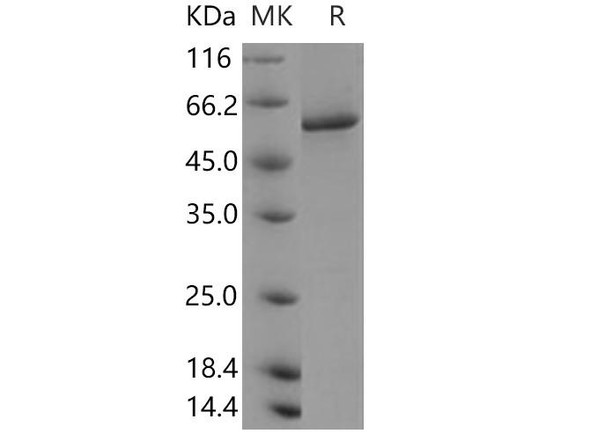
Human PPP3CA Recombinant Protein (N-His) is a recombinant protein expressed in E. coli, spanning Ile7-Ser301, with an N-terminal His tag. Predicted molecular weight: 36.19 kDa. Purity: >90% as determined by SDS-PAGE. Supplied lyophilized from a solution in PBS pH 7.4, 0.02% NLS, 1 mM EDTA, 4% Trehalose, 1% Mannitol. Applications: ELISA, immunogen, SDS-PAGE and Western blot. Protein phosphatase 3 catalytic subunit alpha (PPP3CA) is a ~58 kDa protein. Calcium-dependent, calmodulin-stimulated protein phosphatase which plays an essential role in the transduction of intracellular Ca(2+)-mediated signals. For research use only.
Many of the substrates contain a PxIxIT motif and/or a LxVP motif. In response to increased Ca(2+) levels, dephosphorylates and activates phosphatase SSH1 which results in cofilin dephosphorylation. In response to increased Ca(2+) levels following mitochondrial depolarization, dephosphorylates DNM1L inducing DNM1L translocation to the mitochondrion. Positively regulates the CACNA1B/CAV2.2-mediated Ca(2+) release probability at hippocampal neuronal soma and synaptic terminals.
| Product Name: | Human PPP3CA Recombinant Protein (N-His) |
| SKU: | GXRP02098 |
| Size: | 50 µg, 100 µg, 1 mg |
| Species: | Human |
| Synonyms: | CAM-PRP catalytic subunit, CNA, Calmodulin-dependent calcineurin A subunit alpha isoform, CALNA, Serine/threonine-protein phosphatase 2B catalytic subunit alpha isoform, PPP3CA |
| Tag: | N-His |
| Expression Host: | E. coli |
| Protein Length: | Ile7-Ser301 |
| Calculated MW: | 36.19 kDa |
| UniProt: | Q08209 |
| Applications: | ELISA, Immunogen, SDS-PAGE, WB |
| Purity: | >90% as determined by SDS-PAGE. |
| Form: | Lyophilized |
| Formulation: | Lyophilized from a solution in PBS pH 7.4, 0.02% NLS, 1 mM EDTA, 4% Trehalose, 1% Mannitol. |
| Reconstitution: | Reconstitute in sterile water for a stock solution. Adjust the volume of sterile water so that, after reconstitution, the final stock concentration matches the value indicated on the product label or datasheet. |
| Storage: | Store at 2 to 8°C for frequent use. Store at -20 to -80°C for twelve months from the date of receipt. |
| Shipping: | In general, proteins are provided as lyophilized powder/frozen liquid. They are shipped out with dry ice/blue ice unless customers require otherwise. |
| Note: | For research use only. |