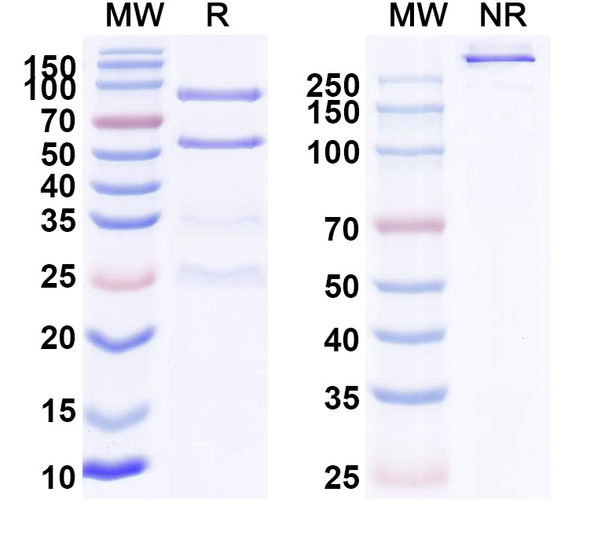
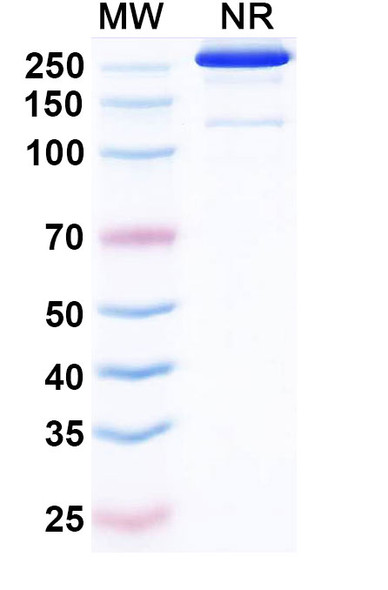
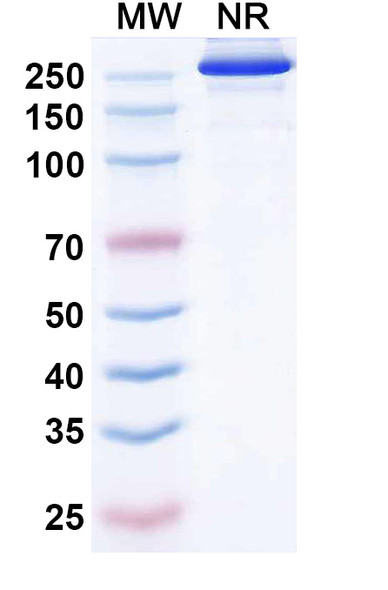
Moflerafusp alfa (Research-Grade) is a research-grade biosimilar monoclonal antibody targeting CD274. It is a human IgG1, Kappa-SIRPα antibody. Reactivity: Human. Supplied as a liquid in 0.01M PBS pH 7.4. Applications: ELISA, flow cytometry, functional assays and in vivo research. Endotoxin: < 10 EU/mg. Purity: >95% as determined by SDS-PAGE. For research use only.
Programmed cell death 1 ligand 1 (CD47/MER6 & PDCD1) is a ~33 kDa protein. Plays a critical role in induction and maintenance of immune tolerance to self. As a ligand for the inhibitory receptor PDCD1/PD-1, modulates the activation threshold of T-cells and limits T-cell effector response. Through a yet unknown activating receptor, may costimulate T-cell subsets that predominantly produce interleukin-10 (IL10). Can also act as a transcription coactivator: in response to hypoxia, translocates into the nucleus via its interaction with phosphorylated STAT3 and promotes transcription of GSDMC, leading to pyroptosis.
Product Name:
Moflerafusp alfa (Research-Grade)
SKU:
GXBS02589
Size:
100 µg, 1 mg
Antibody Type:
Monoclonal Antibody
Target:
CD279
Isotype:
IgG1, Kappa-SIRPα
Host Species:
Human
Reactivity:
Human
Applications:
ELISA, FCM, Functional assay, Research in vivo
Synonyms:
CAS: 2983848-20-8
Purity:
>95% as determined by SDS-PAGE.
Endotoxin Level:
< 10 EU/mg
Formulation:
0.01M PBS pH 7.4.
State of Matter:
Liquid
Regulatory Status:
For research use only. Not suitable for clinical or therapeutic use.
Product Preparation:
Protein A/G purified from cell culture supernatant.
Storage and Handling:
Store at 2 to 8°C for frequent use. Store at -20 to -80°C for twelve months from the date of receipt.