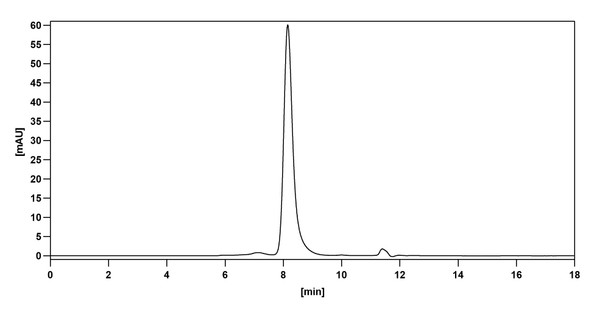
Monalizumab Antibody is a research-grade biosimilar monoclonal antibody targeting CD159. It is a humanized IgG4-kappa antibody. Reactivity: Human. Supplied as a liquid in 0.01M PBS pH 7.4. Applications: ELISA, flow cytometry, functional assays and in vivo research. Endotoxin: < 10 EU/mg. Purity: >95% purity as determined by SDS-PAGE. For research use only.
NKG2-A/NKG2-B type II integral membrane protein (CD159a/KLRC1) is a ~26 kDa protein. Immune inhibitory receptor involved in self-nonself discrimination. In complex with KLRD1 on cytotoxic and regulatory lymphocyte subsets, recognizes non-classical major histocompatibility (MHC) class Ib molecule HLA-E loaded with self-peptides derived from the signal sequence of classical MHC class Ia molecules. Enables cytotoxic cells to monitor the expression of MHC class I molecules in healthy cells and to tolerate self. Upon HLA-E-peptide binding, transmits intracellular signals through two immunoreceptor tyrosine-based inhibition motifs (ITIMs) by recruiting INPP5D/SHP-1 and INPPL1/SHP-2 tyrosine phosphatases to ITIMs, and ultimately opposing signals transmitted by activating receptors through dephosphorylation of proximal signaling molecules. Key inhibitory receptor on natural killer (NK) cells that regulates their activation and effector functions.