Mouse P1NP (Procollagen Type I N-Terminal Propeptide) CLIA Kit
The Mouse PINP (Procollagen Type I N-terminal Propeptide) CLIA Kit is specifically designed for the accurate measurement of PINP levels in mouse samples, including serum, plasma, and cell culture supernatants. This kit offers excellent sensitivity and specificity, ensuring dependable and consistent results that are well-suited for a variety of research applications.PINP is a vital marker for collagen synthesis and bone formation, playing a crucial role in maintaining bone health and integrity.
Changes in PINP levels have been associated with various bone-related disorders, making it an essential biomarker for studying bone metabolism and developing potential treatments.Overall, the Mouse PINP CLIA Kit provides researchers with a reliable tool for investigating the role of PINP in bone physiology and pathophysiology, offering valuable insights into potential therapeutic strategies for bone-related conditions.
Product Name:
Mouse P1NP (Procollagen Type I N-Terminal Propeptide) CLIA Kit
SKU:
MOES00146
Target:
Mouse P1NP (Procollagen Type I N-Terminal Propeptide)
Size:
96T
Assay type:
Sandwich-CLIA
Assay time:
3.5h
Sensitivity:
18.75 pg/mL
Detection range:
31.25-2000 pg/mL
Kit component:
Component
Quantity (24 Assays)
Quantity (96 Assays)
Storage
CLIA Plate
8 wells x 3 strips
8 wells x 12 strips
-20°C, 6 months
Reference Standard
1 vial
2 vials
Concentrated Biotinylated Detection Ab (100×)
1 vial, 60 µL
1 vial, 120 µL
Concentrated HRP Conjugate (100×)
1 vial, 60 µL
1 vial, 120 µL
-20°C (shading light), 6 months
Reference Standard & Sample Diluent
1 vial, 20 mL
1 vial, 20 mL
4°C, 6 months
Biotinylated Detection Ab Diluent
1 vial, 14 mL
1 vial, 14 mL
HRP Conjugate Diluent
1 vial, 14 mL
1 vial, 14 mL
Concentrated Wash Buffer (25×)
1 vial, 30 mL
1 vial, 30 mL
Substrate Reagent A
1 vial, 5 mL
1 vial, 5 mL
4°C (shading light)
Substrate Reagent B
1 vial, 5 mL
1 vial, 5 mL
Desiccant
1
1
Plate Sealer
5 pieces
5 pieces
Product Description
1 copy
1 copy
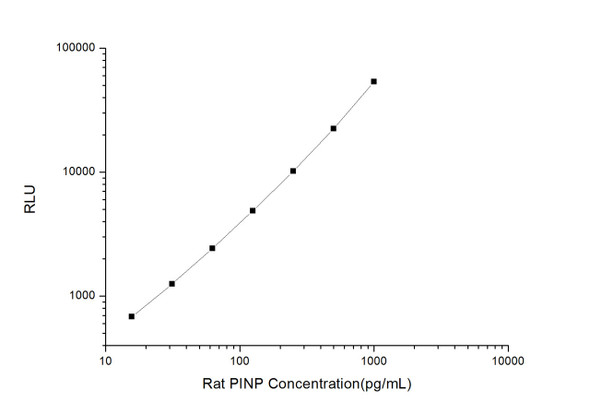
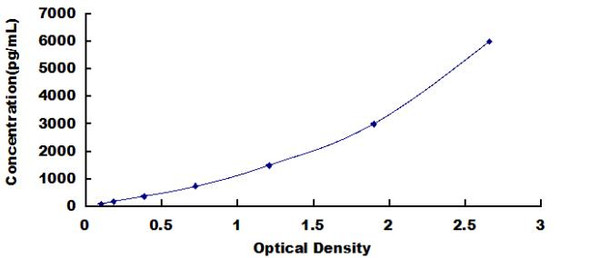
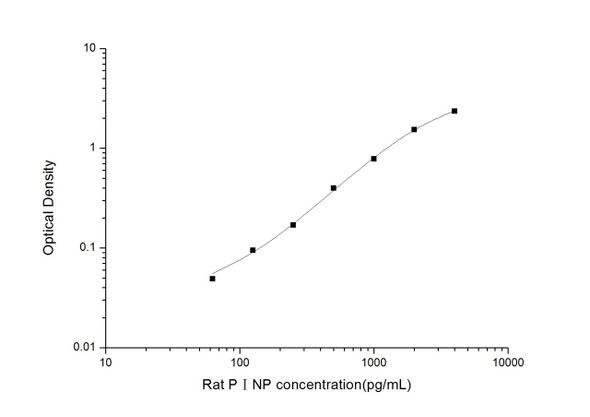
This CLIA kit uses the Sandwich-CLIA principle. The micro CLIA plate provided in this kit has been pre-coated with an antibody specific to Mouse PINP. Standards or samples are added to the micro CLIA plate wells and combined with the specific antibody. Then a biotinylated detection antibody specific for Mouse PINP and Avidin-Horseradish Peroxidase (HRP) conjugate are added successively to each micro plate well and incubated. Free components are washed away. The substrate solution is added to each well. Only those wells that contain Mouse PINP, biotinylated detection antibody and Avidin-HRP conjugate will appear fluorescence. The Relative light unit (RLU) value is measured by the Chemiluminescence immunoassay analyzer. The RLU value is positively associated with the concentration of Mouse PINP. You can calculate the concentration of Mouse PINP in the samples by comparing the RLU value of the samples to the standard curve.
Linearity:
Serum (n=5)
EDTA plasma (n=5)
Cell culture media (n=5)
1:2
Range (%)
95-109
90-104
102-117
Average (%)
103
95
109
1:4
Range (%)
102-120
95-108
96-107
Average (%)
110
102
101
1:8
Range (%)
86-98
93-107
94-107
Average (%)
91
99
101
1:16
Range (%)
93-104
97-111
90-106
Average (%)
98
105
98
Recovery:
Sample Type
Range (%)
Average Recovery (%)
Serum (n=5)
100-113
106
EDTA plasma (n=5)
85-97
90
Cell culture media (n=5)
96-114
104
Precision:
Intra-assay Precision
Inter-assay Precision
Sample
1
2
3
1
2
3
n
20.0
20.0
20.0
20.0
20.0
20.0
Mean (ng/mL)
100.17
292.72
764.36
99.86
277.21
731.15
Standard deviation
12.18
27.05
72.69
9.16
22.9
62.07
C V (%)
12.16
9.24
9.51
9.17
8.26
8.49
Sample type &Sample volume:
serum, plasma and other biological fluids; 100μL
Reproducibility:
Both intra-CV and inter-CV are < 15%.
Application:
This CLIA kit applies to the in vitro quantitative determination of Mouse PINP concentrations in serum, plasma and other biological fluids.
Specificity:
This kit recognizes Mouse PINP in samples. No significant cross-reactivity or interference between Mouse PINP and analogues was observed.