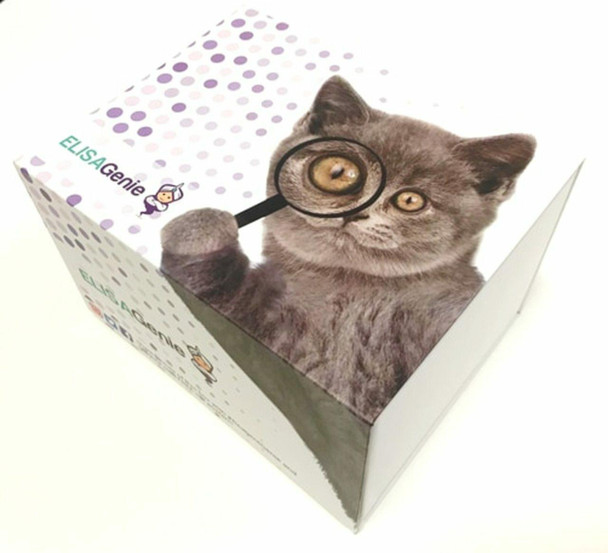
The Porcine BCL2 Associated X Protein (BAX) ELISA Kit is specifically designed for the accurate measurement of BAX levels in porcine samples including serum, plasma, and tissue homogenates. This kit provides high sensitivity and specificity, allowing for precise and reliable results in various research applications.BAX is a key protein involved in the regulation of apoptosis, playing a critical role in the intrinsic pathway of programmed cell death.
Dysregulation of BAX has been associated with various diseases including cancer, neurodegenerative disorders, and cardiovascular diseases, making it an important biomarker for studying these conditions and potential therapeutic interventions.Overall, the Porcine BCL2 Associated X Protein (BAX) ELISA Kit is a valuable tool for researchers looking to investigate the role of BAX in disease pathogenesis and therapeutic development.
Product Name:
Porcine Bcl2 Associated X Protein (Bax) ELISA Kit
Product Code:
PRDL00016
Size:
96 Assays
Target:
Bax
Synonyms:
BCL2L4, Bax Zeta, Apoptosis regulator BAX, Bcl-2-like protein 4
Detection Method:
Sandwich
Range:
0.625-40ng/mL
Shelf Life:
12 months
Note:
For research use only
Recovery:
Matrices listed below were spiked with certain level of recombinant the index and the recovery rates were calculated by comparing the measured value to the expected amount of the index in samples.
Matrix
Recovery range (%)
Average(%)
Serum (n=5)
80-102
91
EDTA plasma (n=5)
81-99
90
Heparin plasma (n=5)
80-89
84
Linearity:
The linearity of the kit was assayed by testing samples spiked with appropriate concentration of the index and their serial dilutions. The results were demonstrated by the percentage of calculated concentration to the expected.
Sample
1:2
1:4
1:8
1:16
Serum (n=5)
82-96%
83-98%
81-99%
93-101%
EDTA plasma (n=5)
88-101%
86-95%
90-102%
80-93%
Heparin plasma (n=5)
80-91%
82-90%
95-104%
79-95%
Intra-assay Precision:
Intra-Assay: CV <10%. 3 samples with low, middle and high level the index were tested 20 times on one plate, respectively.
Inter-assay Precision:
Inter-Assay: CV <12%. 3 samples with low, middle and high level the index were tested on 3 different plates, 8 replicates in each plate.
Stability:
The stability of ELISA kit is determined by the loss rate of activity. The loss rate of this kit is less than 5% within the expiration date under appropriate storage conditions. Note: To minimize unnecessary influences on the performance, operation procedures and lab conditions, especially room temperature, air humidity and incubator temperatures should be strictly regulated. It is also strongly suggested that the whole assay is performed by the same experimenter from the beginning to the end.
Step
Protocol
1.
Prepare all reagents, samples and standards
2.
Add 100µL standard or sample to each well. Incubate 2 hours at 37°C
3.
Aspirate and add 100µL prepared Detection Reagent A. Incubate 1 hour at 37°C
4.
Aspirate and wash 3 times
5.
Add 100µL prepared Detection Reagent B. Incubate 1 hour at 37°C
6.
Aspirate and wash 5 times
7.
Add 90µL Substrate Solution. Incubate 15-25 minutes at 37°C
8.
Add 50µL Stop Solution. Read at 450nm immediately.