T-cell surface glycoprotein CD3 epsilon chain, also known as CD3E, is a single-pass type I membrane protein. CD3E contains 1 Ig-like (immunoglobulin-like) domain and 1 ITAM domain. CD3E, together with CD3-gamma, CD3-delta and CD3-zeta, and the T-cell receptor alpha/beta and gamma/delta heterodimers, forms the T cell receptor-CD3 complex. The CD3 epsilon subunit of the T cell receptor (TCR) complex contains two defined signaling domains, a proline-rich sequence and an immune tyrosine activation motifs (ITAMs), and this complex undergoes a conformational change upon ligand binding that is thought to be important for the activation of T cells. T cell receptor-CD3 complex plays an important role in coupling antigen recognition to several intracellular signal-transduction pathways. This complex is critical for T-cell development and function, and represents one of the most complex transmembrane receptors. CD3E plays an essential role in T-cell development, and defects in CD3E gene cause severe immunodeficiency. Homozygous mutations in CD3D and CD3E genes lead to a complete block in T-cell development and thus to an early-onset severe combined immunodeficiency phenotype.
Product Name:
Cynomolgus CD3e/CD3 Epsilon Recombinant Protein (RPES2899)
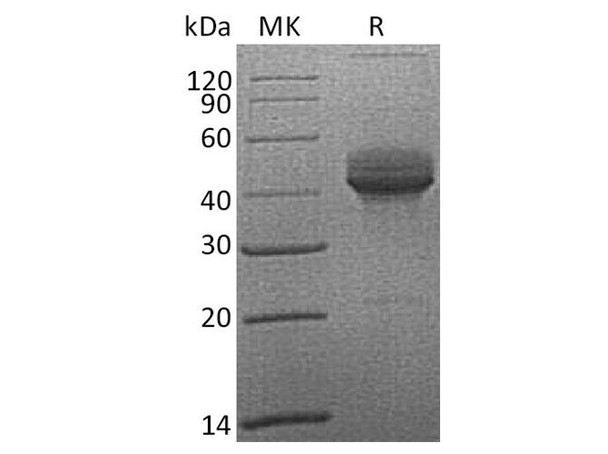
Recombinant Cynomolgus CD3e is produced by our Mammalian expression system and the target gene encoding Gln22-Asp117 is expressed with a Fc tag at the C-terminus.
Purity:
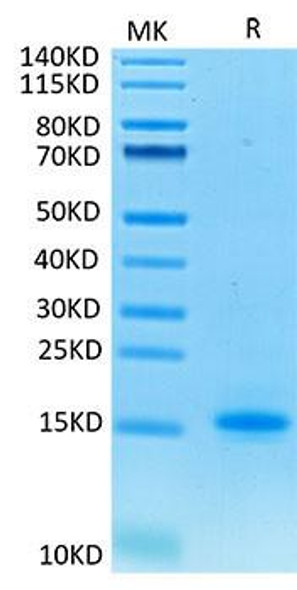
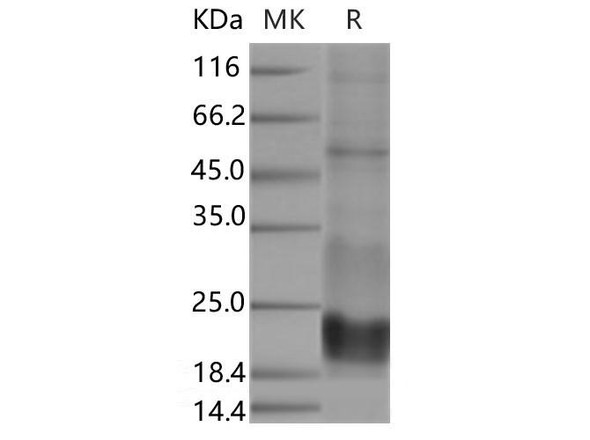
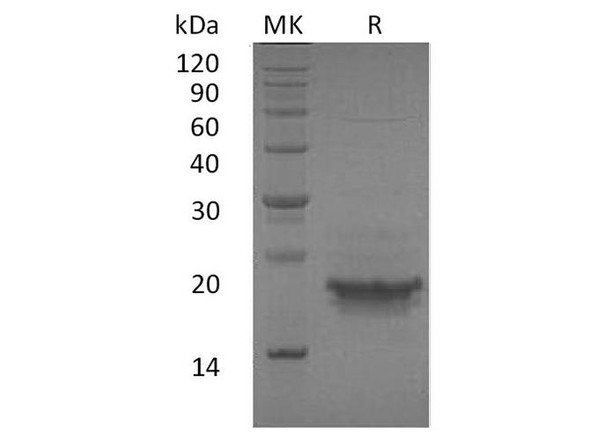
> 95% as determined by reducing SDS-PAGE.
Mol Mass:
38 kDa
AP Mol Mass:
38-55 kDa
Formulation:
Lyophilized from a 0.2 µm filtered solution of 50 mM Tris, 100 mM Glycine, pH 7.5.
Shipping:
This product is provided as lyophilized powder which is shipped with ice packs.
Stability and Storage:
Lyophilized proteins are stable for up to 12 months when stored at -20 to -80°C. Reconstituted protein solution can be stored at 4-8°C for 2-7 days. Aliquots of reconstituted samples are stable at < -20°C for 3 months.