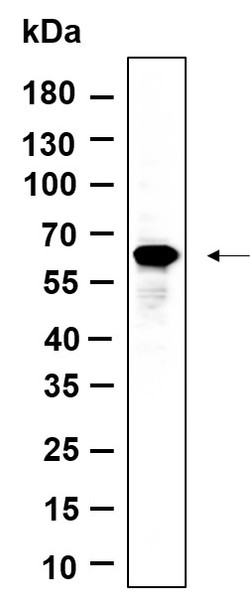
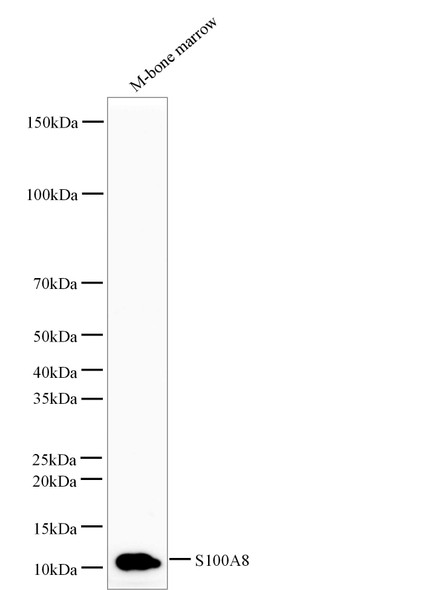
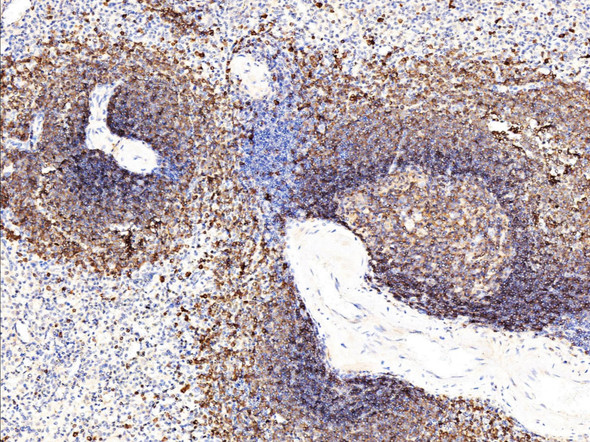
The Recombinant FoxO4 Monoclonal Antibody is a recombinant rabbit monoclonal antibody (clone C110765) against FoxO4. This gene encodes a member of the O class of winged helix/forkhead transcription factor family. Proteins encoded by this class are regulated by factors involved in growth and differentiation indicating they play a role in these processes. A translocation involving this gene on chromosome X and the homolog of the Drosophila trithorax gene, encoding a DNA binding protein, located on chromosome 11 is associated with leukemia. Produced by recombinant technology in Rabbit hosts and purified by Protein A affinity chromatography, this Rabbit IgG antibody is reactive against Human, Mouse and Rat samples.
This antibody is suitable for WB, IHC, IF, IP and ELISA applications. It has been validated by WB analysis of Jurkat and IHC analysis of Human placenta. The target is localized to the cytoplasm, nucleus, when phosphorylated, translocated from nucleus to cytoplasm, Dephosphorylation triggers nuclear translocation. Monoubiquitination increases nuclear localization. When deubiquitinated, translocated from nucleus to cytoplasm.
Product Name:
Recombinant FoxO4 Monoclonal Antibody
SKU:
AGEL6073
Size:
50 µL, 100 µL
Antibody Type:
Recombinant Monoclonal Antibody
Synonyms:
AFX, AFX1, Afxh, ALL1-fused gene from X chromosome, Fork head domain transcription factor AFX1, forkhead box O4, Forkhead box protein O4, FOXO, FOXO 4, FOXO4, MGC117660, MGC120490, Mixed lineage leukemia, MLLT, MLLT7, Myeloid/lymphoid or mixed lineage leukemia, RGD1561201, translocated to
Reactivity:
Human, Mouse, Rat
Immunogen:
Recombinant Human FoxO4 protein
Applications:
WBIHCIFIPELISA
Clonality:
Recombinant Monoclonal
Clone No:
C110765
Host:
Rabbit
Isotype:
Rabbit IgG
Target:
FoxO4
Conjugation:
Unconjugated
Observed MW:
65 kDa
Calculated MW:
54 kDa
Recommended Dilution:
IHC 1:200-500; WB 1:2000-10000; IF 1:200-1000; ELISA 1:5000-20000; IP 1:50-200
UniProt:
P98177
Purification:
Protein A
Concentration:
0.2 mg/mL
Buffer:
PBS, 50% glycerol, 0.05% Proclin 300, 0.05% protein protectant.
Storage:
Store at -20°C valid for 12 months. Avoid freeze / thaw cycles.