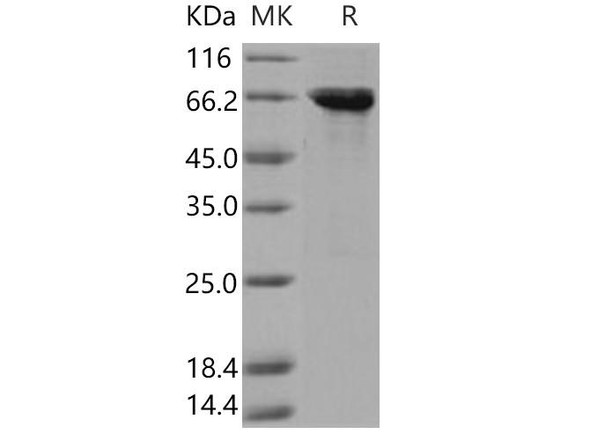
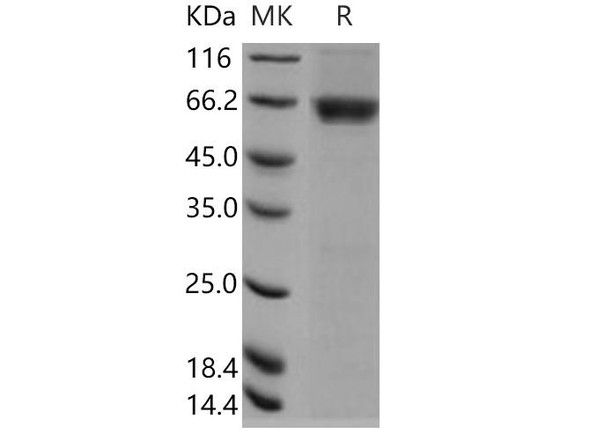
Tyrosine-protein kinase Blk, also known as B lymphocyte kinase, p55-Blk and BLK, is a member of the protein kinase superfamily, Tyr protein kinase family and SRC subfamily. BLK / p55-Blk is expressed in lymphatic organs, pancreatic islets, Leydig cells, striate ducts of salivary glands and hair follicles. BLK / p55-Blk is a src-family protein tyrosine kinase specifically expressed in B-lineage cells of mice. The early onset of Blk expression during B-cell development in the bone marrow and the high expression levels of Blk in mature B cells suggest a possible important role of Blk in B-cell physiology. It is a modulator of beta-cells function, acting through the up-regulation of PDX1 and NKX6-1 and consequent stimulation of insulin secretion in response to glucose. Defects in BLK are a cause of maturity-onset diabetes of the young type 11 which is a form of diabetes that is characterized by an autosomal dominant mode of inheritance, onset in childhood or early adulthood (usually before 25 years of age), a primary defect in insulin secretion and frequent insulin-independence at the beginning of the disease.
Product Name:
Human BLK Recombinant Protein (RPES1476)
Product Code:
RPES1476
Size:
50 µg
Species:
Human
Expressed Host:
Baculovirus-Insect Cells
Synonyms:
Tyrosine-Protein Kinase Blk, B Lymphocyte Kinase, p55-Blk, BLK,MODY11
Accession:
NP_001706.2
Sequence:
Met 1-Pro 505
Fusion tag:
N-GST
Activity:
The specific activity was determined to be 17.4 nmol/min/mg using Poly(Glu,Tyr)4:1 peptide as substrate.
Endotoxin:
<1.0 EU per µg of the protein as determined by the LAL method.
Protein Construction:
A DNA sequence encoding the human BLK (NP_001706.2) (Met 1-Pro 505) was fused with the GST tag at the N-terminus.