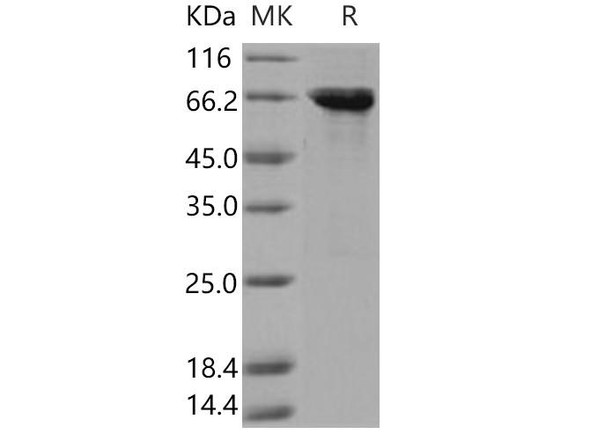
Death-associated protein kinase 3, also known as DAP kinase 3, ZIP-kinase, DAPK3 and ZIPK, is a nucleus and cytoplasm protein which belongs to the protein kinase superfamily, CAMK Ser/Thr protein kinase family and DAP kinase subfamily. DAPK3 / ZIPK contains one protein kinase domain. It is a serine/threonine kinase which acts as a positive regulator of apoptosis. It phosphorylates histone H3 on 'Thr-11' at centromeres during mitosis. DAPK3 / ZIPK is a homodimer or forms heterodimers with ATF4. Both interactions require an intact leucine zipper domain and oligomerization is required for full enzymatic activity. It also binds to DAXX and PAWR, possibly in a ternary complex which plays a role in caspase activation. DAPK3 / ZIPK regulates myosin light chain phosphatase through phosphorylation of MYPT1 thereby regulating the assembly of the actin cytoskeleton, cell migration, invasiveness of tumor cells, smooth muscle contraction and neurite outgrowth. It is involved in the formation of promyelocytic leukemia protein nuclear body (PML-NB), one of many subnuclear domains in the eukaryotic cell nucleus, and which is involved in oncogenesis and viral infection.
Product Name:
Human DAPK3/ZIPK Recombinant Protein (RPES1534)
Product Code:
RPES1534
Size:
50 µg
Species:
Human
Expressed Host:
Baculovirus-Insect Cells
Synonyms:
DLK,ZIP,ZIPK
Accession:
NP_001339.1
Sequence:
Met 1-Arg 454
Fusion tag:
N-GST
Activity:
The specific activity was determined to be 5 nmol/min/mg using MBP as substrate.
Endotoxin:
<1.0 EU per µg as determined by the LAL method.
Protein Construction:
A DNA sequence encoding the full length of human DAPK3 (NP_001339.1) (Met 1-Arg 454) was fused with the GST tag at the N-terminus.