CD137 (also known as 4-1BB) is a surface co-stimulatory glycoprotein originally described as present on activated T lymphocytes, which belongs to the tumor necrosis factor (TNF) receptor superfamily. It is expressed mainly on activated CD4+ and CD8+ T cells, and binds to a high-affinity ligand (4-1BBL) expressed on several antigen-presenting cells such as macrophages and activated B cells. Upon ligand binding, 4-1BB is associated with the tumor necrosis factor receptor–associated factors (TRAFs), the adaptor protein which mediates downstream signaling events including the activation of NF-kappaB and cytokine production. 4-1BB signaling either by binding to 4-1BBL or by antibody ligation delivers signals for T-cell activation and growth, as well as monocyte proliferation and B-cell survival, and plays an important role in the amplification of T cell-mediated immune responses. In addition, CD137 and CD137L are expressed in different human primary tumor tissues, suggesting that they may influence the progression of tumors. Crosslinking of CD137 on activated T cells has shown promise in enhancing anti-tumor immune responses in murine models, and agonistic anti-CD137 antibodies are currently being tested in phase I clinical trials.Immune CheckpointImmune Checkpoint Detection: Antibodies Immune Checkpoint Detection: ELISA AntibodiesImmune Checkpoint ProteinsImmune Checkpoint Targets Co-stimulatory Immune Checkpoint Targets Immunotherapy Cancer Immunotherapy Targeted Therapy
Measured by its binding ability in a functional ELISA. Immobilized mouse His-TNFSF9 at 10 µg/ml (100 ?l/well) can bind mouse TNFRSF9-Fc, The EC50 of mouse TNFRSF9-Fc is 12.0-29.0 ng/ml.
Endotoxin:
<1.0 EU per µg of the protein as determined by the LAL method.
Protein Construction:
A DNA sequence encoding the mouse TNFRSF9 (NP_001070976.1) (Met 1-Leu 211) was fused with the Fc region of human IgG1 at the C-terminus.
Purity:
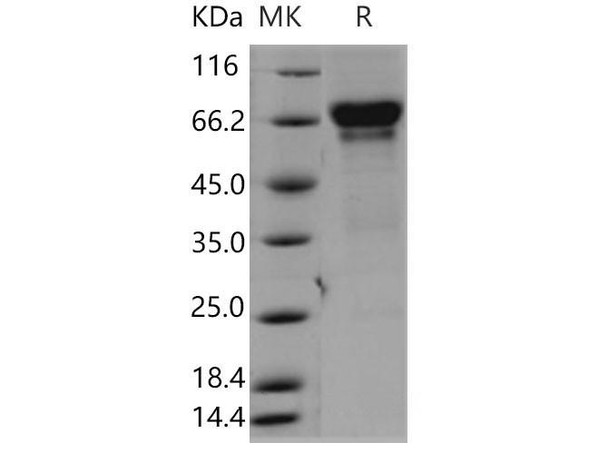
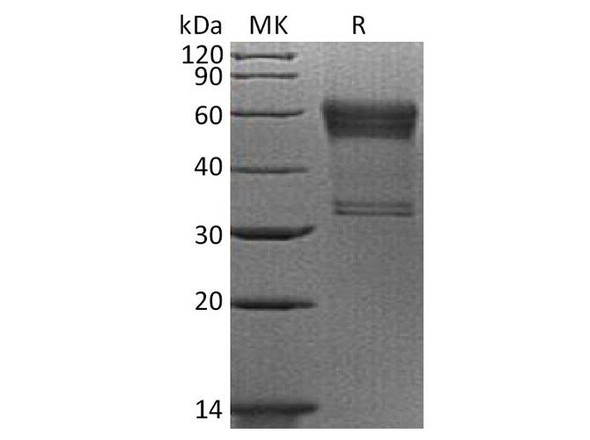
> 90 % as determined by SDS-PAGE
Mol Mass:
47 kDa
Formulation:
Lyophilized from sterile PBS, pH 7.4
Shipping:
This product is provided as lyophilized powder which is shipped with ice packs.
Stability and Storage:
Lyophilized proteins are stable for up to 12 months when stored at -20 to -80°C. Reconstituted protein solution can be stored at 4-8°C for 2-7 days. Aliquots of reconstituted samples are stable at < -20°C for 3 months.