Platelet endothelial cell adhesion molecule (PECAM-1, CD31) is a type I transmembrane glycoprotein adhesion molecule in the immunoglobulin superfamily. PECAM-1 is concentrated at cell junctions and is required for transendothelial migration (TEM). The extracellular domain (ECD) of PECAM-1 has ten potential N-linked glycosylation sites and six C2-type Ig-like domains, the first of which is critical for adhesion and extravasation. The cytoplasmic domain contains immunoregulatory tyrosine-based inhibitory and switch motifs (ITIM, ITSM) that mediate both inhibition and activation via phosphotyrosine-mediated engagement of SH2-containing signaling molecules. Expression is restricted to cells involved in circulation, especially endothelial cells, platelets, monocytes, neutrophils and lymphocyte subsets. PECAM-1 participates with other adhesion molecules in some functions, but is the critical molecule for TEM. Homotypic PECAM-1 adhesion in trans, combined with cycling of PECAM-1 to and from surface-connected endothelial cell vesicles, leads leukocytes across endothelial tight junctions.
Recombinant Mouse PECAM-1 is produced by our Mammalian expression system and the target gene encoding Glu18-Lys590 is expressed with a 6His tag at the C-terminus.
Purity:
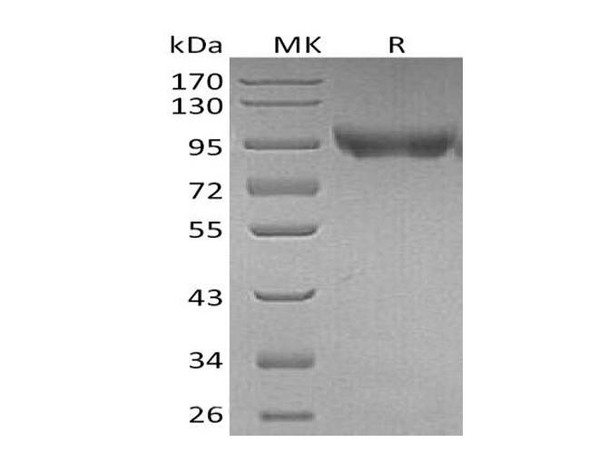
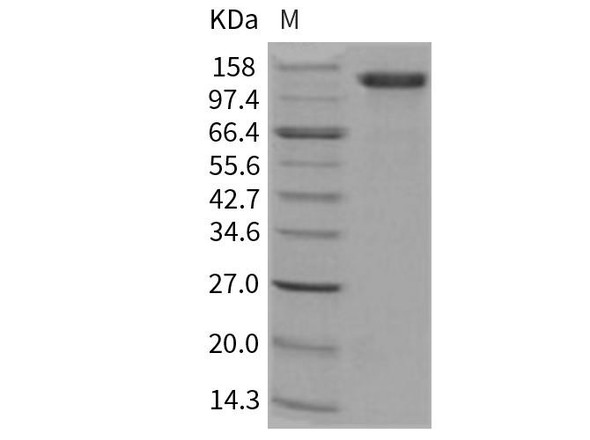
> 95% as determined by reducing SDS-PAGE.
Mol Mass:
63.4 kDa
AP Mol Mass:
90-95 kDa
Formulation:
Lyophilized from a 0.2 µm filtered solution of PBS, pH7.4.
Shipping:
This product is provided as lyophilized powder which is shipped with ice packs.
Stability and Storage:
Lyophilized proteins are stable for up to 12 months when stored at -20 to -80°C. Reconstituted protein solution can be stored at 4-8°C for 2-7 days. Aliquots of reconstituted samples are stable at < -20°C for 3 months.