Description
Total RNA extraction reagent
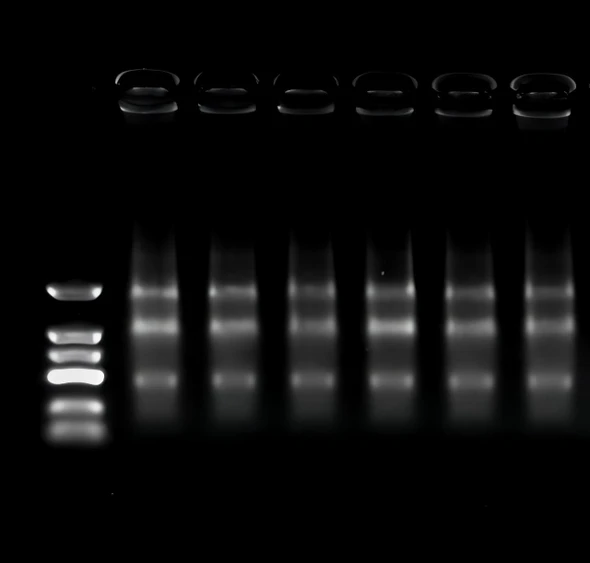
GenieZol Reagent is a monophasic guanidinium/phenol reagent for single-step isolation of high-quality total RNA from cultured cells, animal tissues and plant tissues. It lyses samples while inhibiting RNases to preserve RNA integrity, enabling high-yield, high-quality recovery.
The solution of phenol and guanidine isothiocyanate is supplemented with optimised components for more effective sample disruption and RNase inhibition. After lysis and chloroform extraction, the sample separates into an upper aqueous phase containing RNA, an interphase and a lower red organic phase. Total RNA is then recovered in high yield and purity by isopropanol precipitation and an ethanol wash. The RNA is ready for RT-PCR, RT-qPCR, Northern blot, dot blot, in vitro translation, high-throughput sequencing and other molecular biology applications. For research use only.
Key Features
| Classic organic extraction | Proven phenol/guanidine chemistry with chloroform phase separation and isopropanol precipitation. | |
| Strong lysis | Optimised components give effective sample disruption and RNase inhibition. | |
| Wide sample range | Extracts RNA from cultured cells, animal tissues and plant tissues. | |
| Downstream ready | Total RNA suits RT-qPCR, Northern blot, in vitro translation and sequencing. |
Specifications
| Chemistry | Monophasic phenol and guanidine isothiocyanate solution |
| Sample types | Cultured cells, animal tissues, plant tissues |
| Sample capacity (per 1 ml) | Adherent cells 1 × 10⁵ - 1 × 10⁷; suspension cells 5 × 10⁶ - 1 × 10⁷; tissue 50–100 mg |
| Output | Total RNA |
| Applications | RT-PCR, RT-qPCR, Northern blot, dot blot, in vitro translation, high-throughput sequencing |
| Shelf life | 2 years |
Components
| Components | 100 ml (100 rxns) | 200 ml (200 rxns) |
| GenieZol Reagent | 100 ml | 200 ml |
Storage
Store at 2 ~ 8°C.
Materials required
- Chloroform, isopropanol, 75% ethanol (made with RNase-free ddH2O), RNase-free ddH2O, RNase-free centrifuge tubes and RNase-free glycogen (optional).
Maximum sample amount per 1 ml GenieZol Reagent
| Sample | Amount |
| Adherent cells | 1 × 10⁵ - 1 × 10⁷ cells (3.5 cm dish, about 10 cm2) |
| Suspension cells | 5 × 10⁶ - 1 × 10⁷ cells |
| Animal tissue | 50–100 mg |
| Plant tissue | 50–100 mg |
Too much sample causes incomplete lysis and lower purity. The sample volume should not exceed 10% of the reagent volume.
- Lyse the sample
- Adherent cells: discard the medium and rinse once with 1× PBS. Add 1 ml reagent per well of a 6-well plate or per 3.5 cm dish, cover the cell layer and detach cells by repeated pipetting (use a cell scraper for firmly attached cells, or trypsinise first and treat as suspension cells). Transfer to a 1.5 ml tube, pipette until fully lysed and incubate at room temperature for 5 min.
- Suspension cells: pellet at 2,300 rpm (500 × g), 4°C for 2–5 min and discard the supernatant. Add 1 ml reagent per 5 × 10⁶ - 1 × 10⁷ cells, vortex or pipette until fully lysed and incubate at room temperature for 5 min. Vortex frozen cells immediately after adding the reagent.
- Tissue (liquid nitrogen grinding): grind frozen tissue to a fine powder in a mortar precooled with liquid nitrogen (recommended for plants). Add 1 ml reagent per 50–100 mg tissue, vortex until no clumps remain and incubate at room temperature for 5 min.
- Tissue (homogenisation): add 1 ml reagent per 50–100 mg fresh tissue and homogenise until no visible pieces remain. Incubate at room temperature for 5 min.
- Optional, for lipid-rich tissue: centrifuge at 11,200 rpm (12,000 × g), 4°C for 5 min, remove the fat layer and transfer the clear supernatant to a new RNase-free tube.
- Extract with chloroform
- Add 1/5 volume chloroform, shake vigorously for 15 sec to form a homogeneous emulsion and incubate at room temperature for 5 min.
- For gDNA-rich samples, add 5 μl glacial acetic acid per 1 ml reagent after lysis and mix before adding chloroform.
- Centrifuge at 11,200 rpm (12,000 × g), 4°C for 15 min. Centrifuge cold to limit genomic DNA contamination.
- Transfer the aqueous phase
- Transfer the upper aqueous phase (about 500 μl) to a new RNase-free tube without disturbing the interphase. The aqueous phase is about 60% of the reagent volume (about 600 μl per 1 ml).
- Optional, for small inputs (<106 cells or <10 mg tissue): add 5–10 μg RNase-free glycogen.
- Precipitate the RNA
- Add an equal volume of isopropanol, mix by inversion and incubate at room temperature for 10 min.
- Centrifuge at 11,200 rpm (12,000 × g), 4°C for 10 min. A white pellet is usually visible (it may be barely visible for low-RNA samples). Discard the supernatant as completely as possible; the tube can be inverted on clean blotting paper for 1 min.
- Wash
- Add 1 ml 75% ethanol, flick to loosen the pellet and invert a few times.
- Centrifuge at 11,200 rpm (12,000 × g), 4°C for 5 min. Remove the supernatant completely: discard most of it, spin briefly and pipette off the remainder without disturbing the pellet.
- Dissolve the RNA
- Air-dry the pellet for 2–5 min at room temperature. Do not over-dry.
- Dissolve in 20–100 μl RNase-free ddH2O by vortexing or pipetting. Incubating at 55 ~ 60°C for 10–15 min aids dissolution.
- Aliquot and store at -85 ~ -65°C long term or -30 ~ -15°C short term.
Q1: Why is my RNA yield low?
- Incomplete lysis or homogenisation: reduce the sample input, cut tissue into small pieces and grind or homogenise thoroughly. Incomplete dissolution of the RNA pellet: incubate at 55 ~ 60°C for 10–15 min to aid dissolution.
Q2: What causes RNA degradation and how can I prevent it?
- RNase contamination: use RNase-free reagents and labware (bake heat-resistant labware at 150°C for 4–6 h; soak other equipment overnight in 0.1% DEPC-treated ddH2O), wear a mask and gloves and work in a clean area. Improper sample storage: flash-freeze dissected tissue in liquid nitrogen and store in liquid nitrogen or at -85 ~ -65°C (do not freeze slowly at -85 ~ -65°C); alternatively, use an RNA tissue stabiliser reagent; add the reagent immediately after sample collection. High endogenous RNase: reduce input, grind under liquid nitrogen and use precooled reagent (2 ~ 8°C). Improper product storage: store aliquots at -85 ~ -65°C, and run gels at higher voltage for less time (220 V, 10 min) with ice-cold buffer.
Q3: How can I reduce genomic DNA contamination?
- Centrifuge at 2 ~ 8°C after adding chloroform; transfer only the aqueous phase, leaving some behind rather than disturbing the interphase or lower phase; and for gDNA-rich samples add 5 μl glacial acetic acid per 1 ml reagent after lysis.
Q4: How can I improve RNA purity?
- Residual impurities and salts reduce purity. Increase the number of 75% ethanol washes and precipitations, and remove the supernatant as completely as possible after the isopropanol and ethanol centrifugations.
Q5: What should I do if no pellet is visible after isopropanol precipitation?
- For low RNA content or small inputs, add 5–10 μg RNase-free glycogen as a co-precipitant and leave the isopropanol mixture at 2 ~ 8°C or -30 ~ -15°C for 10–30 min before centrifuging. Samples rich in metabolites may smear RNA along the tube wall instead of forming a compact pellet; remove the supernatant slowly from the liquid surface without disturbing the RNA.