Description
Human USP5 Recombinant Protein (N-His)
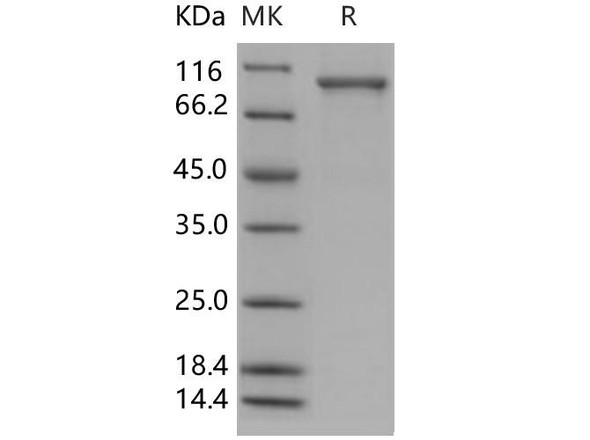
Human USP5 Recombinant Protein (N-His) is a recombinant protein expressed in E. coli, spanning Lys163-Lys291, with an N-terminal His tag. Predicted molecular weight: 16.87 kDa. Purity: >90% as determined by SDS-PAGE. Supplied lyophilized from a solution in PBS pH 7.4, 1 mM EDTA, 4% Trehalose, 1% Mannitol. Applications: ELISA, immunogen, SDS-PAGE and Western blot. Ubiquitin carboxyl-terminal hydrolase 5 is a ~95 kDa protein. Deubiquitinating enzyme that participates in a wide range of cellular processes by specifically cleaving isopeptide bonds between ubiquitin and substrate proteins or ubiquitin itself. For research use only.
Affects thereby important cellular signaling pathways such as NF-kappa-B, Wnt/beta-catenin, and cytokine production by regulating ubiquitin-dependent protein degradation. Participates in the activation of the Wnt signaling pathway by promoting FOXM1 deubiquitination and stabilization that induces the recruitment of beta-catenin to Wnt target gene promoter. Regulates the assembly and disassembly of heat-induced stress granules by mediating the hydrolysis of unanchored ubiquitin chains. Promotes lipopolysaccharide-induced apoptosis and inflammatory response by stabilizing the TXNIP protein.
| Product Name: | Human USP5 Recombinant Protein (N-His) |
| SKU: | GXRP10768 |
| Size: | 50 µg, 100 µg, 1 mg |
| Species: | Human |
| Synonyms: | Deubiquitinating enzyme 5, EC:3.4.19.12, ISOT, Isopeptidase T, USP5, Ubiquitin carboxyl-terminal hydrolase 5, Ubiquitin thioesterase 5, Ubiquitin-specific-processing protease 5 |
| Tag: | N-His |
| Expression Host: | E. coli |
| Protein Length: | Lys163-Lys291 |
| Calculated MW: | 16.87 kDa |
| UniProt: | P45974 |
| Applications: | ELISA, Immunogen, SDS-PAGE, WB |
| Purity: | >90% as determined by SDS-PAGE. |
| Form: | Lyophilized |
| Formulation: | Lyophilized from a solution in PBS pH 7.4, 1 mM EDTA, 4% Trehalose, 1% Mannitol. |
| Reconstitution: | Reconstitute in sterile water for a stock solution. A copy of datasheet will be provided with the products, please refer to it for details. |
| Storage: | Store at 2 to 8°C for frequent use. Store at -20 to -80°C for twelve months from the date of receipt. |
| Shipping: | In general, proteins are provided as lyophilized powder/frozen liquid. They are shipped out with dry ice/blue ice unless customers require otherwise. |
| Note: | For research use only |