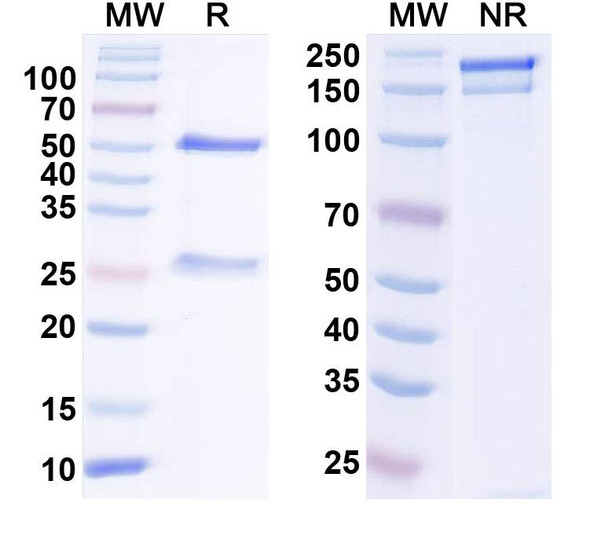
The Recombinant HMGB1 Monoclonal Antibody is a recombinant rabbit monoclonal antibody (clone C123222) against HMGB1. High mobility group (HMG) proteins 1 and 2 are ubiquitous non-histone components of chromatin. Evidence suggests that the binding of HMG proteins to DNA induces alterations in the DNA architecture including DNA bending and unwinding of the helix.HMG proteins synergize with Oct-2, members of the NF B family, ATF-2 and c-Jun to activate transcription. Other studies indicate that phosphorylation of HMG protein is required to stimulate the transcriptional activity of the protein. Human HMG-1 and HMG-2 both contain two DNA-binding domains, termed HMG boxes.HMG proteins bind single-stranded DNA but induce conformational changes in double-stranded DNA alone. Produced by recombinant technology in Rabbit hosts and purified by affinity chromatography, this Rabbit IgG antibody is reactive against Human, Mouse and Rat samples.
This antibody is suitable for WB and IHC-P applications. It has been validated by WB analysis of K562, Rat Rat Brain, C6, 3T3, Hela and IHC analysis of Human tonsil. The target is localized to the Nucleus. Chromosome. Cytoplasm. Secreted. Cell membrane. Endosome. Endoplasmic reticulum-Golgi intermediate compartment. In basal state predominantly nuclear. Shuttles between the cytoplasm and the nucleus (PubMed:12231511, PubMed:17114460). Translocates from the nucleus to the cytoplasm upon autophagy stimulation (PubMed:20819940). Release from macrophages in the extracellular milieu requires the activation of NLRC4 or NLRP3 inflammasomes (By similarity). Passively released to the extracellular milieu from necrotic cells by diffusion, involving the fully reduced HGMB1 which subsequently gets oxidized (PubMed:19811284). Also released from apoptic cells (PubMed:16855214, PubMed:18631454). Active secretion from a variety of immune and non-immune cells such as macrophages, monocytes, neutrophils, dendritic cells and natural killer cells in response to various stimuli such as LPS and cytokines involves a nonconventional secretory process via secretory lysosomes (PubMed:12231511, PubMed:14532127, PubMed:15944249). Secreted by plasma cells in response to LPS (By similarity). Found on the surface of activated platelets (PubMed:11154118).
Product Name:
Recombinant HMGB1 Monoclonal Antibody
SKU:
AGEL8527
Size:
50 µL, 100 µL
Antibody Type:
Recombinant Monoclonal Antibody
Synonyms:
Amphoterin, Chromosomal protein, DKFZp686A04236, High mobility group 1, High mobility group box 1, High mobility group protein 1, High mobility group protein B1, high-mobility group (nonhistone chromosomal) protein 1, HMG-1, HMG1, HMG3, HMGB 1, HMGB1, nonhistone, NONHISTONE CHROMOSOMAL PROTEIN HMG1, SBP 1, Sulfoglucuronyl carbohydrate binding protein