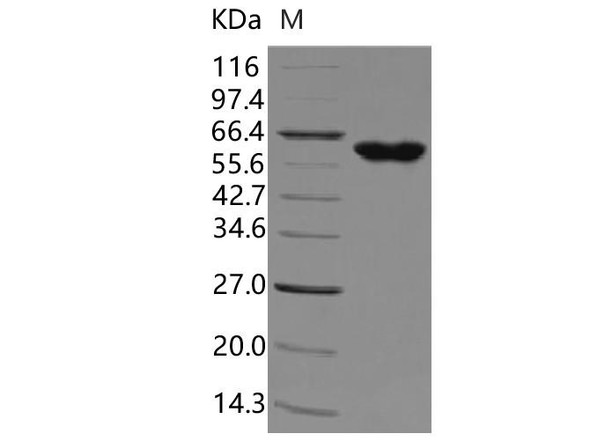
Tissue plasminogen activator (abbreviated tPA or PLAT), is traditionally viewed as a simple serine protease whose main function is to convert plasminogen into biologically active plasmin. As a protease, tPA plays a crucial role in regulating blood fibrinolysis, in maintaining the homeostasis of extracellular matrix and in modulating the post-translational activation of growth factors. tPA is synthesized and secreted as a single chain polypeptide precursor which is cleaved in turn by plasmin. Proteolytic cleavage at the C-terminal side of Arg275 generates the enzyme composed of two subunits, designated as α and β chains which are held together by a single disulfide bond. Unlike the other members of the chymotrypsin family, tPA has one particular distinction in that the catalytic efficiency of the single-chain enzyme is only slightly lower than that of the proteolytically cleaved form and is therefore not a true zymogen. tPA is found not only in the blood, where its primary function is as a thrombolytic enzyme, but also in the central nervous system (CNS). It participats in a number of physiological and pathological events in the CNS, as well as the role of neuroserpin as the natural regulator of tPA's activity in these processes. Increased or decreased activity of tPA leads to hyperfibrinolysis or hypofibrinolysis, respectively. In addition, as a cytokine, tPA plays a pivotal role in the pathogenesis of renal interstitial fibrosis through diverse mechanisms. Thus, as a fibrogenic cytokine, it promotes the progression of kidney diseases.
Product Name:
Mouse tPA/PLAT Recombinant Protein (RPES3949)
Product Code:
RPES3949
Size:
20 µg
Species:
Mouse
Expressed Host:
HEK293 Cells
Synonyms:
AU020998,AW212668,D8Ertd2e,tPA
Accession:
P11214
Sequence:
Ile309-Gln559
Fusion tag:
N-Fc
Endotoxin:
<1.0 EU per µg of the protein as determined by the LAL method.
Protein Construction:
A DNA sequence encoding the mouse PLAT (P11214) (Ile309-Gln559) was was expressed with the fused Fc region of human IgG1 at the N-terminus.
Purity:
> 80 % as determined by SDS-PAGE
Mol Mass:
56.4 kDa
AP Mol Mass:
57 kDa
Formulation:
Lyophilized from sterile PBS, pH 7.4
Shipping:
This product is provided as lyophilized powder which is shipped with ice packs.
Stability and Storage:
Lyophilized proteins are stable for up to 12 months when stored at -20 to -80°C. Reconstituted protein solution can be stored at 4-8°C for 2-7 days. Aliquots of reconstituted samples are stable at < -20°C for 3 months.