The SOD3 Antibody (CAB6984) is a high-quality antibody developed for reliable detection and analysis of target proteins. This antibody, produced in rabbits, exhibits high specificity and sensitivity towards human samples and has been validated for use in Western blot applications.SOD3 is an extracellular antioxidant enzyme that helps to protect cells from oxidative stress by converting superoxide radicals into oxygen and hydrogen peroxide. Its function is particularly important in tissues exposed to high levels of oxidative stress, such as the lungs and blood vessels.
This antibody is validated for use in WB, IHC-P, IF/ICC, ELISA applications and has demonstrated reactivity against Human, Mouse, Rat samples.
Product Name:
SOD3 Antibody
SKU:
CAB6984
Size:
20μL, 100μL
Reactivity:
Human, Mouse, Rat
Conjugate:
Unconjugated
Immunogen:
Synthetic peptide. This information is considered to be commercially sensitive.
Recommended starting concentration is 1 μg/mL. Please optimize the concentration based on your specific assay requirements.
Synonyms:
EC-SOD, SOD3
Positive Sample:
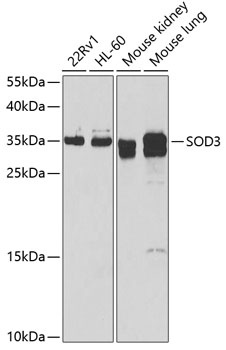
22Rv1, HL-60, Mouse kidney, Mouse lung
Cellular Localization:
Secreted, Extracellular Space.
Calculated MW:
26kDa
Observed MW:
35kDa
This gene encodes a member of the superoxide dismutase (SOD) protein family. SODs are antioxidant enzymes that catalyze the conversion of superoxide radicals into hydrogen peroxide and oxygen, which may protect the brain, lungs, and other tissues from oxidative stress. Proteolytic processing of the encoded protein results in the formation of two distinct homotetramers that differ in their ability to interact with the extracellular matrix (ECM). Homotetramers consisting of the intact protein, or type C subunit, exhibit high affinity for heparin and are anchored to the ECM. Homotetramers consisting of a proteolytically cleaved form of the protein, or type A subunit, exhibit low affinity for heparin and do not interact with the ECM. A mutation in this gene may be associated with increased heart disease risk.
Purification Method
Affinity purification
Gene ID
6649
RRID
AB_2767540
Buffer Information
Store at -20℃. Avoid freeze / thaw cycles. Buffer: PBS containing 50% glycerol, preserved with proclin300 or sodium azide, pH 7.3.
Western blot analysis of various lysates using SOD3 Rabbit pAb (CAB6984) at 1:1000 dilution. Secondary antibody: HRP-conjugated Goat anti-Rabbit IgG (H+L) (CABS014) at 1:10000 dilution. Lysates/proteins: 25μg per lane. Blocking buffer: 3% nonfat dry milk in TBST.
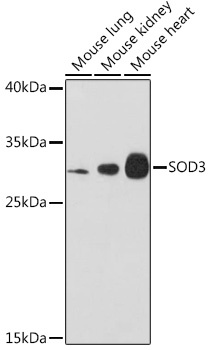
Western blot analysis of various lysates using SOD3 Rabbit pAb (CAB6984) at 1:3000 dilution. Secondary antibody: HRP-conjugated Goat anti-Rabbit IgG (H+L) (CABS014) at 1:10000 dilution. Lysates/proteins: 25μg per lane. Blocking buffer: 3% nonfat dry milk in TBST. Detection: ECL Basic Kit (AbGn00020). Exposure time: 90s.
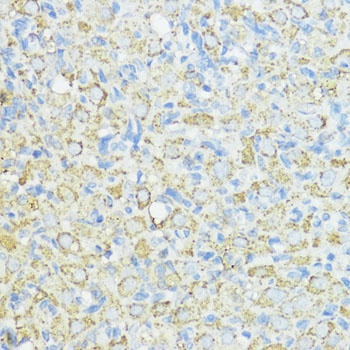
Immunohistochemistry analysis of paraffin-embedded Rat ovary using SOD3 Rabbit pAb (CAB6984) at dilution of 1:100 (40x lens). Microwave antigen retrieval performed with 0.01M PBS Buffer (pH 7.2) prior to IHC staining.
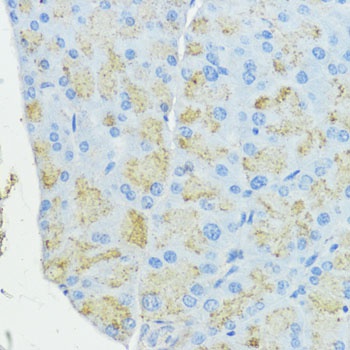
Immunohistochemistry analysis of paraffin-embedded Mouse pancreas using SOD3 Rabbit pAb (CAB6984) at dilution of 1:100 (40x lens). Microwave antigen retrieval performed with 0.01M PBS Buffer (pH 7.2) prior to IHC staining.