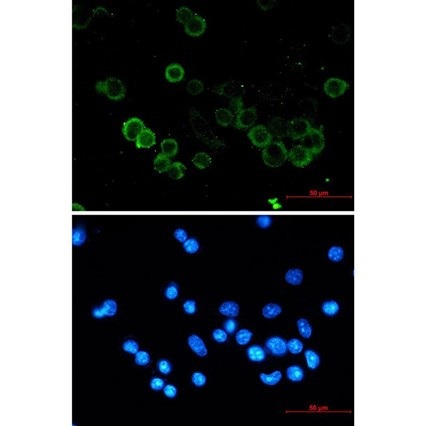
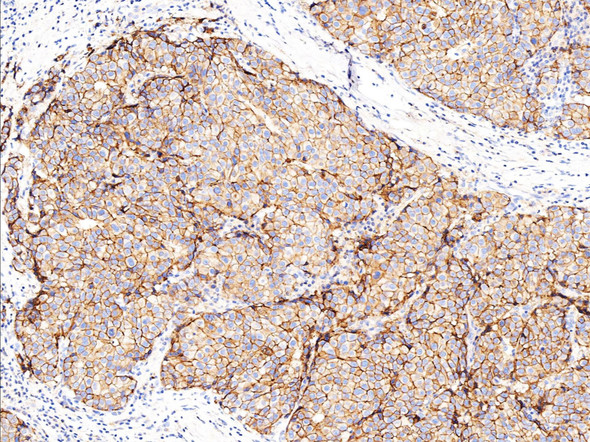
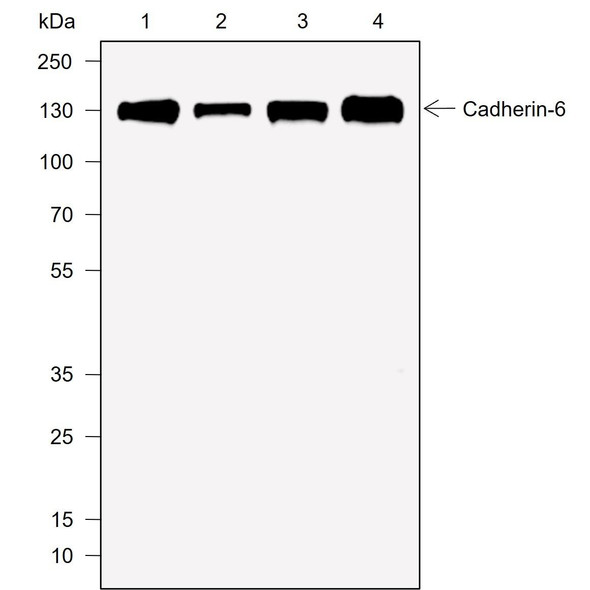
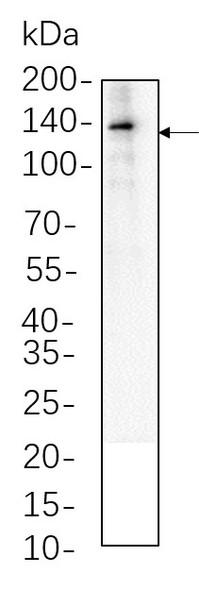
The Recombinant E Cadherin Monoclonal Antibody is a recombinant rabbit monoclonal antibody (clone C313210) against E Cadherin. This gene is a classical cadherin from the cadherin superfamily. The encoded protein is a calcium dependent cell-cell adhesion glycoprotein comprised of five extracellular cadherin repeats, a transmembrane region and a highly conserved cytoplasmic tail. Mutations in this gene are correlated with gastric, breast, colorectal, thyroid and ovarian cancer. Produced by recombinant technology in Rabbit hosts and purified by affinity chromatography, this Rabbit IgG antibody is reactive against Human samples.
This antibody is suitable for WB, IHC-P and IF applications. It has been validated by WB analysis of PC3 and IF analysis of Human Cholangiocarcinoma, MCF-7. The target is localized to the Cell junction. Cell membrane. Endosome. Golgi apparatus>trans-Golgi network. Colocalizes with DLGAP5 at sites of cell-cell contact in intestinal epithelial cells. Anchored to actin microfilaments through association with alpha-, beta- and gamma-catenin. sequential proteolysis induced by apoptosis or calcium influx, results in translocation from sites of cell-cell contact to the cytoplasm. Colocalizes with RAB11A endosomes during its transport from the Golgi apparatus to the plasma membrane.