Description
Total Protein Extraction Kit
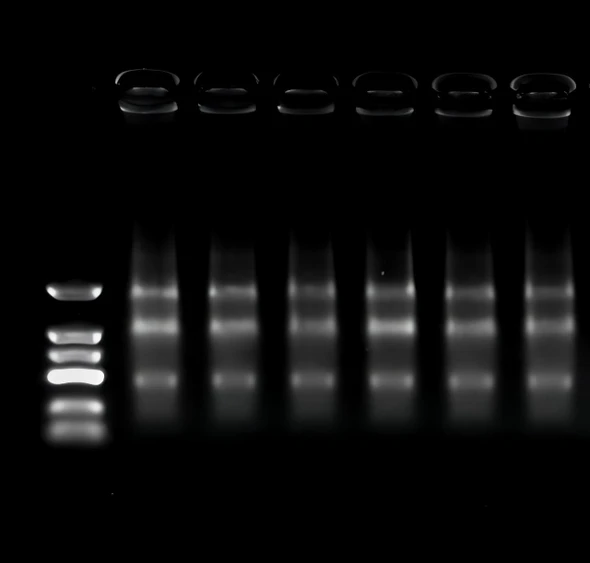
The Total Protein Extraction Kit (MAES0255) from Assay Genie extracts total protein from animal tissues and cultured cells. Lysis reagents containing protease and phosphatase inhibitors are used to limit enzymatic hydrolysis and dephosphorylation of proteins after membrane disruption. Extracts are intended for downstream applications such as Western blot and co-immunoprecipitation. For research use only.
Total protein extraction converts animal tissue or cultured cells into a soluble protein lysate for downstream analysis. When the cell membrane system is disrupted, proteins become accessible but are also exposed to endogenous enzymes that can hydrolyze them or remove phosphate groups. The extraction chemistry must therefore protect the proteome at the moment it is released. The Total Protein Extraction Kit (MAES0255) is designed to produce a total protein extract from both animal tissues and cells using one workflow.
Researchers extract total protein when they need a representative protein sample from a tissue or cell population. According to the manual, the obtained protein can be used for subsequent studies such as Western blot and co-immunoprecipitation. The lysis working solution combines a lysis buffer with a phosphatase inhibitor and a protease inhibitor. Phenylmethylsulfonyl fluoride (PMSF) is added separately at the homogenization or lysis step. Both inhibitor classes are needed because membrane disruption releases enzymes that would otherwise hydrolyze or dephosphorylate proteins.
In practice, the lysis working solution is prepared fresh by mixing 1000 µL of lysis buffer, 10 µL of phosphatase inhibitor, and 10 µL of protease inhibitor. For tissue, 0.1 g of fresh tissue is minced and placed in a pre-cooled 5 mL glass homogenizer with 1 mL of lysis working solution and 10 µL of PMSF, then ground for about 30 strokes in an ice bath. The homogenate is held on ice for 15 min and centrifuged at 12000 × g and 4°C for 15 min. For cells, 5 × 10^6 cells are lysed in 0.5 mL of lysis working solution with 10 µL of PMSF, held on ice for 15 min, and vortexed for 10 s every 5 min. The supernatant after centrifugation is the total protein extract.
Sample handling is critical to extract quality. Tissue should be washed with cold PBS (0.01 M, pH 7.4) at 2–8°C to remove blood and then blotted dry with absorbent paper. Cell pellets are collected by centrifugation at 1000 × g and 4°C for 10 min and washed once with cold PBS. The manual states that the whole extraction process should be performed in an ice bath or at low temperature. Extracts should be kept on ice during detection and stored at −70°C, avoiding repeated freeze-thaw cycles.
| Product Name: | Total Protein Extraction Kit |
| SKU: | MAES0255 |
| Sample Type: | Animal tissues, cells |
| Intended Use: | Total protein extraction for Western blot and co-immunoprecipitation |
| Research Area: | Amino acids and proteins |
| Detection Principle: | Lysis with protease and phosphatase inhibitors; no detection step |
| Sample Type: | Animal tissue, cells |
| Research Area: | Amino acids and proteins |
| Shelf Life: | 12 months |
- Total protein extraction from animal tissues and cultured cells
- Lysis buffer supplemented with protease and phosphatase inhibitors
- Phenylmethylsulfonyl fluoride (PMSF) included as a separate reagent
- Extracts suitable for Western blot and co-immunoprecipitation
- Components stored at 2-8°C or -20°C for 12 months, protected from light
Cell and tissue samples are treated with lysates containing protease inhibitors and phosphatase inhibitors. This prevents enzymes in the sample from being released and hydrolyzing or dephosphorylating proteins after disruption of the membrane system. The kit does not include a quantification or detection step.
- Preparation of tissue lysates for Western blot analysis
- Preparation of cell lysates for Western blot analysis
- Preparation of extracts for co-immunoprecipitation studies
- Protein extraction for downstream phosphoprotein studies from animal tissues and cells
| Component | Storage |
| Lysis Buffer | 2-8°C, 12 months |
| Phosphatase Inhibitor | -20°C, 12 months, protect from light |
| Protease Inhibitor | -20°C, 12 months, protect from light |
| Phenylmethylsulfonyl Fluoride (PMSF) | -20°C, 12 months, protect from light |
- High-speed refrigerated centrifuge capable of 12000 × g
- 5 mL glass homogenizer, pre-cooled
- Pre-cooled 2 mL EP tubes
- Double distilled water
- PBS (0.01 M, pH 7.4), pre-cooled to 2-8°C
- Ice or ice bath
- Absorbent paper
- Scissors
- Cell scraper or EDTA solution (adherent cells)
- Pipettes and vortex mixer
Tissue
- Take 0.1 g of fresh tissue and wash with PBS (0.01 M, pH 7.4) at 2–8°C to remove blood. Blot the water with absorbent paper.
- Cut the tissue into pieces with scissors and place them into a pre-cooled 5 mL glass homogenizer.
- Add 1 mL of pre-cooled lysis working solution and 10 µL of pre-cooled phenylmethylsulfonyl fluoride.
- Grind the tissue up and down in an ice bath for about 30 times.
- Transfer the tissue homogenate to a pre-cooled 2 mL EP tube and place it in an ice bath for 15 min.
- Centrifuge at 12000 × g at 4°C for 15 min. The supernatant is the total protein extract. Place it on ice for detection.
- Store the prepared total protein solution at −70°C, avoiding repeated freeze-thaw.
Cells
- Suspension cells: transfer the cell suspension to a pre-cooled EP tube and centrifuge at 4°C at 1000 × g for 10 min. Remove the supernatant, wash once with PBS (0.01 M, pH 7.4) at 2–8°C, and centrifuge again at 4°C at 1000 × g for 10 min. Remove the supernatant and keep the pellet.
- Adherent cells: discard the culture solution and wash the cells twice with PBS (0.01 M, pH 7.4) at 2–8°C. Scrape the cells with a cell scraper, or treat with EDTA solution and blow the cells off with a pipette. Transfer the cell suspension to a pre-cooled EP tube, centrifuge at 4°C at 1000 × g for 10 min, remove the supernatant, wash once with PBS at 2–8°C, centrifuge again at 4°C at 1000 × g for 10 min, and remove the supernatant. Keep the pellet.
- Take 5 × 10^6 cells and add 0.5 mL of pre-cooled lysis working solution and 10 µL of pre-cooled phenylmethylsulfonyl fluoride.
- Place on ice for 15 min, vortexing and mixing every 5 min for 10 s each time.
- Centrifuge at 12000 × g at 4°C for 15 min. The supernatant is the total protein extract. Place it on ice for detection.
- Store the prepared total protein supernatant at −70°C to avoid repeated freeze-thaw.
Reagent preparation
- Pre-cool all reagents in ice water for at least 15 min until thawed to a liquid state before use.
- Prepare lysis working solution by mixing 1000 µL lysis buffer, 10 µL phosphatase inhibitor, and 10 µL protease inhibitor. Keep on ice, protected from light, and use within 20 min.
Total protein extraction from tissue
- Take 0.1 g fresh tissue and wash with PBS (0.01 M, pH 7.4) at 2-8°C to remove blood. Blot with absorbent paper.
- Cut tissue into pieces with scissors and place into a pre-cooled 5 mL glass homogenizer.
- Add 1 mL pre-cooled lysis working solution and 10 µL pre-cooled PMSF.
- Homogenize on ice by grinding up and down about 30 times.
- Transfer the homogenate to a pre-cooled 2 mL EP tube and place on ice for 15 min.
- Centrifuge at 12000 × g for 15 min at 4°C. Collect the supernatant as the total protein extract and keep on ice for detection.
- Store the total protein extract at -70°C and avoid repeated freeze-thaw cycles.
Cell collection and extraction
- Suspension cells: transfer to a pre-cooled EP tube, centrifuge at 1000 × g for 10 min at 4°C, remove supernatant, wash once with PBS (0.01 M, pH 7.4) at 2-8°C, and centrifuge again under the same conditions.
- Adherent cells: discard culture medium, wash twice with PBS (0.01 M, pH 7.4) at 2-8°C, detach cells by scraping or EDTA treatment, transfer to a pre-cooled EP tube, and wash as for suspension cells.
- Add 0.5 mL pre-cooled lysis working solution and 10 µL pre-cooled PMSF to 5 × 10^6 cells.
- Place on ice for 15 min, vortexing for 10 s every 5 min.
- Centrifuge at 12000 × g for 15 min at 4°C. Collect the supernatant as the total protein extract and keep on ice for detection.
- Store the total protein extract at -70°C and avoid repeated freeze-thaw cycles.
What sample types does the kit accept?
The kit is designed for animal tissues and cells. The manual gives starting amounts of 0.1 g of fresh tissue and 5 × 10^6 cells.
How should the lysis working solution and reagents be stored?
Lysis buffer is stored at 2–8°C for 12 months. Phosphatase inhibitor, protease inhibitor, and phenylmethylsulfonyl fluoride are stored at −20°C for 12 months, protected from light. The prepared lysis working solution should be used within 20 min, and reagents from different kits cannot be mixed.
How should the extracted total protein be stored?
The prepared total protein solution should be stored at −70°C, avoiding repeated freeze-thaw cycles. Keep the extract on ice during detection.
What instrument settings are used for extraction?
A high-speed freezing centrifuge is used at 12000 × g and 4°C for 15 min to collect the supernatant. Tissue is homogenized in a 5 mL glass homogenizer, and the whole extraction should be performed in an ice bath or at low temperature.
How long does the extraction take?
Tissue homogenates are held on ice for 15 min before centrifugation for 15 min. Cell lysates are held on ice for 15 min with mixing every 5 min, followed by centrifugation for 15 min. Reagents must be pre-cooled in ice water for at least 15 min before use.
Why are protease and phosphatase inhibitors included?
Membrane disruption releases enzymes from the sample that can hydrolyze or dephosphorylate proteins. The lysis working solution contains protease and phosphatase inhibitors, and PMSF is added at lysis to further limit this activity.
| Lysis Buffer: | 2-8°C, 12 months |
| Phosphatase Inhibitor: | -20°C, 12 months, protect from light |
| Protease Inhibitor: | -20°C, 12 months, protect from light |
| Phenylmethylsulfonyl Fluoride (PMSF): | -20°C, 12 months, protect from light |
| Prepared total protein extract: | -70°C, avoid repeated freeze-thaw |
| Valid Period: | 12 months |
Notes
- For research use only. Not for diagnostic or therapeutic use.
- Keep the extraction on ice or at low temperature throughout the procedure.
- Use the lysis working solution within 20 min of preparation and protect it from light.
- Do not mix reagents from different kits.
- Avoid repeated freeze-thaw cycles of the protein extract.
- Take samples before preparing the lysis working solution.