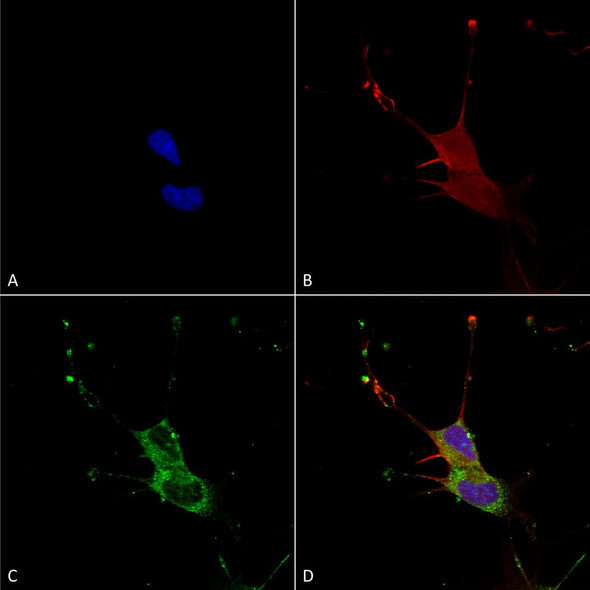
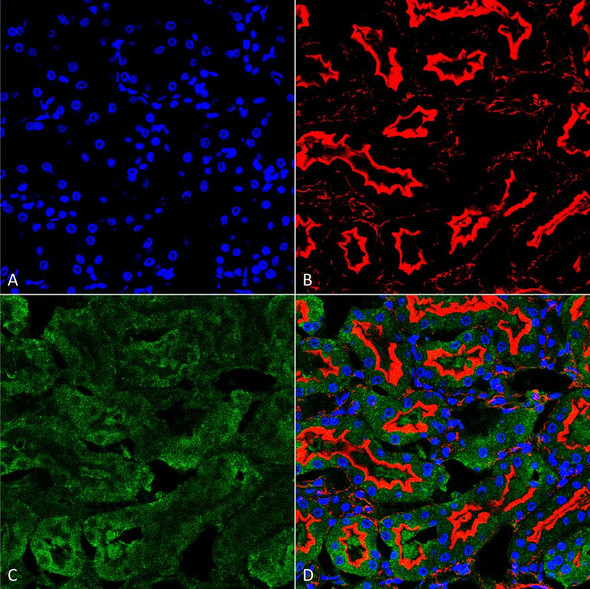
VGLUT1 Antibody [N28/9 (Formerly sold as S28-9)] is a mouse monoclonal antibody directed against VGLUT1, offered by Assay Genie for research applications. Reported applications include WB and IHC. Reported reactivity: Human, Mouse and Rat. Supplied as IgG1, purified by Protein G.
Vesicular glutamate transporter 1 (VGLUT1) plays a critical role in glutamatergic neurotransmission by packaging glutamate into synaptic vesicles for release at excitatory synapses. Expressed in a specific subset of glutamatergic neurons, VGLUT1 exhibits a unique chloride conductance that is inhibited by glutamate, highlighting its dual role in vesicle loading and ion homeostasis. Unlike high-affinity plasma membrane excitatory amino acid transporters (EAATs), VGLUT1 operates with a lower apparent affinity, with a Km of approximately 2 mM—comparable to native synaptic vesicle transport kinetics. Importantly, VGLUT1 demonstrates substrate specificity by selectively transporting glutamate, but not aspartate, distinguishing it from EAATs that recognize both. This specificity underscores VGLUT1’s essential function in maintaining synaptic fidelity and excitatory signaling precision. Emerging evidence links dysregulation of VGLUT1 expression and function to several neurodegenerative disorders, including Alzheimer’s disease, Parkinson’s disease, and amyotrophic lateral sclerosis (ALS). Altered glutamate homeostasis, driven by impaired vesicular transport, contributes to excitotoxicity—a key pathological mechanism in these conditions. As a result, VGLUT1 has become a focal point in neuroscience and neurodegenerative disease research, offering potential as both a biomarker and a therapeutic target. Understanding its molecular properties and regulatory mechanisms is essential for developing strategies to modulate glutamatergic signaling in disease contexts. This antibody is also available conjugated to ATTO 390, ATTO 488, ATTO 594, APC, Biotin, FITC, HRP, PerCP and RPE. Supplied in 100 µg. For research use only; not for diagnostic or therapeutic procedures.