
-
Codrituzumab: Unveiling Its Role in Cancer Research and Treatment(Post)
What You Need to Know About CodrituzumabWhat is Codrituzumab?Codrituzumab is an investigational monoclonal antibody targeting CD47, an immune checkpoint that regulates immune responses i
High-Fidelity DNA Polymerase(Page) Natalizumab: Mechanism, Applications, and Emerging Research in Multiple Sclerosis and Crohn's Disease(Post)Quick Facts About NatalizumabWhat is Natalizumab?Natalizumab is a monoclonal antibody used to treat multiple sclerosis (MS) and Crohn's disease. It works by blocking immune cells from at
Unveiling the Potential of Cy3 Wavelength: Illuminating the Path to Advanced Biomedical Imaging(Post)In the realm of biomedical imaging, the quest for precision and clarity drives researchers to explore innovative technologies. One such breakthrough is the Cy3 wavelength, a powerful tool revol
Chronic myelogenous leukaemia (CML) – Review(Post)Chronic myelogenous leukaemia (CML) is a myeloproliferative haematopoietic malignancy, characterised by a karyotypic abnormality present in more than 95% of cases known as the Philadelph
Cgas sting pathway deep · HT(Page) Clinical Pathology Labs List: Overview, Services, and Importance(Post)Clinical pathology labs play a crucial role in modern healthcare, providing critical diagnostic testing services for a wide array of diseases and conditions. These laboratories are design
Inflammasomes: NLRP3, Caspase-1 and IL-1(Page) Biomarker Testing: Advancements, Applications, and Future Directions(Post)Biomarkers, measurable indicators of biological processes or responses to therapeutic interventions, play a pivotal role in modern healthcare. They provide clinicians with valuable information
Microcalcifications in breast cancer: Novel insights into the molecular mechanism and functional consequences(Post)Shane O’Grady, PhD student, RCSI Cancer is a disease that will, unfortunately, touch all of our lives at some point, directly or indirectly. Despite decades
HERV-K group of endogenous retroviruses and cancer(Post)In 2006, upon completion of the Human Genome Project, it was discovered that nearly 8% of the human genome is made up of viral DNA. These viral remnants are composed of ancient germl
FAO Activity Negative Results? Data Analysis Help(Post)Quick answer On the Fatty Acid Oxidation (FAO) Assay Kit (BR00001), a researcher found that a subset of skeletal-muscle samples returned negative values once the control well was subtr
Neurofilament Light chain (NEFL) as a biomarker for neuronal damage(Post)Delve into the pivotal role of Neurofilament Light chain (NEFL) in neuron structure and its emerging importance as a biomarker for various neurodegenerative diseases, offering insights into dis
Varlilumab: Unlocking CD27’s Potential in Cancer Research(Post)What You Need to Know About VarlilumabWhat is Varlilumab?Varlilumab is a monoclonal antibody targeting CD27, a receptor on T-cells that plays a critical role in immune modulation.What is
Imalumab: Unveiling Its Mechanism, Clinical Potential, and Biosimilar Advancements(Post)What You Need to Know About ImalumabWhat is Imalumab?Imalumab is a monoclonal antibody targeting macrophage migration inhibitory factor (MIF), a key regulator of inflammation and immune
Control Samples Required for ELISA Protocol(Post)Enzyme-Linked Immunosorbent Assay (ELISA) is a powerful analytical biochemistry assay that utilizes antibodies and color change to identify a substance. It is widely used in the field of immunolog
Sirexatamab: Advancing CD47-Targeted Cancer Therapy and Research(Post)Quick Facts About SirexatamabWhat is Sirexatamab?Sirexatamab is an investigational monoclonal antibody designed to target CD47, a key immune checkpoint involved in cancer evasion.How Doe
Apamistamab: Advancing Leukemia Treatment through Targeted Radioimmunotherapy(Post)Quick Facts About ApamistamabWhat is Apamistamab?Apamistamab is a monoclonal antibody that targets the CD45 antigen on hematopoietic cells.How does Apamistamab work?When labeled with the
CRISPR-Cas Screening for Cell Viability(Post)Key Points Clustered Regularly Interspaced Short Palindromic Repeats (CRISPR) is a method of gene editing that uses t
cGAS-STING cytosolic DNA sensing(Page)Featured
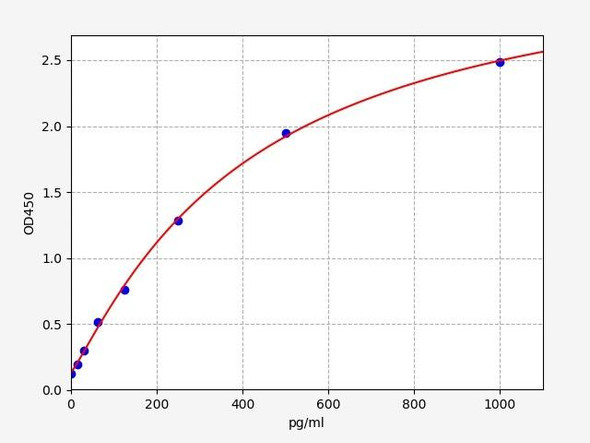

Human CAT (Catalase) ELISA Kit (HUFI07676)
- Product Code:
- HUFI07676
- Detection Method:
- Sandwich ELISA, Double Antibody
- Sensitivity:
- 9.375 pg/mL
- Range:
- 15.625-1000 pg/mL


Human MICA ELISA Kit (HUFI00015)
- Product Code:
- HUFI00015
- Detection Method:
- Sandwich ELISA, Double Antibody
- Sensitivity:
- 46.875 pg/mL
- Range:
- 78.125-5000 pg/mL

Fatty Acid Oxidation (FAO) Assay Kit (BR00001)
- Product Code:
- BR00001
- Instrument:
- Microplate Reader

Anti-Mouse IFNAR-1 In Vivo Antibody - Low Endotoxin (IVMB0202)
- Product Code:
- IVMB0202
- Antibody Type:
- Functional-Grade In Vivo Antibody
- Clone:
- MAR1-5A3
- Protein:
- IFNAR1
- Isotype:
- Mouse IgG1

Anti-Mouse CD25 In Vivo Antibody - Low Endotoxin (IVMB0148)
- Product Code:
- IVMB0148
- Antibody Type:
- Functional-Grade In Vivo Antibody
- Clone:
- PC61
- Protein:
- CD25
- Isotype:
- Rat IgG1 lambda

Anti-Mouse NK1.1 In Vivo Antibody - Low Endotoxin (IVMB0100)
- Product Code:
- IVMB0100
- Antibody Type:
- Functional-Grade In Vivo Antibody
- Clone:
- PK136
- Protein:
- NK1.1
- Isotype:
- Mouse IgG2a kappa

Anti-Mouse PD-1 Antibody [RMP1-14] In Vivo-Low Endotoxin (IVMB0037)
- Product Code:
- IVMB0037
- Antibody Type:
- Functional-Grade In Vivo Antibody
- Clone:
- RMP1-14
- Protein:
- PD-1
- Isotype:
- Rat IgG2a kappa


LSAMP Rabbit Polyclonal Antibody (CAB14248)
- Product Code:
- CAB14248
- Antibody Type:
- Polyclonal Antibody
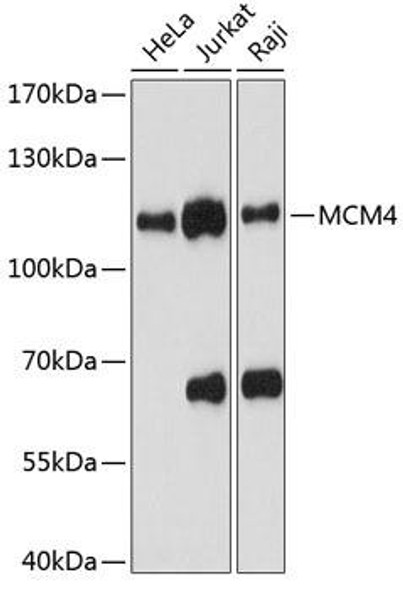
MCM4 Rabbit Polyclonal Antibody (CAB13513)
- Product Code:
- CAB13513
- Antibody Type:
- Polyclonal Antibody

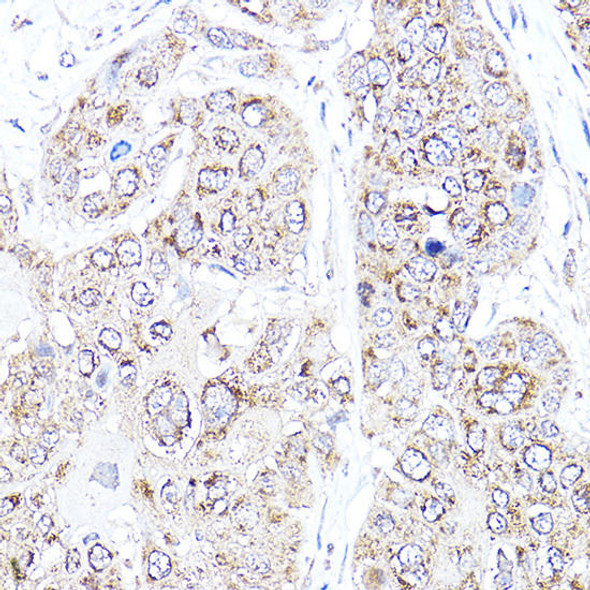
VEGF Rabbit Polyclonal Antibody (CAB12303)
- Product Code:
- CAB12303
- Antibody Type:
- Polyclonal Antibody

MDA ELISA Kit (UNFI0048)
- Product Code:
- UNFI0048
- Detection Method:
- Competitive ELISA, Coated with Antigen
- Sensitivity:
- 4.688 ng/mL
- Range:
- 7.813-500 ng/mL


Dopamine ELISA Kit (UNFI0013)
- Product Code:
- UNFI0013
- Detection Method:
- Competitive ELISA, Coated with Antigen
- Sensitivity:
- 0.938 ng/mL
- Range:
- 1.563-100 ng/mL

Serotonin ELISA Kit (UNFI0018)
- Product Code:
- UNFI0018
- Detection Method:
- Competitive ELISA, Coated with Antigen
- Sensitivity:
- 0.938 ng/mL
- Range:
- 1.563-100 ng/mL

PGE2 ELISA Kit (UNFI0032)
- Product Code:
- UNFI0032
- Detection Method:
- Competitive ELISA, Coated with Antigen
- Sensitivity:
- 18.75 pg/mL
- Range:
- 31.25-2000 pg/mL
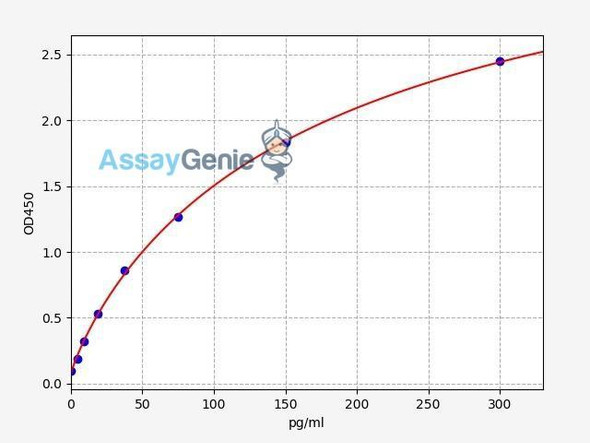
Human IL-6 ELISA Kit (HUFI00180)
- Product Code:
- HUFI00180
- Sensitivity:
- 2.813pg/ml
- Range:
- 4.688-300pg/ml
- ELISA Type:
- Sandwich
