
-
Macrophage Phagocytosis and the CD47–SIRPα Checkpoint Explained(Post)
A macrophage does not decide to eat; it counts votes. Every particle it touches carries a mixture of pro-phagocytic and inhibitory ligands, and engulfment follows only when the activating tally clear
Lusvertikimab: Unveiling the Potential in Immuno-Oncology(Post)What You Need to Know About LusvertikimabWhat is Lusvertikimab?Lusvertikimab is a monoclonal antibody designed to inhibit the IL-4 receptor, a key player in regulating immune responses,
Uliledlimab: Unveiling the Role of Anti-CD47 in Cancer Research(Post)Quick Facts About UliledlimabWhat is Uliledlimab?Uliledlimab is a monoclonal antibody targeting CD47, a checkpoint protein that helps tumors evade immune system detection. By blocking CD
In the Thymus, Co-stimulation Kills(Post)In the periphery, co-stimulation rescues a T cell. In the thymus, the same molecules kill it. A peripheral T cell that engages its receptor without CD80 and CD86 becomes anergic; engage them and it r
CD25 Marker(Post)CD25, a key molecule in immune regulation, is integral to the function of activated lymphocytes and regulatory T cells. It's central in mediating immune responses, with implications in autoimmune
Tarextumab: Unlocking the Potential of Cancer Therapeutics(Post)Quick Facts About TarextumabWhat is Tarextumab?Tarextumab is a novel therapeutic antibody designed to target the Notch signaling pathway, which plays a crucial role in tumor progression
Natalizumab: Mechanism, Applications, and Emerging Research in Multiple Sclerosis and Crohn's Disease(Post)Quick Facts About NatalizumabWhat is Natalizumab?Natalizumab is a monoclonal antibody used to treat multiple sclerosis (MS) and Crohn's disease. It works by blocking immune cells from at
Lirilumab: Unlocking the Potential of Anti-KIR Therapy in Cancer Research(Post)Quick Facts About LirilumabWhat is Lirilumab?Lirilumab is an anti-KIR monoclonal antibody designed to enhance natural killer (NK) cell activity by blocking killer-cell immunoglobulin-lik
CD33 Marker: Function, Expression & Myeloid Cell Role(Post)Introduction Discover the multifaceted role of CD33, a critical player in immune function and disease, shaping our approach to treating cancers and neurodegenerative conditions
After Tocilizumab, IL-6 Goes Up. That Is the Drug Working.(Post)Tocilizumab reverses cytokine release syndrome within hours, and it never touches the cell that started it. That sentence contains the whole mechanism. The trigger is a T cell — engaged by a CAR, a b
Murlentamab: Revolutionizing Cancer Research with Targeted Therapy(Post)Quick Facts About MurlentamabWhat is Murlentamab?Murlentamab is a novel monoclonal antibody designed to target CD47, a "don’t eat me" signal that helps cancer cells evade the immune syst
Indusatumab: Advancing Anti-CD47 Cancer Research with Biosimilar Innovations(Post)Quick Facts About IndusatumabWhat is Indusatumab?Indusatumab is an experimental antibody therapy targeting CD47, a protein that enables cancer cells to evade immune destruction.How does
Galegenimab: Unlocking the Potential of Anti-CD47 in Cancer Research(Post)Quick Facts About GalegenimabWhat is Galegenimab?Galegenimab is an anti-CD47 monoclonal antibody designed to block the "don't eat me" signal, enhancing the immune system's ability to eli
Key Players in T Cell Regulation: Lag-3, Tim-3, and TIGIT(Post)Understanding Lag-3, Tim-3, and TIGIT: Key Players in T Cell RegulationThe immune system's ability to regulate T cell responses is crucial for maintaining homeostasis and combating diseases such as ca
CD52 Expression(Post)What is CD52? Cluster Of Differentiation 52 (CD52) is a highly expressed membrane glycoprotein which is present on the surface of immune cell
Co-Inhibitory Checkpoints Beyond PD-1: CTLA-4, LAG-3 and TIM-3(Post)PD-1 gets the attention, but it is one brake among many — and the others do not work the same way. The co-inhibitory receptors are routinely drawn as interchangeable stop signs on a T cell. They are
Resources(Page) The PD-1 Pathway and Cancer Immunotherapy(Post)The initial identification of PD-1 as a potential target for cancer treatment occurred in the late 1990s and early 2000s through studies exploring the regulation of T-cell responses.
The Environmental Shift: How Climate Change and Biodiversity Loss are Driving the Hantavirus Surge(Post)The year 2026 has brought an unsettling spotlight onto an old adversary: Hantavirus. What began as isolated cases has rapidly escalated into a multi-country surge, leaving scientists and public healt
Secukinumab: A Comprehensive Guide to Its Mechanism, Applications, and Biosimilar Advancements(Post)Quick Facts About SecukinumabWhat is SecukinumabSecukinumab is a monoclonal antibody that targets interleukin-17A (IL-17A), a key cytokine involved in inflammatory and autoimmune respons
Featured
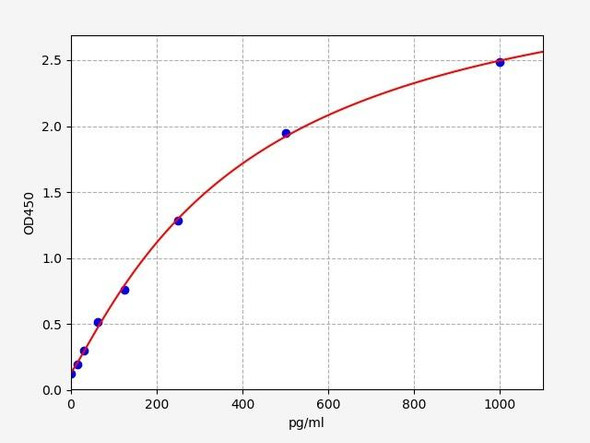

Human CAT (Catalase) ELISA Kit (HUFI07676)
- Product Code:
- HUFI07676
- Detection Method:
- Sandwich ELISA, Double Antibody
- Sensitivity:
- 9.375 pg/mL
- Range:
- 15.625-1000 pg/mL


Human MICA ELISA Kit (HUFI00015)
- Product Code:
- HUFI00015
- Detection Method:
- Sandwich ELISA, Double Antibody
- Sensitivity:
- 46.875 pg/mL
- Range:
- 78.125-5000 pg/mL

Fatty Acid Oxidation (FAO) Assay Kit (BR00001)
- Product Code:
- BR00001
- Instrument:
- Microplate Reader

Anti-Mouse IFNAR-1 In Vivo Antibody - Low Endotoxin (IVMB0202)
- Product Code:
- IVMB0202
- Antibody Type:
- Functional-Grade In Vivo Antibody
- Clone:
- MAR1-5A3
- Protein:
- IFNAR1
- Isotype:
- Mouse IgG1

Anti-Mouse CD25 In Vivo Antibody - Low Endotoxin (IVMB0148)
- Product Code:
- IVMB0148
- Antibody Type:
- Functional-Grade In Vivo Antibody
- Clone:
- PC61
- Protein:
- CD25
- Isotype:
- Rat IgG1 lambda

Anti-Mouse NK1.1 In Vivo Antibody - Low Endotoxin (IVMB0100)
- Product Code:
- IVMB0100
- Antibody Type:
- Functional-Grade In Vivo Antibody
- Clone:
- PK136
- Protein:
- NK1.1
- Isotype:
- Mouse IgG2a kappa
![Anti-Mouse PD-1 (CD279) [RMP1-14] In Vivo Antibody - Low Endotoxin](https://cdn11.bigcommerce.com/s-h68l9z2lnx/images/stencil/590x590/products/214372/569320/anti-mouse-pd-1-cd279-rmp1-14-in-vivo-antibody-low-endotoxin__18202.1743527968.jpg?c=2 "Anti-Mouse PD-1 (CD279) [RMP1-14] In Vivo Antibody - Low Endotoxin")
Anti-Mouse PD-1 Antibody [RMP1-14] In Vivo-Low Endotoxin (IVMB0037)
- Product Code:
- IVMB0037
- Antibody Type:
- Functional-Grade In Vivo Antibody
- Clone:
- RMP1-14
- Protein:
- PD-1
- Isotype:
- Rat IgG2a kappa


LSAMP Rabbit Polyclonal Antibody (CAB14248)
- Product Code:
- CAB14248
- Antibody Type:
- Polyclonal Antibody
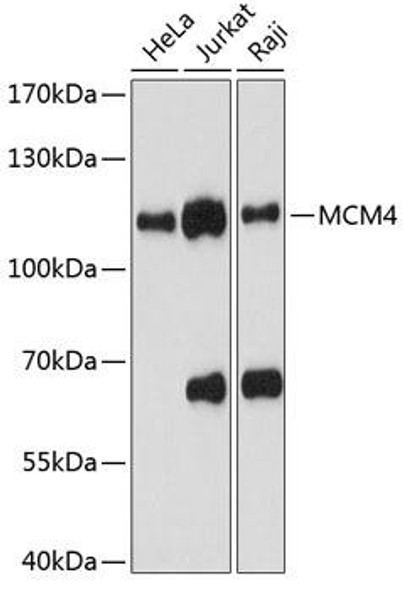
MCM4 Rabbit Polyclonal Antibody (CAB13513)
- Product Code:
- CAB13513
- Antibody Type:
- Polyclonal Antibody

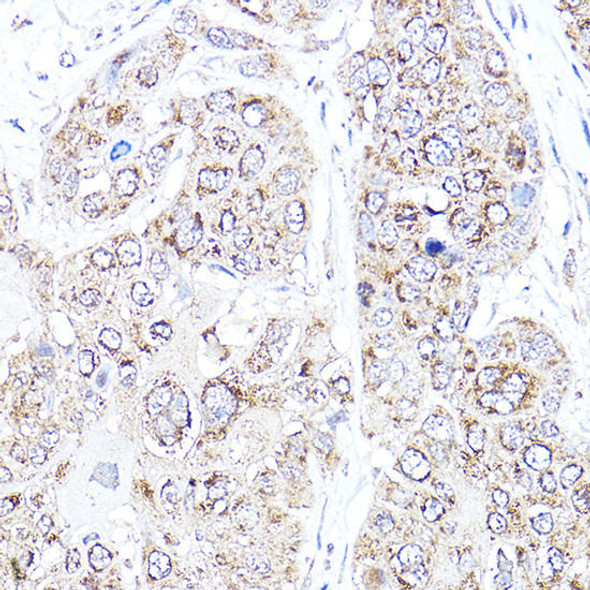
VEGF Rabbit Polyclonal Antibody (CAB12303)
- Product Code:
- CAB12303
- Antibody Type:
- Polyclonal Antibody

MDA ELISA Kit (UNFI0048)
- Product Code:
- UNFI0048
- Detection Method:
- Competitive ELISA, Coated with Antigen
- Sensitivity:
- 4.688 ng/mL
- Range:
- 7.813-500 ng/mL


Dopamine ELISA Kit (UNFI0013)
- Product Code:
- UNFI0013
- Detection Method:
- Competitive ELISA, Coated with Antigen
- Sensitivity:
- 0.938 ng/mL
- Range:
- 1.563-100 ng/mL

Serotonin ELISA Kit (UNFI0018)
- Product Code:
- UNFI0018
- Detection Method:
- Competitive ELISA, Coated with Antigen
- Sensitivity:
- 0.938 ng/mL
- Range:
- 1.563-100 ng/mL

PGE2 ELISA Kit (UNFI0032)
- Product Code:
- UNFI0032
- Detection Method:
- Competitive ELISA, Coated with Antigen
- Sensitivity:
- 18.75 pg/mL
- Range:
- 31.25-2000 pg/mL
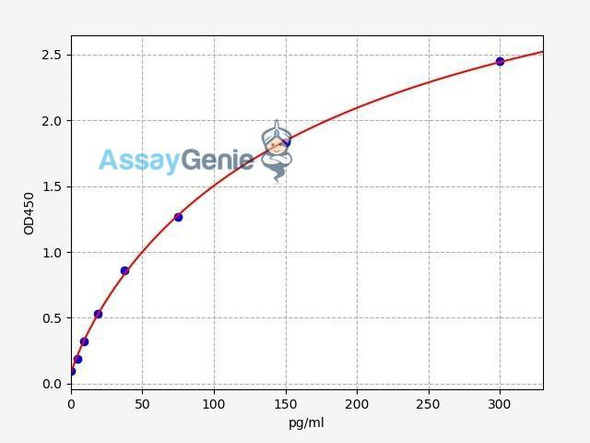
Human IL-6 ELISA Kit (HUFI00180)
- Product Code:
- HUFI00180
- Sensitivity:
- 2.813pg/ml
- Range:
- 4.688-300pg/ml
- ELISA Type:
- Sandwich
