
-
Your Th2 Phenotype Might Not Be a T Cell(Post)
If your knockout showed a type 2 phenotype and you attributed it to Th2 cells, there is a reasonable chance you were looking at something else. Innate lymphoid cells run T-bet, GATA3 and RORγt — not
Erk Signal Transduction Explained: Step-by-Step Process & Key Concepts(Post)The ERK signal transduction pathway stands as a fundamental mechanism in cellular biology, orchestrating a wide array of physiological processes, including cell division, differentiation, and surv
Anti-CTLA-4 Immunotherapy(Post)CD Markers Cluster of Differentiation (CD) markers play an important role in the differentiation of B cells, T cells and NK (natural killer) ce
Understanding the Bcl-2 Pathway in Cancer Therapy(Post)Understanding the Bcl-2 Pathway: Implications for Cancer Therapy The Bcl-2 family of proteins plays a pivotal role in regulating apoptosis, a crucial process for maintaining cellular
Cabiralizumab: Unlocking the Potential of Anti-CSF1R Therapy(Post)What You Need to Know About CabiralizumabWhat is Cabiralizumab?Cabiralizumab is a monoclonal antibody targeting the colony-stimulating factor-1 receptor (CSF1R), developed for treating c
Bevacizumab: Mechanism, Clinical Applications, and Biosimilar Insights(Post)Quick Facts About BevacizumabWhat is Bevacizumab?Bevacizumab is a monoclonal antibody that targets vascular endothelial growth factor (VEGF), inhibiting angiogenesis (the formation of ne
Avdoralimab: Exploring Its Role in Immunotherapy and Biosimilar Advancements(Post)Quick Facts About AvdoralimabWhat is Avdoralimab?Avdoralimab is a monoclonal antibody targeting C5aR1, playing a crucial role in modulating immune response and inflammation.What is the m
Eldelumab: Unlocking the Potential of Anti-TNFSF14 in Inflammatory Diseases(Post)Quick Facts About EldelumabWhat is Eldelumab?Eldelumab is a monoclonal antibody targeting TNFSF14 (LIGHT), a key regulator in immune system signaling, with potential applications in infl
Durvalumab: Advancing Immunotherapy in Cancer Treatment(Post)Quick Facts About DurvalumabWhat is Durvalumab?Durvalumab (Imfinzi) is a PD-L1 checkpoint inhibitor used in immunotherapy to treat various cancers, including non-small cell lung cancer (
Begelomab: Mechanism of Action, Clinical Applications & Biosimilars(Post)Quick Facts About BegelomabWhat is Begelomab?Begelomab is a monoclonal antibody that targets CD26, a key molecule involved in immune regulation. It has been studied for its potential app
The Role of ACE2 in SARS-CoV-2(Post)Structure, Function, and Detection Assays for COVID-2019 Background The global spread of the novel cor
Custom Multiplex Assay(Page)Custom Protein & Peptide Service | Assay Genie
Cyclins and Cyclin Dependent Kinase – Review(Post)Cell Cycle · KinasesCyclins and Cyclin-Dependent Kinases: Regulation, Substrates and Mitotic ControlCDKs are inactive on their own. They require a cyclin partner, and because cyclin levels rise and fa
One Cytokine, Two Opposite Clinical Effects(Post)Low-dose IL-2 expands regulatory T cells. High-dose IL-2 expands the cells they exist to restrain. Same cytokine, same receptor family, opposite clinical intent — and the explanation is a receptor su
Targeted Protein Degradation: The Next Frontier in Oncology Drug Discovery(Post)For decades, cancer drug development has focused on blocking proteins—inhibiting enzymes, antagonizing receptors, disrupting signaling pathways. Yet this approach leaves a vast landscape of disease-d
Bersanlimab: Revolutionizing Cancer Research with Anti-CD47 Therapeutics(Post)What You Need to Know About BersanlimabWhat is Bersanlimab?Bersanlimab is a cutting-edge anti-CD47 monoclonal antibody designed to disrupt cancer cells' evasion of immune detection.What
Utomilumab: Advancing Immuno-Oncology Research(Post)Quick Facts About UtomilumabWhat is Utomilumab?Utomilumab is a monoclonal antibody targeting 4-1BB (CD137), a co-stimulatory receptor on T-cells, designed to enhance anti-tumor immunity.
The Role of Tumor Suppressor Genes in Cancer: Knudson Hypothesis & Oncogenes(Post)Cancer Biology · GeneticsTumour Suppressor Genes: Roles, Examples & CancerTumour suppressor genes are the brakes on cell growth — they restrain proliferation, repair damaged DNA and trigger apoptosis
CD4 T-Helper Differentiation: Th1, Th2, Th17, Treg and Tfh(Post)The antigen tells a CD4 T cell to respond; the cytokine tells it what kind of response to make. A naive CD4⁺ T cell leaving the thymus is uncommitted. Within about seventy-two hours of engaging TCR/C
Troubleshooting high ELISA concentrations(Post)QUICK ANSWER If your ELISA returns sample concentrations that are orders of magnitude too high, the assay itself is usually fine — the error is almost always in data analysis. The most
Featured
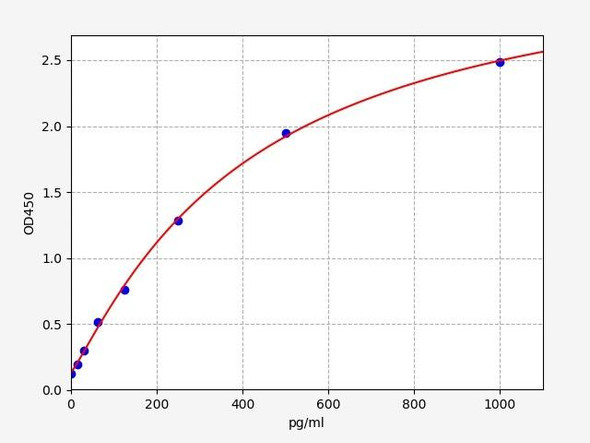

Human CAT (Catalase) ELISA Kit (HUFI07676)
- Product Code:
- HUFI07676
- Detection Method:
- Sandwich ELISA, Double Antibody
- Sensitivity:
- 9.375 pg/mL
- Range:
- 15.625-1000 pg/mL


Human MICA ELISA Kit (HUFI00015)
- Product Code:
- HUFI00015
- Detection Method:
- Sandwich ELISA, Double Antibody
- Sensitivity:
- 46.875 pg/mL
- Range:
- 78.125-5000 pg/mL

Fatty Acid Oxidation (FAO) Assay Kit (BR00001)
- Product Code:
- BR00001
- Instrument:
- Microplate Reader

Anti-Mouse IFNAR-1 In Vivo Antibody - Low Endotoxin (IVMB0202)
- Product Code:
- IVMB0202
- Antibody Type:
- Functional-Grade In Vivo Antibody
- Clone:
- MAR1-5A3
- Protein:
- IFNAR1
- Isotype:
- Mouse IgG1

Anti-Mouse CD25 In Vivo Antibody - Low Endotoxin (IVMB0148)
- Product Code:
- IVMB0148
- Antibody Type:
- Functional-Grade In Vivo Antibody
- Clone:
- PC61
- Protein:
- CD25
- Isotype:
- Rat IgG1 lambda

Anti-Mouse NK1.1 In Vivo Antibody - Low Endotoxin (IVMB0100)
- Product Code:
- IVMB0100
- Antibody Type:
- Functional-Grade In Vivo Antibody
- Clone:
- PK136
- Protein:
- NK1.1
- Isotype:
- Mouse IgG2a kappa

Anti-Mouse PD-1 Antibody [RMP1-14] In Vivo-Low Endotoxin (IVMB0037)
- Product Code:
- IVMB0037
- Antibody Type:
- Functional-Grade In Vivo Antibody
- Clone:
- RMP1-14
- Protein:
- PD-1
- Isotype:
- Rat IgG2a kappa


LSAMP Rabbit Polyclonal Antibody (CAB14248)
- Product Code:
- CAB14248
- Antibody Type:
- Polyclonal Antibody
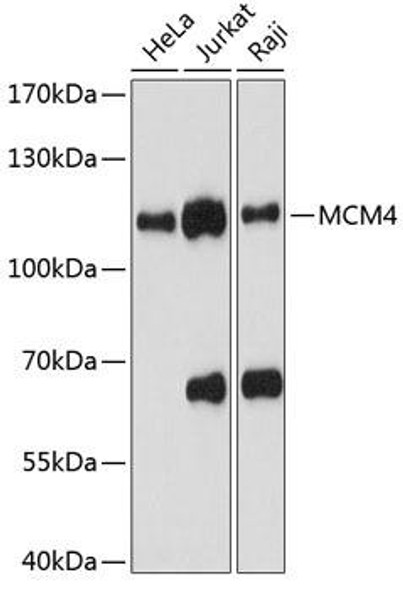
MCM4 Rabbit Polyclonal Antibody (CAB13513)
- Product Code:
- CAB13513
- Antibody Type:
- Polyclonal Antibody

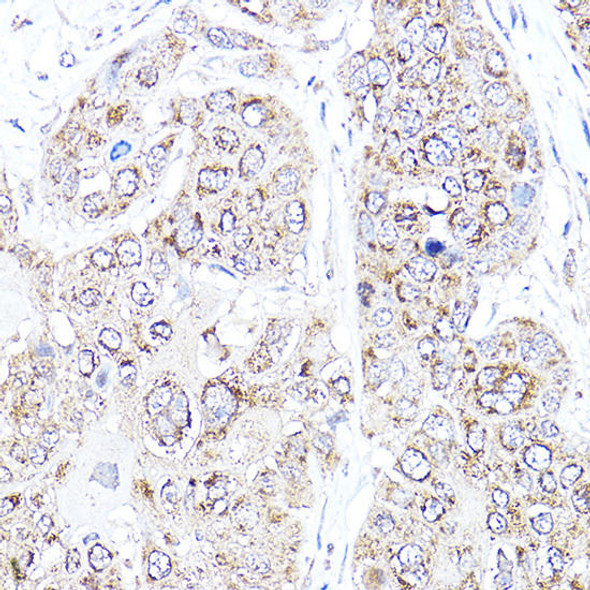
VEGF Rabbit Polyclonal Antibody (CAB12303)
- Product Code:
- CAB12303
- Antibody Type:
- Polyclonal Antibody

MDA ELISA Kit (UNFI0048)
- Product Code:
- UNFI0048
- Detection Method:
- Competitive ELISA, Coated with Antigen
- Sensitivity:
- 4.688 ng/mL
- Range:
- 7.813-500 ng/mL


Dopamine ELISA Kit (UNFI0013)
- Product Code:
- UNFI0013
- Detection Method:
- Competitive ELISA, Coated with Antigen
- Sensitivity:
- 0.938 ng/mL
- Range:
- 1.563-100 ng/mL

Serotonin ELISA Kit (UNFI0018)
- Product Code:
- UNFI0018
- Detection Method:
- Competitive ELISA, Coated with Antigen
- Sensitivity:
- 0.938 ng/mL
- Range:
- 1.563-100 ng/mL

PGE2 ELISA Kit (UNFI0032)
- Product Code:
- UNFI0032
- Detection Method:
- Competitive ELISA, Coated with Antigen
- Sensitivity:
- 18.75 pg/mL
- Range:
- 31.25-2000 pg/mL
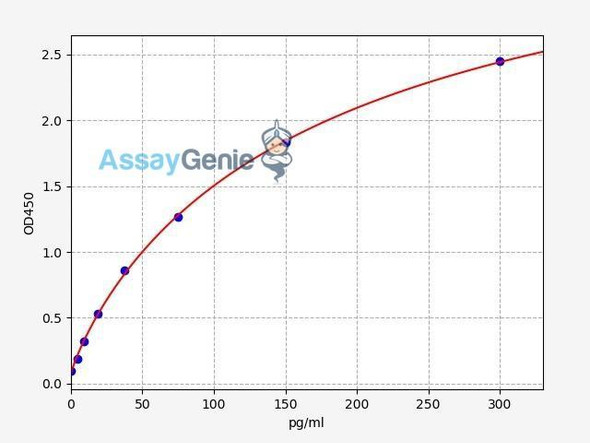
Human IL-6 ELISA Kit (HUFI00180)
- Product Code:
- HUFI00180
- Sensitivity:
- 2.813pg/ml
- Range:
- 4.688-300pg/ml
- ELISA Type:
- Sandwich
