
-
One Cytokine, Two Opposite Clinical Effects(Post)
Low-dose IL-2 expands regulatory T cells. High-dose IL-2 expands the cells they exist to restrain. Same cytokine, same receptor family, opposite clinical intent — and the explanation is a receptor su
PCR Detection of COVID-19 (SARS-CoV-2)(Post)PCR Detection of COVID-19 (SARS-CoV-2) Contents Background Assay Information Sample Types Upp
T-Cell Engagers and Bispecific Antibodies(Page) Microtubule and Mitosis review(Post)Introduction Microtubules are key components of the cytoskeleton and are composed of alpha and beta tubulin. These dimerise in a head to tail fashion to form 13 linear protofilaments.
Cytokine Release Syndrome and the IL-6 Axis(Page) CD25 Marker(Post)CD25, a key molecule in immune regulation, is integral to the function of activated lymphocytes and regulatory T cells. It's central in mediating immune responses, with implications in autoimmune
What are MHC Class I and II molecules?(Post)What are MHC Class I molecules? The MHC class I is a glycoprotein that is expressed on all nucleated cells of the human body. MHC class I are important in disease defense against viruses, ba
Cytokine-Storm-Panel: Analyten, Auswahl und Interpretation(Post)Cytokine-Storm-Panel: Analyten, Auswahl und Interpretation Ein Cytokine-Storm-Panel ist ein vorvalidiertes Multiplex-Assay, das aus einem einzigen Probenaliquot mehrere pro- und antiinflammatorische
CD28: Amplifying T Cell Responses for Better Tumor Clearance(Post)The CD28 molecule plays a crucial role in amplifying T cell activation, which is critical for mounting effective immune responses against tumors. By engaging with co-stimulatory molecules
The Adenosine Axis: How CD39 and CD73 Switch Immunity Off(Post)The most abundant immunosuppressive molecule in a solid tumour is not a protein. It is adenosine — a metabolite, produced from ATP in two enzymatic steps, at concentrations orders of magnitude above
Unconventional T Cells: Gamma Delta, iNKT and MAIT(Page) Etigilimab: Unveiling the Role of Anti-TIGIT in Cancer Research(Post)Key Facts About EtigilimabWhat is Etigilimab?Etigilimab is an anti-TIGIT monoclonal antibody being studied for its potential role in cancer immunotherapy.What role does Etigilimab play i
Mit 20–30 Blankreplikaten: LoD/LoQ korrekt berechnen für Ihr Labor(Post)Mit 20–30 Blankreplikaten: LoD/LoQ korrekt berechnen für Ihr Labor LoB, LoD und LoQ bilden eine feste Rangordnung: LoB ≤ LoD ≤ LoQ. LoD beantwortet die Frage „Ist die Substanz überhaupt nachweisbar?“
Your Agonist Antibody Is Not an Agonist(Post)An agonist antibody does not activate its receptor. It gets held still by something else, and the receptors underneath cluster because they are crowded. That sentence sounds like a technicality and i
Anifrolumab: Transforming Lupus Treatment with Targeted Immunotherapy(Post)Quick Facts About AnifrolumabWhat is Anifrolumab?Anifrolumab is a monoclonal antibody that targets the type I interferon receptor, playing a crucial role in treating systemic lupus eryth
Autophagy alterations in Alzheimer’s disease(Post)By Diana-Madalina Stan, PhD student, University of Salford Disease Description Alzheimer’s disease (AD), the most common cause of dementia, is a neu
No Cytokine on This Pathway Touches Bone(Post)Not one immune cytokine on this pathway touches bone. TNF, IL-1β, IL-6 and IL-17A all act on osteoblasts, osteocytes and synovial fibroblasts, and it is those stromal cells that decide between RANKL
Adalimumab: Mechanism, Clinical Applications, and the Role of Biosimilars(Post)Biologics · TNF InhibitionAdalimumab: Mechanism, Clinical Applications and BiosimilarsAdalimumab is a fully human IgG1 monoclonal antibody that binds tumour necrosis factor alpha and prevents it engag
TIGIT, DNAM-1 and the CD155 Axis: Pathway, Function and Assays(Post)CD155 is read by four different receptors, and only one of them turns the killing programme on. The nectin and nectin-like ligands induced on stressed and transformed cells are simultaneously an acti
Necrosis: Types, Causes, Symptoms & Prevention Guide(Post)Cell Biology · PathologyNecrosis: Types, Causes, Mechanisms and How It Is MeasuredNecrosis is cell death accompanied by membrane rupture and release of intracellular contents — which is what makes it
Featured
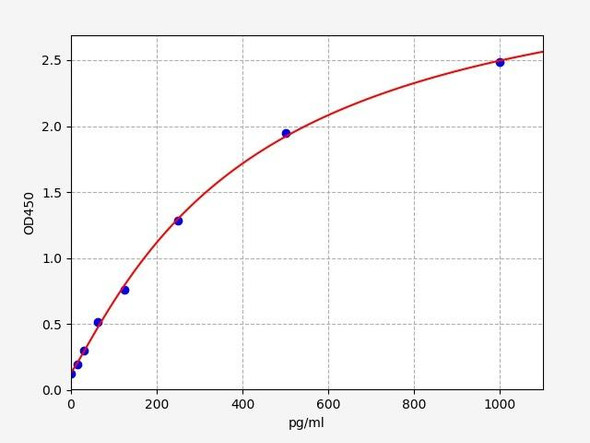

Human CAT (Catalase) ELISA Kit (HUFI07676)
- Product Code:
- HUFI07676
- Detection Method:
- Sandwich ELISA, Double Antibody
- Sensitivity:
- 9.375 pg/mL
- Range:
- 15.625-1000 pg/mL


Human MICA ELISA Kit (HUFI00015)
- Product Code:
- HUFI00015
- Detection Method:
- Sandwich ELISA, Double Antibody
- Sensitivity:
- 46.875 pg/mL
- Range:
- 78.125-5000 pg/mL

Fatty Acid Oxidation (FAO) Assay Kit (BR00001)
- Product Code:
- BR00001
- Instrument:
- Microplate Reader

Anti-Mouse IFNAR-1 In Vivo Antibody - Low Endotoxin (IVMB0202)
- Product Code:
- IVMB0202
- Antibody Type:
- Functional-Grade In Vivo Antibody
- Clone:
- MAR1-5A3
- Protein:
- IFNAR1
- Isotype:
- Mouse IgG1

Anti-Mouse CD25 In Vivo Antibody - Low Endotoxin (IVMB0148)
- Product Code:
- IVMB0148
- Antibody Type:
- Functional-Grade In Vivo Antibody
- Clone:
- PC61
- Protein:
- CD25
- Isotype:
- Rat IgG1 lambda

Anti-Mouse NK1.1 In Vivo Antibody - Low Endotoxin (IVMB0100)
- Product Code:
- IVMB0100
- Antibody Type:
- Functional-Grade In Vivo Antibody
- Clone:
- PK136
- Protein:
- NK1.1
- Isotype:
- Mouse IgG2a kappa
![Anti-Mouse PD-1 (CD279) [RMP1-14] In Vivo Antibody - Low Endotoxin](https://cdn11.bigcommerce.com/s-h68l9z2lnx/images/stencil/590x590/products/214372/569320/anti-mouse-pd-1-cd279-rmp1-14-in-vivo-antibody-low-endotoxin__18202.1743527968.jpg?c=2 "Anti-Mouse PD-1 (CD279) [RMP1-14] In Vivo Antibody - Low Endotoxin")
Anti-Mouse PD-1 Antibody [RMP1-14] In Vivo-Low Endotoxin (IVMB0037)
- Product Code:
- IVMB0037
- Antibody Type:
- Functional-Grade In Vivo Antibody
- Clone:
- RMP1-14
- Protein:
- PD-1
- Isotype:
- Rat IgG2a kappa


LSAMP Rabbit Polyclonal Antibody (CAB14248)
- Product Code:
- CAB14248
- Antibody Type:
- Polyclonal Antibody
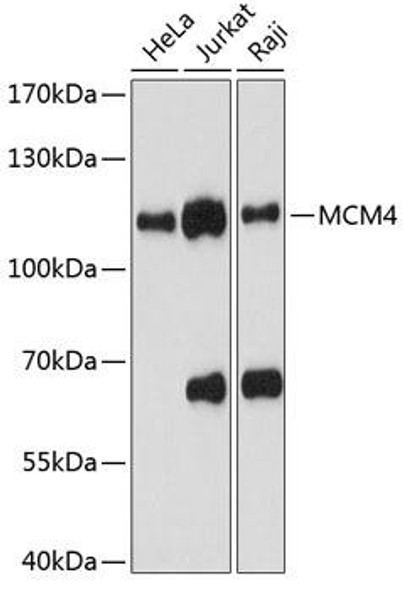
MCM4 Rabbit Polyclonal Antibody (CAB13513)
- Product Code:
- CAB13513
- Antibody Type:
- Polyclonal Antibody

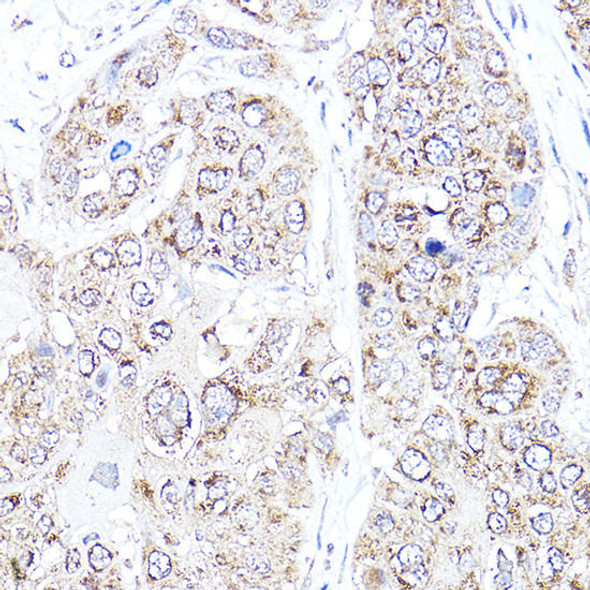
VEGF Rabbit Polyclonal Antibody (CAB12303)
- Product Code:
- CAB12303
- Antibody Type:
- Polyclonal Antibody

MDA ELISA Kit (UNFI0048)
- Product Code:
- UNFI0048
- Detection Method:
- Competitive ELISA, Coated with Antigen
- Sensitivity:
- 4.688 ng/mL
- Range:
- 7.813-500 ng/mL


Dopamine ELISA Kit (UNFI0013)
- Product Code:
- UNFI0013
- Detection Method:
- Competitive ELISA, Coated with Antigen
- Sensitivity:
- 0.938 ng/mL
- Range:
- 1.563-100 ng/mL

Serotonin ELISA Kit (UNFI0018)
- Product Code:
- UNFI0018
- Detection Method:
- Competitive ELISA, Coated with Antigen
- Sensitivity:
- 0.938 ng/mL
- Range:
- 1.563-100 ng/mL

PGE2 ELISA Kit (UNFI0032)
- Product Code:
- UNFI0032
- Detection Method:
- Competitive ELISA, Coated with Antigen
- Sensitivity:
- 18.75 pg/mL
- Range:
- 31.25-2000 pg/mL
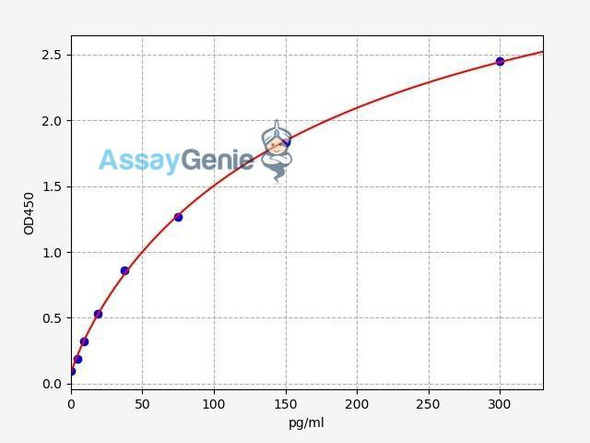
Human IL-6 ELISA Kit (HUFI00180)
- Product Code:
- HUFI00180
- Sensitivity:
- 2.813pg/ml
- Range:
- 4.688-300pg/ml
- ELISA Type:
- Sandwich
