
-
Treponema pallidum Antibodies: Comprehensive Guide to Diagnostic and Clinical Relevance(Post)
Treponema pallidum, the causative agent of syphilis, triggers an immune response that produces antibodies detectable by laboratory tests. Diagnosing syphilis often involves detecting thes
Cytokine Storms: What happens when the immune system overreacts?(Post)Immunology · HyperinflammationCytokine Storm and Cytokine Release Syndrome: Mechanisms, Triggers and MarkersA cytokine storm is a self-amplifying inflammatory response in which cytokine release drives
Toll-like Receptor Signalling in Neurodegenerative Disease(Post)Toll-Like Receptors The innate immune response has come under the spotlight in recent years due to its central role in propagating the pathogen
Embryonic Induced Pluripotent Stem Cell Differentiation: Pathways and Lineage-Specific Markers(Post)Embryonic induced pluripotent stem cells (iPSCs) hold immense potential in the field of regenerative medicine due to their ability to differentiate into various cell types. Understanding the diffe
Data Analysis in Flow Cytometry: Harnessing Complexity for Scientific Insight(Post)Flow cytometry is a powerful analytical technology employed in cell biology, immunology, and oncology research. It enables the rapid measurement of physical and chemical characteristics of cells o
Breakthrough Discovery: Epstein-Barr Virus Identified as Primary Trigger for Lupus(Post)Breakthrough Discovery: Epstein-Barr Virus Identified as Primary Trigger for Lupus A groundbreaking study published in November 2025 has provided the most definitive evidence to date that the common E
TIGIT/DNAM-1/CD155 (PVR) Checkpoint Axis(Page) Atezolizumab: Unveiling the Role of Anti-PD-L1 in Cancer Research(Post)Quick Facts About AtezolizumabWhat is Atezolizumab?Atezolizumab is an anti-PD-L1 monoclonal antibody used in immunotherapy to treat various cancers by enhancing the immune system's abili
Osteoimmunology: The RANKL-OPG Axis & Bone Erosion(Page) CD31: A Comprehensive Look at an Essential Biomarker(Post)What is CD31? CD31, also known as PECAM-1, was originally described as a cell surface antigen present on platelets and megakaryocytes. CD31 is
SOCS proteins: Manipulating the immune response(Post)Katherine Edwards, PhD Student, Queen’s University Belfast Cytokines play a vital role in immune responses enabling cross-talk between different cell types a
Talquetamab: Exploring its Role in Cancer Therapy and Ongoing Research(Post)Quick Info Section: Key Facts About TalquetamabWhat is Talquetamab?Talquetamab is a novel monoclonal antibody being developed for the treatment of multiple myeloma and other cancers. It
Can infection cause chronic disease?(Post)By Anusha Senevirante, Post-Doctoral researcher, Imperial College London With non-communicable diseases (or NCDs, which include heart disease, diabetes, ca
CIDE: The New Bioinformatics Engine Unmasking Secreted Proteins for Precision Immunotherapy(Post)For decades, the battle against cancer has focused on the cellular 'soldiers' and the genetic 'blueprints' within them. Yet, a vast, invisible world of communication exists between these cells—a secr
Filarial Infections - Tropical Diseases | Assay Genie(Post)By Juan Quintana, PhD student, University of Edinbrugh What are Neglected Tropical Diseases (NTDs)? The World Health Organ
Enoblituzumab: Unveiling the Role of Anti-B7-H3 in Cancer Research(Post)Key Facts About EnoblituzumabWhat is Enoblituzumab?Enoblituzumab is a monoclonal antibody targeting the B7-H3 protein, which is expressed on the surface of various cancer cells, includin
Innate Lymphoid Cells Differentiation: Guardians of Immune Homeostasis(Post)Innate Lymphoid Cells (ILCs) represent a fascinating component of the immune system, playing a crucial role in maintaining tissue homeostasis and mounting rapid responses against pathogens. The
Illuminating the Multifaceted Role of Acetylation: Bridging Chemistry and Biology Introduction:(Post)Acetylation, a chemical process characterized by the addition of an acetyl functional group to a molecule, stands as a cornerstone in both biochemical and biological landscapes. Its significanc
Antibody Light Chains, Heavy Chains, Constant Regions & Tumour-Associated Antigens(Post)Immunology · Antibody BiologyAntibody Light Chains, Heavy Chains, Constant Regions & Tumour-Associated AntigensAn antibody’s specificity comes from its variable domains and its biological effect comes
Interferon Axis — Type I & Type II Signalling(Page)Featured
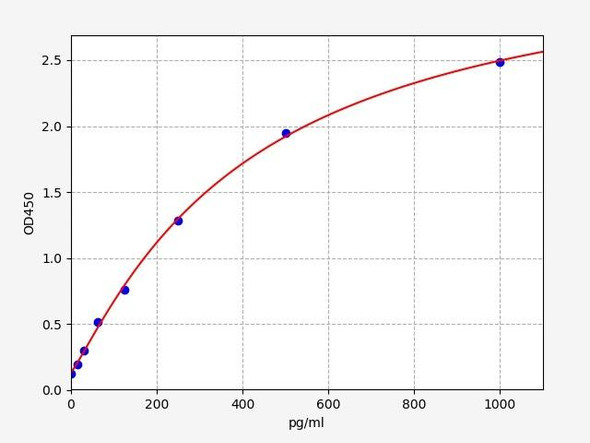

Human CAT (Catalase) ELISA Kit (HUFI07676)
- Product Code:
- HUFI07676
- Detection Method:
- Sandwich ELISA, Double Antibody
- Sensitivity:
- 9.375 pg/mL
- Range:
- 15.625-1000 pg/mL


Human MICA ELISA Kit (HUFI00015)
- Product Code:
- HUFI00015
- Detection Method:
- Sandwich ELISA, Double Antibody
- Sensitivity:
- 46.875 pg/mL
- Range:
- 78.125-5000 pg/mL

Fatty Acid Oxidation (FAO) Assay Kit (BR00001)
- Product Code:
- BR00001
- Instrument:
- Microplate Reader

Anti-Mouse IFNAR-1 In Vivo Antibody - Low Endotoxin (IVMB0202)
- Product Code:
- IVMB0202
- Antibody Type:
- Functional-Grade In Vivo Antibody
- Clone:
- MAR1-5A3
- Protein:
- IFNAR1
- Isotype:
- Mouse IgG1

Anti-Mouse CD25 In Vivo Antibody - Low Endotoxin (IVMB0148)
- Product Code:
- IVMB0148
- Antibody Type:
- Functional-Grade In Vivo Antibody
- Clone:
- PC61
- Protein:
- CD25
- Isotype:
- Rat IgG1 lambda

Anti-Mouse NK1.1 In Vivo Antibody - Low Endotoxin (IVMB0100)
- Product Code:
- IVMB0100
- Antibody Type:
- Functional-Grade In Vivo Antibody
- Clone:
- PK136
- Protein:
- NK1.1
- Isotype:
- Mouse IgG2a kappa

Anti-Mouse PD-1 Antibody [RMP1-14] In Vivo-Low Endotoxin (IVMB0037)
- Product Code:
- IVMB0037
- Antibody Type:
- Functional-Grade In Vivo Antibody
- Clone:
- RMP1-14
- Protein:
- PD-1
- Isotype:
- Rat IgG2a kappa


LSAMP Rabbit Polyclonal Antibody (CAB14248)
- Product Code:
- CAB14248
- Antibody Type:
- Polyclonal Antibody
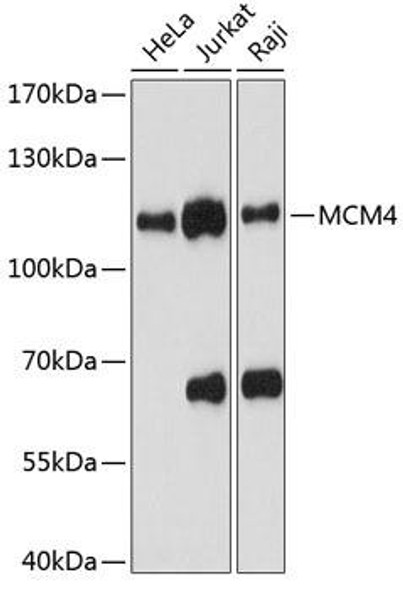
MCM4 Rabbit Polyclonal Antibody (CAB13513)
- Product Code:
- CAB13513
- Antibody Type:
- Polyclonal Antibody

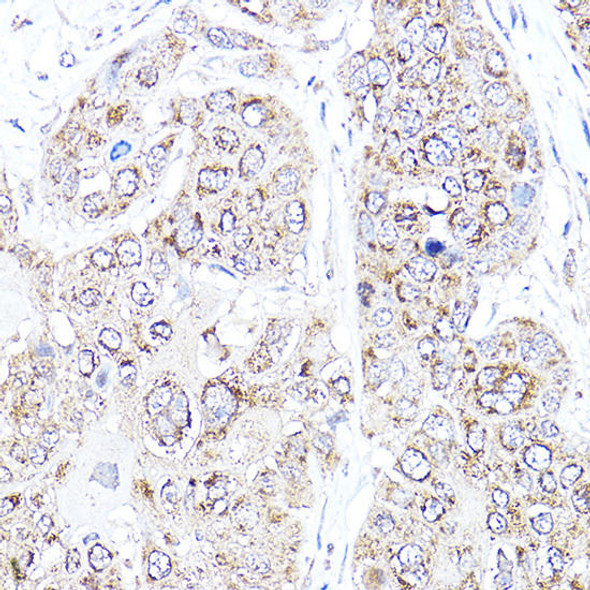
VEGF Rabbit Polyclonal Antibody (CAB12303)
- Product Code:
- CAB12303
- Antibody Type:
- Polyclonal Antibody

MDA ELISA Kit (UNFI0048)
- Product Code:
- UNFI0048
- Detection Method:
- Competitive ELISA, Coated with Antigen
- Sensitivity:
- 4.688 ng/mL
- Range:
- 7.813-500 ng/mL


Dopamine ELISA Kit (UNFI0013)
- Product Code:
- UNFI0013
- Detection Method:
- Competitive ELISA, Coated with Antigen
- Sensitivity:
- 0.938 ng/mL
- Range:
- 1.563-100 ng/mL

Serotonin ELISA Kit (UNFI0018)
- Product Code:
- UNFI0018
- Detection Method:
- Competitive ELISA, Coated with Antigen
- Sensitivity:
- 0.938 ng/mL
- Range:
- 1.563-100 ng/mL

PGE2 ELISA Kit (UNFI0032)
- Product Code:
- UNFI0032
- Detection Method:
- Competitive ELISA, Coated with Antigen
- Sensitivity:
- 18.75 pg/mL
- Range:
- 31.25-2000 pg/mL
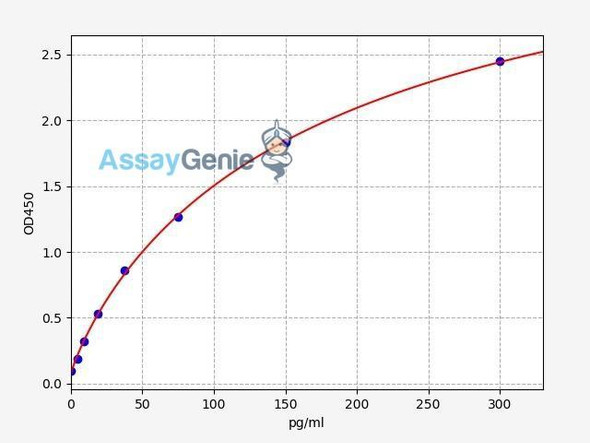
Human IL-6 ELISA Kit (HUFI00180)
- Product Code:
- HUFI00180
- Sensitivity:
- 2.813pg/ml
- Range:
- 4.688-300pg/ml
- ELISA Type:
- Sandwich
