
-
Understanding Glutamate Receptors: Classification, Function, and Implications in Neurological Disorders(Post)
Glutamate receptors are pivotal in mediating excitatory neurotransmission in the central nervous system (CNS), playing crucial roles in synaptic transmission, plasticity, learning, and memory. The
What is an Antigen?(Post)Antigen's are foreign molecules recognised by the immune system. Antigens can be protein, carbohydrate, lipid or nucleic acid molecules. Examples include viruses and bacteria as well as fr
ELISA-Platten beschichten: Protokoll, Puffer und Fehlerquellen(Post)ELISA-Platten beschichten: Protokoll, Puffer und Fehlerquellen ELISA-Platten beschichten bedeutet, Antikörper oder Antigene passiv auf Polystyrol-Wells zu immobilisieren, um eine reproduzierbare Bind
One Cytokine, Two Opposite Clinical Effects(Post)Low-dose IL-2 expands regulatory T cells. High-dose IL-2 expands the cells they exist to restrain. Same cytokine, same receptor family, opposite clinical intent — and the explanation is a receptor su
Androgenic steroid action in breast cancer(Post)By Rachel Bleach, PhD Student, RCSI By the age of 79 years, 1 in 14 women will develop breast cancer (Global Burden of Disease Cancer 2017). Beatson reported
MAPK Signaling in Inflammatory Cytokines Pathways(Post)Cell Signalling · InflammationMAPK Signalling in Inflammatory Cytokine PathwaysMAPK cascades convert receptor engagement into changes in gene expression, and in inflammation they do it in both directi
Renal Cell Carcinoma: Understanding, Diagnosing, and Treating Kidney Cancer(Post)Renal Cell Carcinoma (RCC) is the most common form of kidney cancer, originating in the lining of the proximal renal tubules. RCC accounts for approximately 90% of all kidney cancers and
Alsevalimab: Targeting CD47 for Cancer Research and Treatment(Post)Quick Facts About AlsevalimabWhat is Alsevalimab?Alsevalimab is a monoclonal antibody targeting CD47, a protein involved in immune evasion by cancer cells. By blocking CD47, Alsevalimab
Polo-like kinase (Plk1) substrates and mitosis(Post)Polo-like kinase (Plk1) Polo-like kinase (Plk1), is a serine/threonine kinase that is active during mitosis (Hamanaka et al., 1995). Its name is derived from its origi
TIGIT/DNAM-1/CD155 (PVR) Checkpoint Axis(Page) Alzheimer's Disease: A Comprehensive Insight(Post)Alzheimer's disease stands as a formidable challenge in the realm of neurological disorders, characterized by its progressive nature and profound impact on cognitive functions. This article delve
Unveiling the Potential of Cy3 Wavelength: Illuminating the Path to Advanced Biomedical Imaging(Post)In the realm of biomedical imaging, the quest for precision and clarity drives researchers to explore innovative technologies. One such breakthrough is the Cy3 wavelength, a powerful tool revol
The NLRP3 inflammasome & pyroptosis(Page) Narnatumab: Unveiling the Role of Anti-CD47 in Cancer Research(Post)Quick Facts About NarnatumabWhat is Narnatumab?Narnatumab is a monoclonal antibody targeting CD47, a key immune checkpoint that helps cancer cells evade destruction by the immune system.
Deprotonation: Unveiling the Chemistry Behind It(Post)Chemistry · Acid-BaseDeprotonation: Mechanism, pKa and Choosing the Right BaseDeprotonation is the removal of a proton from a molecule to give its conjugate base. Whether it happens, and how completel
Guide to Bacterial Transformation: The Science of Genetic Manipulation(Post)Techniques · Molecular CloningGuide to Bacterial Transformation: The Science of Genetic ManipulationBacterial transformation is the process by which bacteria take up foreign DNA — usually a plasmid —
Liver & Kidney Biomarker Assays(Page) Suspected Plague Death at a Siberian Anti-Plague Institute: What Researchers Should Know(Post)Infectious Disease · News AnalysisSuspected Plague Death at a Siberian Anti-Plague Institute: What Researchers Should KnowA 28-year-old laboratory worker at the Irkutsk Anti-Plague Research Institute
Extracellular Vesicles in Neurodegenerative Disease: From Pathology to Therapeutic Potential(Post)In the intricate landscape of the brain, cells constantly communicate, sending and receiving messages that govern our thoughts, memories, and movements. For decades, scientists believed this communica
Spindle Assembly Checkpoint review(Post)Spindle assembly checkpoint The spindle assembly checkpoint (SAC), or mitotic checkpoint, is the main cell cycle control mechanism that governs mitosis. Incorrec
Featured
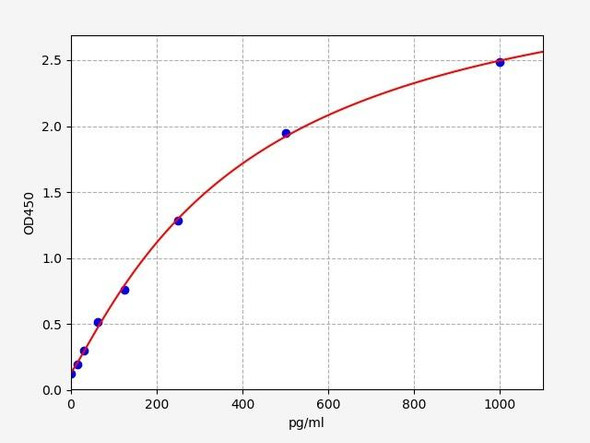

Human CAT (Catalase) ELISA Kit (HUFI07676)
- Product Code:
- HUFI07676
- Detection Method:
- Sandwich ELISA, Double Antibody
- Sensitivity:
- 9.375 pg/mL
- Range:
- 15.625-1000 pg/mL


Human MICA ELISA Kit (HUFI00015)
- Product Code:
- HUFI00015
- Detection Method:
- Sandwich ELISA, Double Antibody
- Sensitivity:
- 46.875 pg/mL
- Range:
- 78.125-5000 pg/mL

Fatty Acid Oxidation (FAO) Assay Kit (BR00001)
- Product Code:
- BR00001
- Instrument:
- Microplate Reader

Anti-Mouse IFNAR-1 In Vivo Antibody - Low Endotoxin (IVMB0202)
- Product Code:
- IVMB0202
- Antibody Type:
- Functional-Grade In Vivo Antibody
- Clone:
- MAR1-5A3
- Protein:
- IFNAR1
- Isotype:
- Mouse IgG1

Anti-Mouse CD25 In Vivo Antibody - Low Endotoxin (IVMB0148)
- Product Code:
- IVMB0148
- Antibody Type:
- Functional-Grade In Vivo Antibody
- Clone:
- PC61
- Protein:
- CD25
- Isotype:
- Rat IgG1 lambda

Anti-Mouse NK1.1 In Vivo Antibody - Low Endotoxin (IVMB0100)
- Product Code:
- IVMB0100
- Antibody Type:
- Functional-Grade In Vivo Antibody
- Clone:
- PK136
- Protein:
- NK1.1
- Isotype:
- Mouse IgG2a kappa
![Anti-Mouse PD-1 (CD279) [RMP1-14] In Vivo Antibody - Low Endotoxin](https://cdn11.bigcommerce.com/s-h68l9z2lnx/images/stencil/590x590/products/214372/569320/anti-mouse-pd-1-cd279-rmp1-14-in-vivo-antibody-low-endotoxin__18202.1743527968.jpg?c=2 "Anti-Mouse PD-1 (CD279) [RMP1-14] In Vivo Antibody - Low Endotoxin")
Anti-Mouse PD-1 Antibody [RMP1-14] In Vivo-Low Endotoxin (IVMB0037)
- Product Code:
- IVMB0037
- Antibody Type:
- Functional-Grade In Vivo Antibody
- Clone:
- RMP1-14
- Protein:
- PD-1
- Isotype:
- Rat IgG2a kappa


LSAMP Rabbit Polyclonal Antibody (CAB14248)
- Product Code:
- CAB14248
- Antibody Type:
- Polyclonal Antibody
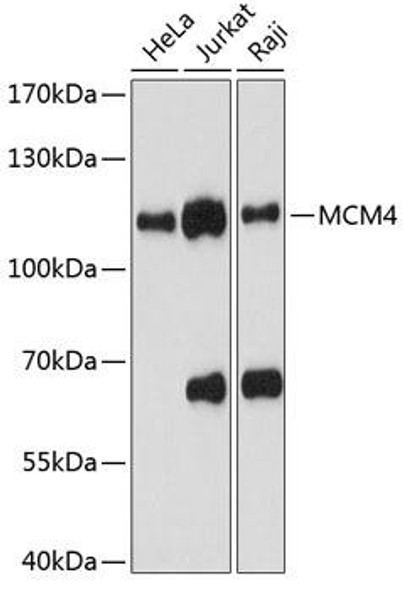
MCM4 Rabbit Polyclonal Antibody (CAB13513)
- Product Code:
- CAB13513
- Antibody Type:
- Polyclonal Antibody

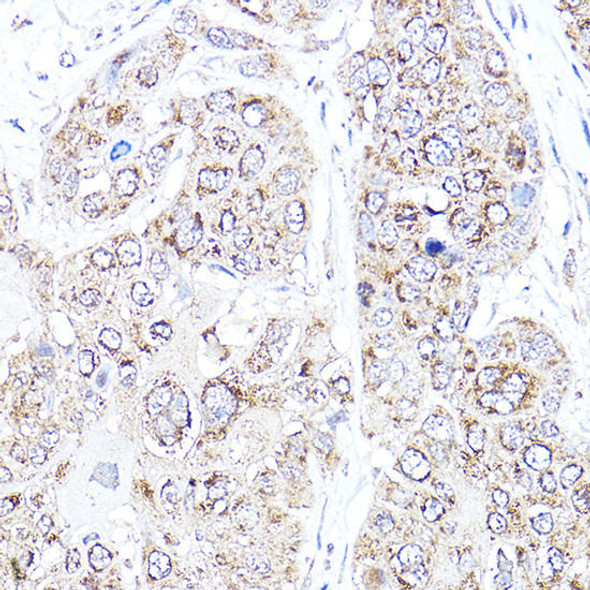
VEGF Rabbit Polyclonal Antibody (CAB12303)
- Product Code:
- CAB12303
- Antibody Type:
- Polyclonal Antibody

MDA ELISA Kit (UNFI0048)
- Product Code:
- UNFI0048
- Detection Method:
- Competitive ELISA, Coated with Antigen
- Sensitivity:
- 4.688 ng/mL
- Range:
- 7.813-500 ng/mL


Dopamine ELISA Kit (UNFI0013)
- Product Code:
- UNFI0013
- Detection Method:
- Competitive ELISA, Coated with Antigen
- Sensitivity:
- 0.938 ng/mL
- Range:
- 1.563-100 ng/mL

Serotonin ELISA Kit (UNFI0018)
- Product Code:
- UNFI0018
- Detection Method:
- Competitive ELISA, Coated with Antigen
- Sensitivity:
- 0.938 ng/mL
- Range:
- 1.563-100 ng/mL

PGE2 ELISA Kit (UNFI0032)
- Product Code:
- UNFI0032
- Detection Method:
- Competitive ELISA, Coated with Antigen
- Sensitivity:
- 18.75 pg/mL
- Range:
- 31.25-2000 pg/mL
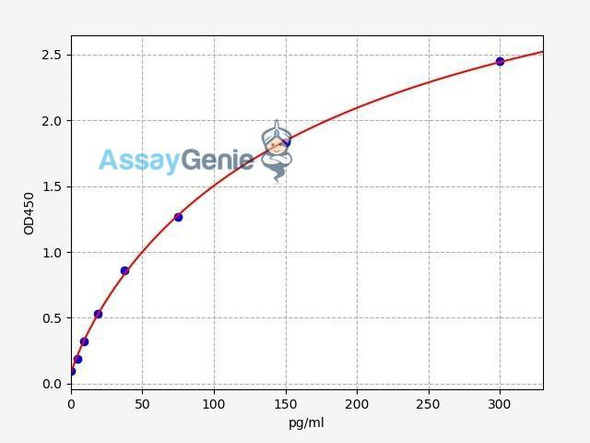
Human IL-6 ELISA Kit (HUFI00180)
- Product Code:
- HUFI00180
- Sensitivity:
- 2.813pg/ml
- Range:
- 4.688-300pg/ml
- ELISA Type:
- Sandwich
