
Suspected Plague Death at a Siberian Anti-Plague Institute: What Researchers Should Know
Suspected Plague Death at a Siberian Anti-Plague Institute: What Researchers Should Know
A 28-year-old laboratory worker at the Irkutsk Anti-Plague Research Institute died on 2 October 2026, and Russian media reported pneumonic plague as the cause. Russian health authorities have not confirmed plague. Here is what is known, the science of the disease, and the tools researchers use to study the host response.
See host-response assaysKey Takeaways
- Plague has not been confirmed. The official cause of death is pneumonia of unknown aetiology.
- Nearly 200 contacts were placed under observation, and no onward transmission has been reported.
- Untreated pneumonic plague can kill within 18 to 24 hours, but early antibiotics are highly effective.
- Yersinia pestis suppresses early immune signalling, then triggers a late cytokine surge.
- Host-response markers such as IL-6, IL-1β, IFN-γ and procalcitonin are central to research on severe bacterial infection.
Research tools for studying the host response
These six Assay Genie kits measure the cytokines and sepsis markers discussed in this article. They measure the host response. They do not detect Y. pestis, and they are for research use only, not for diagnosis.

Human IL-6 ELISA Kit
The core marker of the acute inflammatory surge in severe pneumonia and sepsis.
View kit →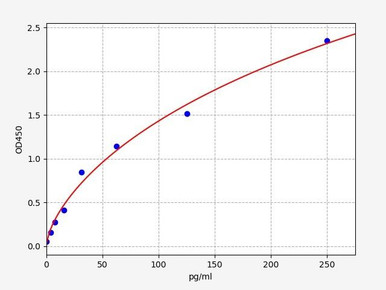
Human IL-1 beta ELISA Kit
Reads out inflammasome activation, which Yersinia effectors work to suppress.
View kit →
Human IL-18 ELISA Kit
The second inflammasome cytokine and a driver of IFN-γ production.
View kit →
Human IFN-gamma PharmaGenie ELISA Kit
Tracks the protective Th1 response in infection and vaccine studies.
View kit →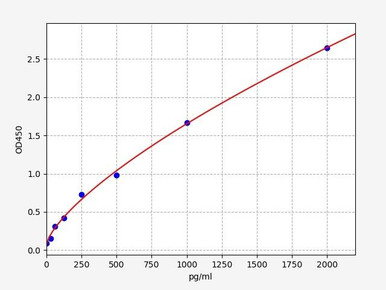
Human Procalcitonin ELISA Kit
A widely studied marker for separating bacterial infection from viral illness.
View kit →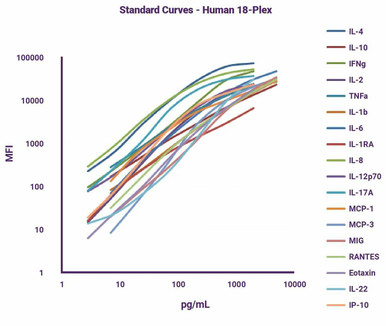
GeniePlex Human Inflammation 18-Plex
Profiles 18 analytes in one well, including TNF-α, IL-6, IL-1β, IL-8, IL-10 and IFN-γ.
View panel →What happened in Irkutsk
Plague has not been confirmed. That is the single most important fact in this story, and much of the early coverage skipped it.
The worker was employed at the Irkutsk Anti-Plague Research Institute of Siberia and the Far East, a state facility that studies plague, cholera, anthrax and other dangerous infections. She was admitted to the district hospital in Shelekhov, near Irkutsk, on Tuesday 29 September with severe pneumonia. Doctors reportedly first suspected COVID-19. She died in intensive care in the early hours of 2 October.
Our thoughts are with her family and colleagues. People who work with dangerous pathogens do so to protect the rest of us.
| Claim | Source | Status on 6 October 2026 |
|---|---|---|
| She died of pneumonic plague | Regional outlets and Telegram channels, citing unnamed sources | Not confirmed |
| A tube containing the plague bacterium broke on 25 September | Regional media | Denied. A Rospotrebnadzor commission found no accidents at the institute |
| Official cause of death | Rospotrebnadzor, Russia's public health agency | Pneumonia of unknown aetiology, with no work-related microorganisms found in her samples |
| Nearly 200 contacts placed under observation | Russian media | Reported. Daily testing found two COVID-19 and two rhinovirus cases, and no other infections |
| Hospitals quarantined | Euronews | Several hospitals in Irkutsk and Shelekhov restricted, and more than 60 institute staff isolated |
Two things can both be true. The official statement says no plague was found (The Moscow Times). The scale of the response, with hundreds of contacts observed and hospitals closed (Euronews), is what you would expect if plague were suspected. Independent confirmation is not available, so we treat this as a suspected case.
If it were confirmed, it would be the first human plague case reported in Russia in about a decade. No onward transmission has been reported.
Why this matters to research labs
At Assay Genie we supply immunoassays to infectious disease and immunology labs worldwide, and three points in this story are familiar to anyone who works at the bench.
Severe pneumonia looks the same at first
The patient was reportedly first treated as a COVID-19 case. Early pneumonic plague, severe influenza, COVID-19 and bacterial sepsis all present with fever, cough and breathlessness. Telling them apart depends on pathogen-specific tests, and on host-response markers that show how sick the patient is.
Speed decides the outcome
WHO states that pneumonic plague can be fatal within 18 to 24 hours of onset if untreated, while recovery rates are high when antibiotics start within 24 hours. A disease this fast leaves little room for a missed diagnosis. That is why researchers keep looking for earlier and better biomarkers of severe bacterial infection.
Laboratory-acquired infections are rare, and they do happen
Work with live Yersinia pestis is restricted to high-containment facilities for good reason. Most plague research does not need the live organism at all. Recombinant antigens, attenuated strains and host-response assays let scientists study the disease safely in standard labs.
That last point is where our work sits. The questions researchers ask about plague are the same ones they ask about sepsis and severe pneumonia in general: which cytokines rise, when, and what that predicts.
How Yersinia pestis beats the immune system
Yersinia pestis kills quickly because it switches off the body's early alarm, then triggers an overwhelming inflammatory response once it is too late to help.
In mouse models, pneumonic plague runs in two phases. For roughly the first day and a half the bacteria multiply in the lung while inflammation stays low. Then cytokines surge, neutrophils flood the airways, and pneumonia and sepsis follow.
| What the bacterium does | Effect on the host | What researchers measure |
|---|---|---|
| Makes a modified lipopolysaccharide at 37 °C that TLR4 recognises poorly | Innate sensing is delayed | TNF-α, IL-6 |
| Injects Yop effector proteins through a type III secretion system | Phagocytosis is blocked; YopJ suppresses NF-κB and MAPK signalling | TNF-α, IL-6, IL-8 |
| Releases LcrV (the V antigen) | Promotes the anti-inflammatory cytokine IL-10 | IL-10 |
| Uses YopM and YopK to interfere with the inflammasome | Limits caspase-1 activation | IL-1β, IL-18 |
| Coats itself in the F1 capsule | Resists uptake by macrophages | Anti-F1 antibody titres |
| Later, uncontrolled growth in lung and blood | Cytokine surge, sepsis, organ failure | IL-6, IFN-γ, procalcitonin |
In animal models, IFN-γ and TNF-α are protective, which is why vaccine studies track them alongside antibody responses to F1 and LcrV. Those two antigens are also the targets of most rapid plague tests. Researchers studying the late phase often follow IL-6 and procalcitonin as markers of sepsis severity, and IL-18 as a readout of inflammasome activity.
Profiling the cytokine response to infection?
GeniePlex bead-based panels measure up to 24 human cytokines, chemokines and growth factors from 15 µL of sample on a standard flow cytometer.
Browse human multiplex panelsPlague FAQ
Answers follow the WHO plague fact sheet, updated 29 September 2026.
What is plague?
Plague is an infectious disease caused by the bacterium Yersinia pestis. The bacterium lives in small mammals and their fleas.
Is plague the same as the Black Death?
Yes. The Black Death was the plague pandemic of the fourteenth century, which caused more than 50 million deaths in Europe. The same bacterium causes plague today.
What are the forms of plague?
There are three. Bubonic plague is the most common and follows a flea bite, producing painful swollen lymph nodes called buboes. Septicaemic plague occurs when the bacteria multiply in the blood. Pneumonic plague infects the lungs and is the most virulent form.
How do people catch it?
Through the bite of an infected flea, unprotected contact with infected fluids or tissue, or by inhaling respiratory particles from a person with pneumonic plague.
Can plague spread from person to person?
Pneumonic plague can, through respiratory particles. Person-to-person spread of bubonic plague is rare.
What are the symptoms?
Symptoms usually start one to seven days after infection. Bubonic plague brings sudden fever, chills, aches, weakness, nausea and swollen lymph nodes. Pneumonic plague can begin within 24 hours, with shortness of breath and a cough that often produces bloody sputum.
How deadly is plague?
Untreated bubonic plague kills 30% to 60% of patients. Untreated pneumonic and septicaemic plague are always fatal. With early antibiotics, most patients recover.
How is plague treated?
With common antibiotics and supportive care. Timing matters most: WHO reports high recovery rates when pneumonic plague is treated within 24 hours of symptoms starting.
How is plague diagnosed?
By laboratory testing of pus from a bubo, blood or sputum. Labs identify Y. pestis directly or detect its F1 antigen, including with a rapid dipstick test used widely in Africa and South America.
Is there a vaccine?
WHO does not recommend vaccination for the general public. It is advised only for high-risk groups such as laboratory staff and health workers who are regularly exposed.
Where does plague still occur?
Plague exists in animals on every continent except Oceania. Between 2019 and 2025, most human cases reported to WHO came from the Democratic Republic of the Congo and Madagascar. Natural reservoirs also exist in Mongolia and parts of southern Siberia.
Should people outside the region be worried?
No wider risk has been identified. No further cases have been reported among contacts, plague is not confirmed, and the disease responds to standard antibiotics.
Sources
- Plague fact sheet, World Health Organization, 29 September 2026
- Officials Seek to Reassure Public After Irkutsk Anti-Plague Institute Worker's Death, The Moscow Times, 5 October 2026
- Russia denies lab worker died of plague as quarantine in Siberia stays in place, Euronews, 5 October 2026
- Has plague returned to Siberia? Panic in Russia after death of lab worker, Euronews, 4 October 2026
- US 'monitoring' suspected case of plague in Russia after lab worker dies, The Irish Times, 5 October 2026
Recent Posts
-
Suspected Plague Death at a Siberian Anti-Plague Institute: What Researchers Should Know
Infectious Disease · News AnalysisSuspected Plague Death at a Siberian Anti-Plague Institute: What …6th Oct 2026 -
LPS ELISA Troubleshooting: The Importance of Sample Nature
Quick answer A researcher measuring circulating lipopolysaccharide (LPS) in human serum …25th Sep 2026 -

Sekundärantikörper wählen: Die Regel, die im Labor wirklich zählt
Sekundärantikörper wählen: Die Regel, die im Labor wirklich zählt Wählen Sie einen Sekundärantikörp …24th Sep 2026