
-
Human Multiplex ELISA Panels(Page)
Human Multiplex Cytokine ELISA Panels | Assay Genie
Unconventional T Cells: Already Armed, and No MHC Required(Post)Most immunology is written as though a T cell must first be told what to look for. Three lineages did not read that memo. γδ T cells, invariant NKT cells and MAIT cells leave the thymus with their ef
Agonist Antibodies: Why CD40, OX40 & 4-1BB Need FcγR Crosslinking(Page) Human Multiplex Inflammation ELISA Panels(Page) Interactive Pathway Diagrams(Page) CD25 Marker(Post)CD25, a key molecule in immune regulation, is integral to the function of activated lymphocytes and regulatory T cells. It's central in mediating immune responses, with implications in autoimmune
Biomarkers & Inflammatory markers of atherosclerosis(Post)As atherosclerosis is a complex inflammatory disease, there are many influential biomarkers that contribute to the disease’s progression as well as biomarkers from atherosclerosis related di
Allorecognition, Transplant Rejection & GvHD(Page) The Rat Effectively Models Signature Cytokines of T Helper Cells(Post)Understanding the immune system's intricacies requires models that accurately reflect its complexity. The rat, as a model organism, plays a crucial role in immunological research, particularly in
Mouse Multiplex ELISA Panels(Page)Mouse Multiplex ELISA & Cytokine Assay Panels | Assay Genie
Unlocking the Potential of Anti-CD47 in Cancer Immunotherapy(Post)Quick Facts About RagifilimabWhat is Ragifilimab?Ragifilimab is an investigational anti-CD47 monoclonal antibody developed to block the CD47-SIRPα interaction, thereby enhancing macropha
Macrophage Phagocytosis and the CD47–SIRPα Checkpoint Explained(Post)A macrophage does not decide to eat; it counts votes. Every particle it touches carries a mixture of pro-phagocytic and inhibitory ligands, and engulfment follows only when the activating tally clear
CD47: Overcoming Tumor Evasion Through Macrophage Activation(Post)One of the greatest challenges in cancer therapy is how tumors evade immune detection. Among the mechanisms cancer cells exploit, the CD47 pathway has emerged as a major player in helping
Narnatumab: Unveiling the Role of Anti-CD47 in Cancer Research(Post)Quick Facts About NarnatumabWhat is Narnatumab?Narnatumab is a monoclonal antibody targeting CD47, a key immune checkpoint that helps cancer cells evade destruction by the immune system.
CD25+FOXP3+CD45RA- Treg Cells and Cancer Prognosis(Post)The Role of CD25+FOXP3+CD45RA- Treg Cells in Cancer PrognosisIntroductionRegulatory T-cells (Treg cells) are a specialized subset of T-cells that play a pivotal role in maintaining immune homeostasis
The IL-36 Subfamily | Expression, Function & Regulation(Post)By Charlotte O'Donnell PhD The genes of the IL-36 family members are located in a cluster on chromosome 2 [1]. All three activating ligands, IL-36α, IL-36β a
Magrolimab: Unveiling the Role of Anti-CD47 in Cancer Research and Beyond(Post)What You Need to Know About MagrolimabWhat is Magrolimab?Magrolimab is an anti-CD47 monoclonal antibody that targets the "don't eat me" signal on cancer cells, promoting their destructio
T-cell receptor (TCR) signalling(Page) Osteoimmunology: The RANKL-OPG Axis & Bone Erosion(Page) Tesnatilimab: Unveiling the Potential of Anti-CD47 in Cancer Research(Post)Quick Facts About TesnatilimabWhat is Tesnatilimab?Tesnatilimab is an anti-CD47 monoclonal antibody designed to block the "don’t eat me" signal used by cancer cells to evade immune respo
Featured
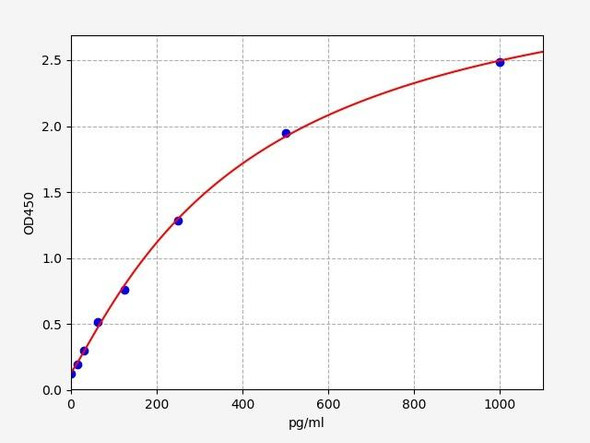

Human CAT (Catalase) ELISA Kit (HUFI07676)
- Product Code:
- HUFI07676
- Detection Method:
- Sandwich ELISA, Double Antibody
- Sensitivity:
- 9.375 pg/mL
- Range:
- 15.625-1000 pg/mL


Human MICA ELISA Kit (HUFI00015)
- Product Code:
- HUFI00015
- Detection Method:
- Sandwich ELISA, Double Antibody
- Sensitivity:
- 46.875 pg/mL
- Range:
- 78.125-5000 pg/mL

Fatty Acid Oxidation (FAO) Assay Kit (BR00001)
- Product Code:
- BR00001
- Instrument:
- Microplate Reader

Anti-Mouse IFNAR-1 In Vivo Antibody - Low Endotoxin (IVMB0202)
- Product Code:
- IVMB0202
- Antibody Type:
- Functional-Grade In Vivo Antibody
- Clone:
- MAR1-5A3
- Protein:
- IFNAR1
- Isotype:
- Mouse IgG1

Anti-Mouse CD25 In Vivo Antibody - Low Endotoxin (IVMB0148)
- Product Code:
- IVMB0148
- Antibody Type:
- Functional-Grade In Vivo Antibody
- Clone:
- PC61
- Protein:
- CD25
- Isotype:
- Rat IgG1 lambda

Anti-Mouse NK1.1 In Vivo Antibody - Low Endotoxin (IVMB0100)
- Product Code:
- IVMB0100
- Antibody Type:
- Functional-Grade In Vivo Antibody
- Clone:
- PK136
- Protein:
- NK1.1
- Isotype:
- Mouse IgG2a kappa
![Anti-Mouse PD-1 (CD279) [RMP1-14] In Vivo Antibody - Low Endotoxin](https://cdn11.bigcommerce.com/s-h68l9z2lnx/images/stencil/590x590/products/214372/569320/anti-mouse-pd-1-cd279-rmp1-14-in-vivo-antibody-low-endotoxin__18202.1743527968.jpg?c=2 "Anti-Mouse PD-1 (CD279) [RMP1-14] In Vivo Antibody - Low Endotoxin")
Anti-Mouse PD-1 Antibody [RMP1-14] In Vivo-Low Endotoxin (IVMB0037)
- Product Code:
- IVMB0037
- Antibody Type:
- Functional-Grade In Vivo Antibody
- Clone:
- RMP1-14
- Protein:
- PD-1
- Isotype:
- Rat IgG2a kappa


LSAMP Rabbit Polyclonal Antibody (CAB14248)
- Product Code:
- CAB14248
- Antibody Type:
- Polyclonal Antibody
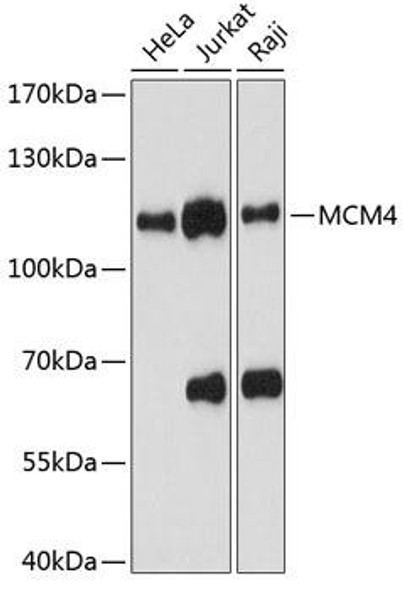
MCM4 Rabbit Polyclonal Antibody (CAB13513)
- Product Code:
- CAB13513
- Antibody Type:
- Polyclonal Antibody

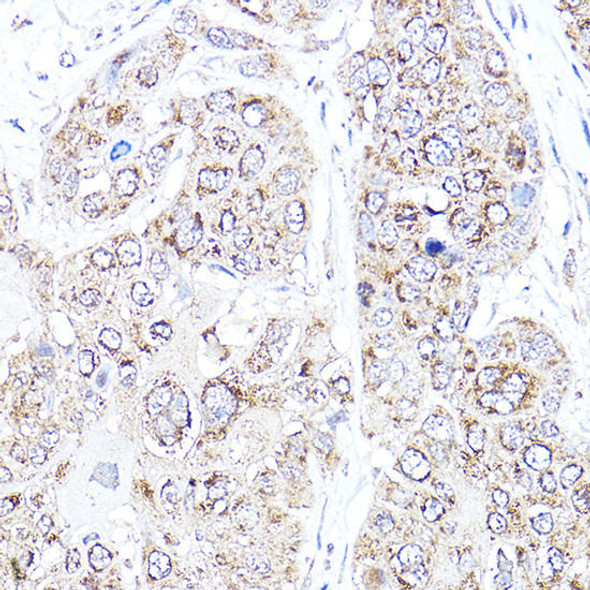
VEGF Rabbit Polyclonal Antibody (CAB12303)
- Product Code:
- CAB12303
- Antibody Type:
- Polyclonal Antibody

MDA ELISA Kit (UNFI0048)
- Product Code:
- UNFI0048
- Detection Method:
- Competitive ELISA, Coated with Antigen
- Sensitivity:
- 4.688 ng/mL
- Range:
- 7.813-500 ng/mL


Dopamine ELISA Kit (UNFI0013)
- Product Code:
- UNFI0013
- Detection Method:
- Competitive ELISA, Coated with Antigen
- Sensitivity:
- 0.938 ng/mL
- Range:
- 1.563-100 ng/mL

Serotonin ELISA Kit (UNFI0018)
- Product Code:
- UNFI0018
- Detection Method:
- Competitive ELISA, Coated with Antigen
- Sensitivity:
- 0.938 ng/mL
- Range:
- 1.563-100 ng/mL

PGE2 ELISA Kit (UNFI0032)
- Product Code:
- UNFI0032
- Detection Method:
- Competitive ELISA, Coated with Antigen
- Sensitivity:
- 18.75 pg/mL
- Range:
- 31.25-2000 pg/mL
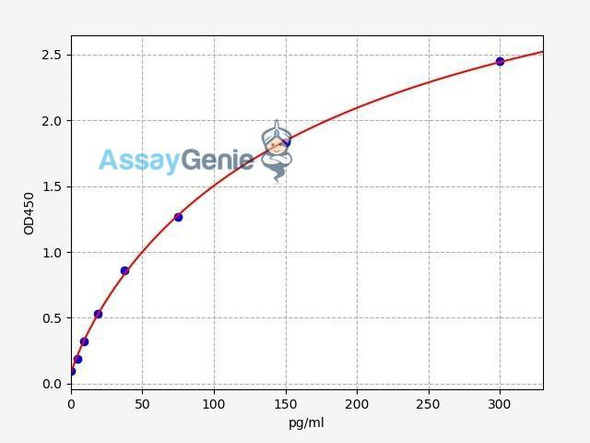
Human IL-6 ELISA Kit (HUFI00180)
- Product Code:
- HUFI00180
- Sensitivity:
- 2.813pg/ml
- Range:
- 4.688-300pg/ml
- ELISA Type:
- Sandwich
