
-
NK Cells: Unlocking the Potential of Natural Killer Cells in Cancer Therapy(Post)
Natural killer (NK) cells are a crucial component of the innate immune system and play a significant role in eliminating tumor cells. Unlike T cells, NK cells can recognize and kill cance
The role of key Interleukins(Post)Interleukin signaling is involved in a number of biological processes, including cell growth and differentiation, inflammation and immunity. Interleukins are glycoproteins which act on hema
Tocilizumab: Advancing Therapeutics and Research with Biosimilars(Post)What You Need to Know About TocilizumabWhat is Tocilizumab?Tocilizumab is a monoclonal antibody that targets the interleukin-6 (IL-6) receptor, widely used for managing autoimmune and in
Co-Inhibitory Checkpoints & T-Cell Exhaustion(Page) Canakinumab: Unraveling Its Role in Inflammatory Disease and Cancer Research(Post)Quick Facts About CanakinumabWhat is Canakinumab?Canakinumab is a human monoclonal antibody that targets interleukin-1 beta (IL-1β), reducing inflammation associated with various disease
Enokizumab: Exploring Its Mechanism, Clinical Applications, and Biosimilar Advancements(Post)Quick Facts About EnokizumabWhat is Enokizumab?Enokizumab is a monoclonal antibody designed to target interleukin-9 (IL-9), a cytokine involved in inflammatory responses. It has been stu
T-Cell Co-Stimulation and Agonist Checkpoint Signalling Explained(Post)Signal 1 tells a T cell what it is looking at; signal 2 tells it whether to care. The same peptide–MHC engagement that launches a productive effector response can just as easily install an anergy pro
Macrophage, M1 & M2, Polarization and Function(Post)What is a Macrophage? Macrophages are indeed a type of phagocyte, responsible for engulfing and destroying foreign particles and cellular debris. They are larger cells with more cytoplasm an
CD25 Marker(Post)CD25, a key molecule in immune regulation, is integral to the function of activated lymphocytes and regulatory T cells. It's central in mediating immune responses, with implications in autoimmune
Adhesion molecules in atherosclerosis – ICAM1(Post)Adhesion Molecules Direct cell-cell interactions are maintained and regulated by cell adhesion molecules. The expression of adhesion molecules
Leukocyte Adhesion Cascade(Page) In the Thymus, Co-stimulation Kills(Post)In the periphery, co-stimulation rescues a T cell. In the thymus, the same molecules kill it. A peripheral T cell that engages its receptor without CD80 and CD86 becomes anergic; engage them and it r
Your Agonist Antibody Is Not an Agonist(Post)An agonist antibody does not activate its receptor. It gets held still by something else, and the receptors underneath cluster because they are crowded. That sentence sounds like a technicality and i
Macrophage Phagocytosis and the CD47–SIRPα Checkpoint Explained(Post)A macrophage does not decide to eat; it counts votes. Every particle it touches carries a mixture of pro-phagocytic and inhibitory ligands, and engulfment follows only when the activating tally clear
Tumour Inflammation & Signaling | Assay Genie(Post)By Charlotte O’Donnell PhD Inflammation and Cancer The link between inflammation and cancer is well established, with infl
Immune Regulation in COVID-19 (Post)Immune Regulation in COVID-19: Immunomodulatory Mechanisms against SARS-CoV-2 Infection What is COVID-19?
Interleukin-8 signalling(Post)IL-8 Overview Interleukin-8 (IL-8), also known as CXCL8, was discovered over 30 years ago as a small molecule that could promote chemotaxis and induce the production
Toll-Like Receptor (TLR) & Innate Sensing(Page) Suspected Plague Death at a Siberian Anti-Plague Institute: What Researchers Should Know(Post)Infectious Disease · News AnalysisSuspected Plague Death at a Siberian Anti-Plague Institute: What Researchers Should KnowA 28-year-old laboratory worker at the Irkutsk Anti-Plague Research Institute
BDNF in inflammation and neuropathologies(Post)BDNF Overview Brain-derived neurotrophic factor (BDNF) is a central mediator of neuroplasticity, a term used to describe the ability of neurons
Featured
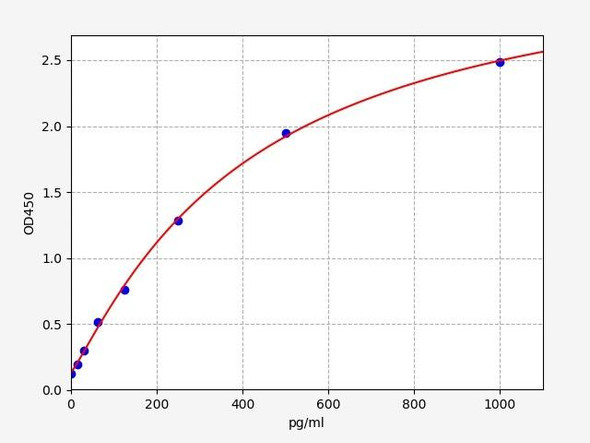

Human CAT (Catalase) ELISA Kit (HUFI07676)
- Product Code:
- HUFI07676
- Detection Method:
- Sandwich ELISA, Double Antibody
- Sensitivity:
- 9.375 pg/mL
- Range:
- 15.625-1000 pg/mL


Human MICA ELISA Kit (HUFI00015)
- Product Code:
- HUFI00015
- Detection Method:
- Sandwich ELISA, Double Antibody
- Sensitivity:
- 46.875 pg/mL
- Range:
- 78.125-5000 pg/mL

Fatty Acid Oxidation (FAO) Assay Kit (BR00001)
- Product Code:
- BR00001
- Instrument:
- Microplate Reader

Anti-Mouse IFNAR-1 In Vivo Antibody - Low Endotoxin (IVMB0202)
- Product Code:
- IVMB0202
- Antibody Type:
- Functional-Grade In Vivo Antibody
- Clone:
- MAR1-5A3
- Protein:
- IFNAR1
- Isotype:
- Mouse IgG1

Anti-Mouse CD25 In Vivo Antibody - Low Endotoxin (IVMB0148)
- Product Code:
- IVMB0148
- Antibody Type:
- Functional-Grade In Vivo Antibody
- Clone:
- PC61
- Protein:
- CD25
- Isotype:
- Rat IgG1 lambda

Anti-Mouse NK1.1 In Vivo Antibody - Low Endotoxin (IVMB0100)
- Product Code:
- IVMB0100
- Antibody Type:
- Functional-Grade In Vivo Antibody
- Clone:
- PK136
- Protein:
- NK1.1
- Isotype:
- Mouse IgG2a kappa

Anti-Mouse PD-1 Antibody [RMP1-14] In Vivo-Low Endotoxin (IVMB0037)
- Product Code:
- IVMB0037
- Antibody Type:
- Functional-Grade In Vivo Antibody
- Clone:
- RMP1-14
- Protein:
- PD-1
- Isotype:
- Rat IgG2a kappa


LSAMP Rabbit Polyclonal Antibody (CAB14248)
- Product Code:
- CAB14248
- Antibody Type:
- Polyclonal Antibody
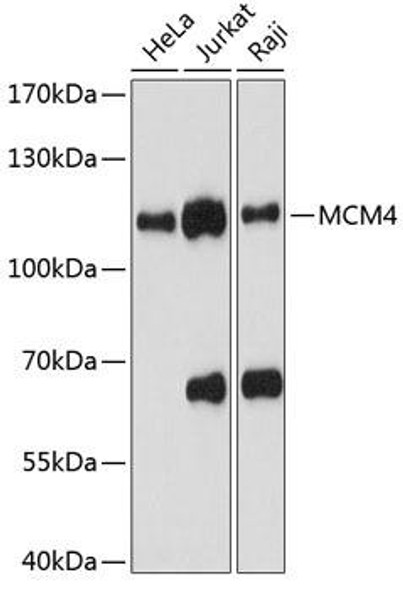
MCM4 Rabbit Polyclonal Antibody (CAB13513)
- Product Code:
- CAB13513
- Antibody Type:
- Polyclonal Antibody

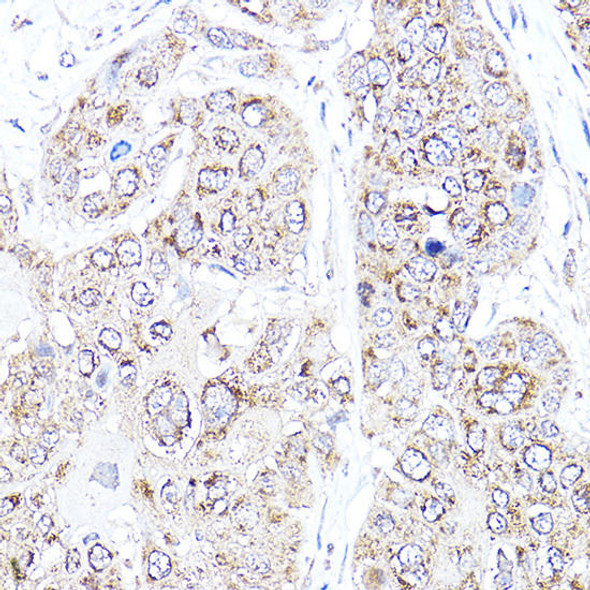
VEGF Rabbit Polyclonal Antibody (CAB12303)
- Product Code:
- CAB12303
- Antibody Type:
- Polyclonal Antibody

MDA ELISA Kit (UNFI0048)
- Product Code:
- UNFI0048
- Detection Method:
- Competitive ELISA, Coated with Antigen
- Sensitivity:
- 4.688 ng/mL
- Range:
- 7.813-500 ng/mL


Dopamine ELISA Kit (UNFI0013)
- Product Code:
- UNFI0013
- Detection Method:
- Competitive ELISA, Coated with Antigen
- Sensitivity:
- 0.938 ng/mL
- Range:
- 1.563-100 ng/mL

Serotonin ELISA Kit (UNFI0018)
- Product Code:
- UNFI0018
- Detection Method:
- Competitive ELISA, Coated with Antigen
- Sensitivity:
- 0.938 ng/mL
- Range:
- 1.563-100 ng/mL

PGE2 ELISA Kit (UNFI0032)
- Product Code:
- UNFI0032
- Detection Method:
- Competitive ELISA, Coated with Antigen
- Sensitivity:
- 18.75 pg/mL
- Range:
- 31.25-2000 pg/mL
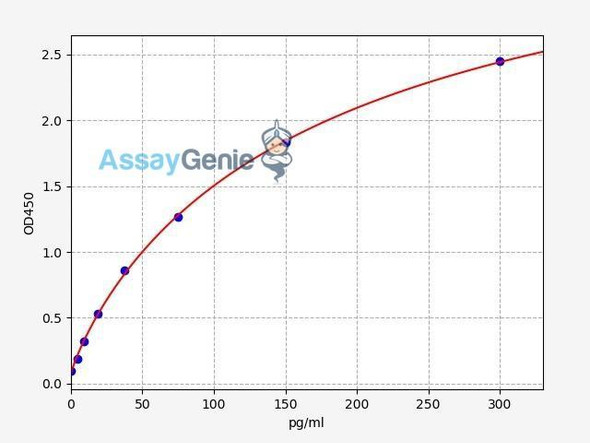
Human IL-6 ELISA Kit (HUFI00180)
- Product Code:
- HUFI00180
- Sensitivity:
- 2.813pg/ml
- Range:
- 4.688-300pg/ml
- ELISA Type:
- Sandwich
