
-
CD28: Amplifying T Cell Responses for Better Tumor Clearance(Post)
The CD28 molecule plays a crucial role in amplifying T cell activation, which is critical for mounting effective immune responses against tumors. By engaging with co-stimulatory molecules
Adaptive immune system molecules(Page) PD-1/PD-L1 Checkpoint Signalling: Pathway, Function and Assays(Post)PD-1 does not switch a T cell off; it moves the threshold. Engagement of PD-1 by PD-L1 recruits a single phosphatase into the immunological synapse, and that one recruitment event is enough to collap
Car t signalling pathway · H(Page) Co-Inhibitory Checkpoints Beyond PD-1: CTLA-4, LAG-3 and TIM-3(Post)PD-1 gets the attention, but it is one brake among many — and the others do not work the same way. The co-inhibitory receptors are routinely drawn as interchangeable stop signs on a T cell. They are
T-Cell Co-Stimulation and Agonist Checkpoint Signalling Explained(Post)Signal 1 tells a T cell what it is looking at; signal 2 tells it whether to care. The same peptide–MHC engagement that launches a productive effector response can just as easily install an anergy pro
CAR-T cell signalling(Page) CD86: Enhancing T Cell Activation in Immunotherapy(Post)Introduction to CD86 and Its Role in Immune Activation CD86 is a crucial co-stimulatory molecule that plays an essential role in T cell activation, driving the immune system’s ability to
T-cell receptor (TCR) signalling(Page) Co-Inhibitory Checkpoints & T-Cell Exhaustion(Page) PD-1 PD-L1 Pathway Diagram(Page) CD80: Amplifying Immune Activation Through Co-Stimulatory Pathways(Post)Introduction to CD80 and Its Role in Immune Activation CD80 is a critical immune checkpoint molecule that plays an essential role in T cell activation through co-stimulatory pathways. Exp
CAR-T Cell Signalling Pathway: Costimulation, Output and Assays(Post)A chimeric antigen receptor is a synthetic protein wired into a real signalling pathway. The extracellular half is an antibody fragment; everything below the membrane is borrowed from the T-cell rece
T-Cell Receptor Signalling: The Complete Pathway, Branch by Branch(Post)The T-cell receptor is the most finely calibrated detector in immunology. It must discriminate an agonist peptide present at a few dozen copies from a self peptide present at tens of thousands, and i
Anti-CTLA-4 Immunotherapy(Post)CD Markers Cluster of Differentiation (CD) markers play an important role in the differentiation of B cells, T cells and NK (natural killer) ce
Nfkb signalling pathway · HTM(Page) T-Cell Co-Stimulation & Agonist Checkpoint Pathway(Page) CD4 T-Helper Differentiation: Th1, Th2, Th17, Treg and Tfh(Post)The antigen tells a CD4 T cell to respond; the cytokine tells it what kind of response to make. A naive CD4⁺ T cell leaving the thymus is uncommitted. Within about seventy-two hours of engaging TCR/C
PI3K / AKT / mTOR Signalling in T Cells(Page) NF-κB Signalling Pathway(Page) Allorecognition, Transplant Rejection & GvHD(Page) Interactive Pathway Diagrams(Page) CTLA-4 in Breast Cancer: Insights for Immunotherapy(Post)The Role of CTLA-4 in Breast Cancer: Implications for ImmunotherapyBreast cancer (BC) remains one of the most prevalent malignancies affecting women worldwide, with significant morbidity and mortality
NF-κB Signalling Pathway: Canonical and Non-Canonical Routes(Post)NF-κB is not one pathway, it is two clocks running at different speeds. The canonical arm fires within minutes of TNF-α, IL-1β or LPS reaching the surface, peaks, and is switched off by feedback it e
CD4+ T-helper cell differentiation(Page) TIGIT/DNAM-1/CD155 (PVR) Checkpoint Axis(Page) PI3K/AKT/mTOR Signalling in T Cells: Pathway, Function and Assays(Post)PI3K does not switch on a protein — it rewrites a membrane. Everything downstream follows from one chemical event: the 3-hydroxyl of a phosphoinositide is phosphorylated, PIP₂ becomes PIP₃, and every
Allorecognition Pathway: Transplant Rejection, DSA and GvHD(Post)Transplant rejection is the fastest, most violent adaptive immune response a body can mount — and it is a response to a molecule rather than to a pathogen. Somewhere between one and ten per cent of a
Ipilimumab and Nivolumab: Advancing Research on CTLA-4 in Cancer Therapy(Post)What You Need to Know About IpilimumabWhat is Ipilimumab?Ipilimumab is a monoclonal antibody that targets CTLA-4, a protein involved in downregulating the immune system, to boost the bod
Anti-CTLA-4: Unleashing the Power of T Cells in Combination Immunotherapy(Post)Immunotherapy has revolutionized cancer treatment by harnessing the body's immune system to fight malignancies. Among the notable advancements in this field is the development of immune c
ICOS: Stimulating the Immune System for Superior Cancer Therapy(Post)Immunotherapy has transformed the landscape of cancer treatment by leveraging the body’s immune system to target and destroy cancer cells. A key player in this process is Inducible T-cell
Enhancing Cancer Research: Syngeneic Mouse Models and Immune Checkpoint Inhibitors(Post)Enhancing Cancer Research: Syngeneic Mouse Models and Immune Checkpoint Inhibitors A quick guide to Syngeneic Mouse Models Syngeneic Mouse Models Cancer research has seen rema
Freezing Stimulated T Cells: A Detailed Guide(Post)Cryopreservation of stimulated T cells is a common technique in immunology research, allowing for long-term storage while maintaining their functional viability. Stimulated T cells—especi
Macrophage, M1 & M2, Polarization and Function(Post)What is a Macrophage? Macrophages are indeed a type of phagocyte, responsible for engulfing and destroying foreign particles and cellular debris. They are larger cells with more cytoplasm an
Plasma Membrane Markers(Post)What is a Plasma Membrane? The plasma membrane, also known as the cell membrane, is a vital component of all cells. It is a thin, semi-permeable barrier that separate
Targeting Immune Checkpoints as Cancer Therapy(Post)In recent years, the field of oncology has witnessed a paradigm shift with the advent of immunotherapy, a treatment modality that harnesses the body's immune system to combat cancer. Among the mos
Antigen Processing & Presentation(Page) Treg Suppression and the IL-2 Axis: Pathway, Function and Assays(Post)Regulatory T cells cannot make the cytokine they depend on. FOXP3 represses the Il2 locus, so every Treg lives on IL-2 secreted by the conventional T cells it exists to restrain. That asymmetry expla
T cell Immunophenotyping - A Guide(Post)Immunology · Flow CytometryT Cell Immunophenotyping: Markers, Subsets and Panel DesignImmunophenotyping identifies cell populations by the proteins on their surface. For T cells that means resolving n
T Cell Types, Activation, Polarization & Function(Post)T Cell Types, Activation, Polarization & Function A comprehensive guide to T cells! Introduction T-cells, vital components of the immune system, encompass vari
CD Markers Expression on B Cells(Post)Immunology · ImmunophenotypingCD Markers on B Cells: Development, Subsets and ImmunophenotypingB cells change their surface marker profile at every stage from bone marrow progenitor to antibody-secret
CD8+ T Cells: Understanding the Role of Cytotoxic T Cells in Immunity(Post)Immunology · T LymphocytesCD8+ T Cells: Cytotoxic Mechanisms, Memory and ExhaustionCD8+ T cells kill infected and transformed cells directly, and they do it with a specificity nothing else in the immu
Dendritic Cells - Markers, Activation & Subtypes(Post)Immunology · Antigen PresentationDendritic Cells: Markers, Activation and SubtypesDendritic cells are the professional antigen-presenting cells that decide whether an immune response happens at all. T
Featured
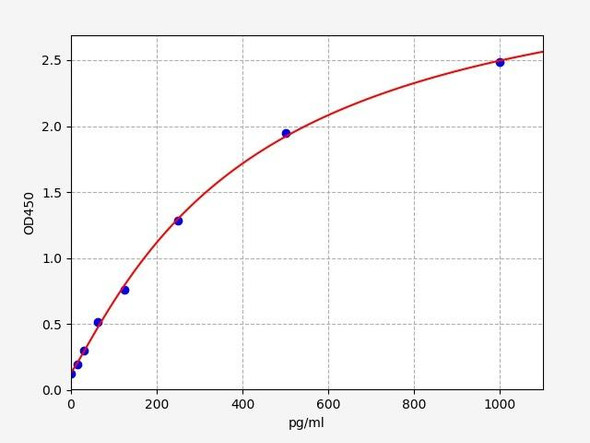

Human CAT (Catalase) ELISA Kit (HUFI07676)
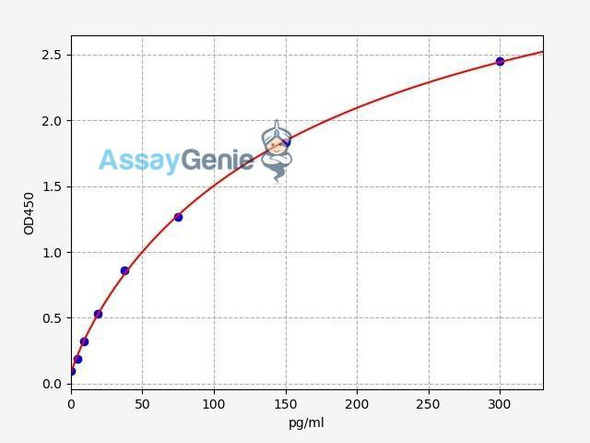
Human IL-6 ELISA Kit (HUFI00180)
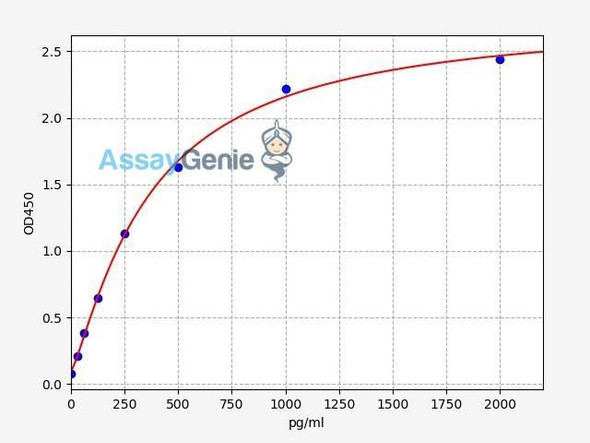
Human CRP ELISA Kit (HUFI00088)

Serotonin ELISA Kit (UNFI0018)


Human MICA ELISA Kit (HUFI00015)

Fatty Acid Oxidation (FAO) Assay Kit (BR00001)

Anti-Mouse IFNAR-1 In Vivo Antibody - Low Endotoxin (IVMB0202)

Anti-Mouse CD25 In Vivo Antibody - Low Endotoxin (IVMB0148)

Anti-Mouse NK1.1 In Vivo Antibody - Low Endotoxin (IVMB0100)
![Anti-Mouse PD-1 (CD279) [RMP1-14] In Vivo Antibody - Low Endotoxin](https://cdn11.bigcommerce.com/s-h68l9z2lnx/images/stencil/590x590/products/214372/569320/anti-mouse-pd-1-cd279-rmp1-14-in-vivo-antibody-low-endotoxin__18202.1743527968.jpg?c=2 "Anti-Mouse PD-1 (CD279) [RMP1-14] In Vivo Antibody - Low Endotoxin")
Anti-Mouse PD-1 Antibody [RMP1-14] In Vivo-Low Endotoxin (IVMB0037)


LSAMP Rabbit Polyclonal Antibody (CAB14248)
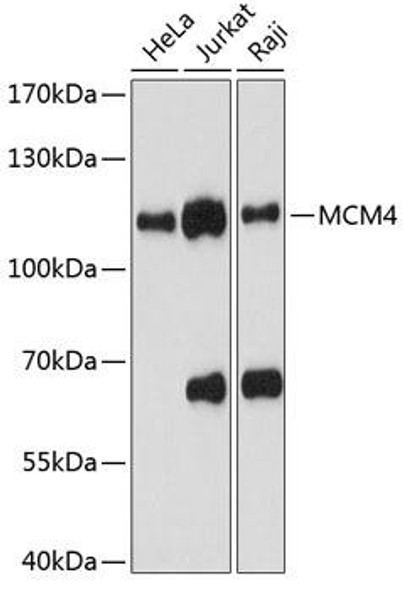
MCM4 Rabbit Polyclonal Antibody (CAB13513)

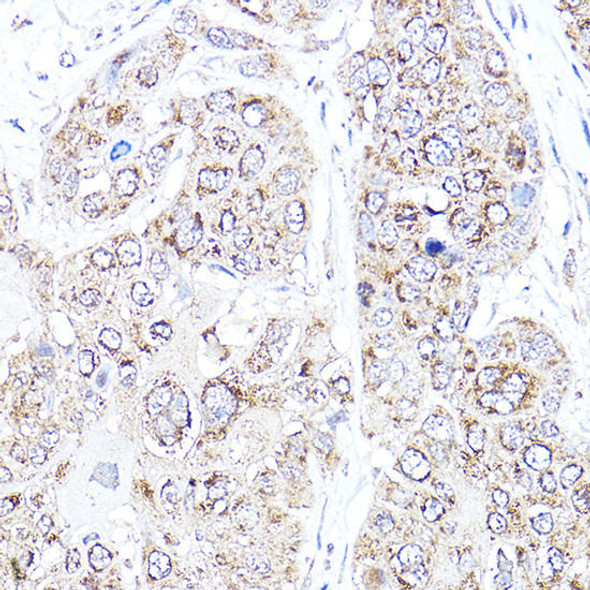
VEGF Rabbit Polyclonal Antibody (CAB12303)

MDA ELISA Kit (UNFI0048)

PGE2 ELISA Kit (UNFI0032)

