
-
Toll-like Receptor Signalling in Neurodegenerative Disease(Post)
Toll-Like Receptors The innate immune response has come under the spotlight in recent years due to its central role in propagating the pathogen
Myeloid reprogramming in the tumour microenvironment(Page) Comment choisir un test multiplex adapté à votre laboratoire(Post)Comment choisir un test multiplex adapté à votre laboratoire Un test multiplex se justifie quand le panel couvre précisément l’arsenal pathogène recherché en clinique et que le laboratoire peut en ga
The Leukocyte Adhesion Cascade: Integrin Signalling and Assays(Post)Every leukocyte that reaches an inflamed tissue has solved the same mechanical problem. It must stop, in under a second, against a shear flow that would otherwise sweep it past the site of infection.
Chemokines versus Cytokines: A Detailed Comparative Study(Post)The complex interplay between chemokines and cytokines is fundamental to the immune system's function, orchestrating the body's response to infection, inflammation, and injury. This detailed analy
Ferroptosis and Immunogenic Cell Death(Page) Leukemia Inhibitory Factor: An Overview (Post)Leukemia Inhibitory Factor and JAK-STAT Signalling Pathway Leukemia inhibitory factor (LIF) is a cytokine that belongs to the interleukin-6 (IL-6) family of cytokines. Other members of
Understanding T Cell Fatigue: Implications for Immune Function and Therapeutic Interventions(Post)T cells are central players in adaptive immunity, responsible for recognizing and eliminating infected or aberrant cells. Upon encountering antigens, T cells undergo clonal expansion and differ
B-Cell Depletion: Why Anti-CD20 Spares the Antibody(Post)You can remove almost every B cell from an animal and barely move its antibody titre. That is not a failed experiment — it is the expected result, and it follows from one fact: CD20 is switched off a
Allorecognition Pathway: Transplant Rejection, DSA and GvHD(Post)Transplant rejection is the fastest, most violent adaptive immune response a body can mount — and it is a response to a molecule rather than to a pathogen. Somewhere between one and ten per cent of a
PD-1/PD-L1 Checkpoint Signalling: Pathway, Function and Assays(Post)PD-1 does not switch a T cell off; it moves the threshold. Engagement of PD-1 by PD-L1 recruits a single phosphatase into the immunological synapse, and that one recruitment event is enough to collap
What is an Antigen?(Post)Antigen's are foreign molecules recognised by the immune system. Antigens can be protein, carbohydrate, lipid or nucleic acid molecules. Examples include viruses and bacteria as well as fr
Dendritic Cells: Tracing the Developmental Lineage Pathway(Post)Dendritic cells (DCs) are pivotal in the immune system, orchestrating innate and adaptive immune responses. Understanding their developmental lineage pathway is crucial in immunology, particularly
Necrosis: Types, Causes, Symptoms & Prevention Guide(Post)Cell Biology · PathologyNecrosis: Types, Causes, Mechanisms and How It Is MeasuredNecrosis is cell death accompanied by membrane rupture and release of intracellular contents — which is what makes it
The Double-Edged Sword: How Neutrophil Traps Can Both Help and Hinder Cancer's Spread(Post)The Double-Edged Sword: How Neutrophil Traps Can Both Help and Hinder Cancer's Spread In the intricate battlefield of the human body, the immune system’s foot soldiers, neutrophils, have long been re
VEGF: Inflammation and Tumourigenesis(Post)What is VEGF? Vascular Endothelial Growth Factors (VEGFs) are a group of homodimeric polypeptides, and are master regulators of vascular development, maintenance and a
PD-1 PD-L1 Pathway Diagram(Page) Gut Inflammation and Inflammatory Diseases (Post)What is Gut Inflammation? The gut, or gastrointestinal (GI) tract is a long tube that starts from the mouth and extends to the anus. It includes various organs such
Streptococcus pneumoniae: Pathogenesis, Diagnosis, and Treatment(Post)Microbiology · Bacterial PathogensStreptococcus pneumoniae: Pathogenesis, Diagnosis & TreatmentStreptococcus pneumoniae (the pneumococcus) is a Gram-positive, encapsulated bacterium that colonises the
Neutrophils - Cells of the Immune System(Post)The immune system is the body’s main defence against infection. In order to function properly, the immune system must be able to detect and protect against infinite agents such as
Featured
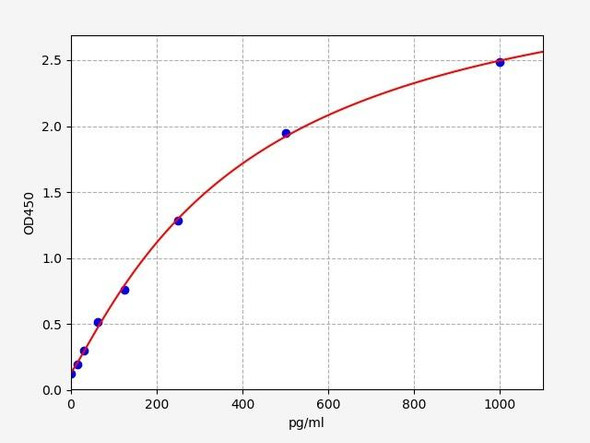

Human CAT (Catalase) ELISA Kit (HUFI07676)
- Product Code:
- HUFI07676
- Detection Method:
- Sandwich ELISA, Double Antibody
- Sensitivity:
- 9.375 pg/mL
- Range:
- 15.625-1000 pg/mL


Human MICA ELISA Kit (HUFI00015)
- Product Code:
- HUFI00015
- Detection Method:
- Sandwich ELISA, Double Antibody
- Sensitivity:
- 46.875 pg/mL
- Range:
- 78.125-5000 pg/mL

Fatty Acid Oxidation (FAO) Assay Kit (BR00001)
- Product Code:
- BR00001
- Instrument:
- Microplate Reader

Anti-Mouse IFNAR-1 In Vivo Antibody - Low Endotoxin (IVMB0202)
- Product Code:
- IVMB0202
- Antibody Type:
- Functional-Grade In Vivo Antibody
- Clone:
- MAR1-5A3
- Protein:
- IFNAR1
- Isotype:
- Mouse IgG1

Anti-Mouse CD25 In Vivo Antibody - Low Endotoxin (IVMB0148)
- Product Code:
- IVMB0148
- Antibody Type:
- Functional-Grade In Vivo Antibody
- Clone:
- PC61
- Protein:
- CD25
- Isotype:
- Rat IgG1 lambda

Anti-Mouse NK1.1 In Vivo Antibody - Low Endotoxin (IVMB0100)
- Product Code:
- IVMB0100
- Antibody Type:
- Functional-Grade In Vivo Antibody
- Clone:
- PK136
- Protein:
- NK1.1
- Isotype:
- Mouse IgG2a kappa
![Anti-Mouse PD-1 (CD279) [RMP1-14] In Vivo Antibody - Low Endotoxin](https://cdn11.bigcommerce.com/s-h68l9z2lnx/images/stencil/590x590/products/214372/569320/anti-mouse-pd-1-cd279-rmp1-14-in-vivo-antibody-low-endotoxin__18202.1743527968.jpg?c=2 "Anti-Mouse PD-1 (CD279) [RMP1-14] In Vivo Antibody - Low Endotoxin")
Anti-Mouse PD-1 Antibody [RMP1-14] In Vivo-Low Endotoxin (IVMB0037)
- Product Code:
- IVMB0037
- Antibody Type:
- Functional-Grade In Vivo Antibody
- Clone:
- RMP1-14
- Protein:
- PD-1
- Isotype:
- Rat IgG2a kappa


LSAMP Rabbit Polyclonal Antibody (CAB14248)
- Product Code:
- CAB14248
- Antibody Type:
- Polyclonal Antibody
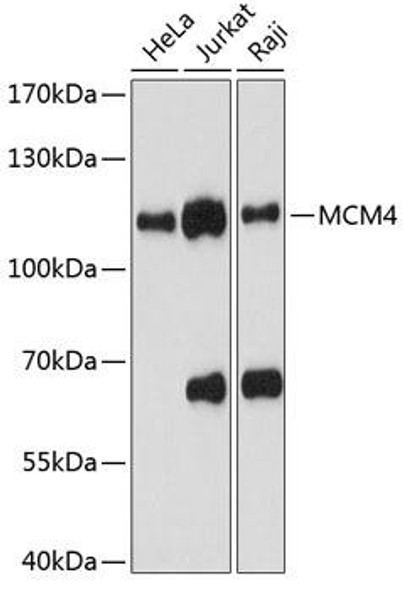
MCM4 Rabbit Polyclonal Antibody (CAB13513)
- Product Code:
- CAB13513
- Antibody Type:
- Polyclonal Antibody

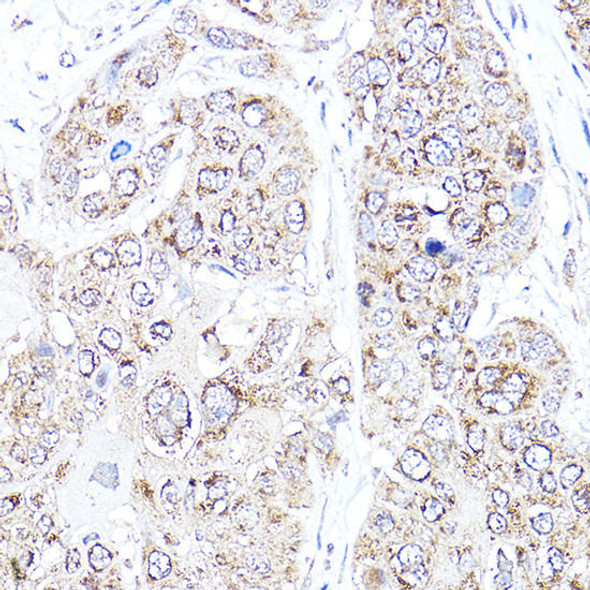
VEGF Rabbit Polyclonal Antibody (CAB12303)
- Product Code:
- CAB12303
- Antibody Type:
- Polyclonal Antibody

MDA ELISA Kit (UNFI0048)
- Product Code:
- UNFI0048
- Detection Method:
- Competitive ELISA, Coated with Antigen
- Sensitivity:
- 4.688 ng/mL
- Range:
- 7.813-500 ng/mL


Dopamine ELISA Kit (UNFI0013)
- Product Code:
- UNFI0013
- Detection Method:
- Competitive ELISA, Coated with Antigen
- Sensitivity:
- 0.938 ng/mL
- Range:
- 1.563-100 ng/mL

Serotonin ELISA Kit (UNFI0018)
- Product Code:
- UNFI0018
- Detection Method:
- Competitive ELISA, Coated with Antigen
- Sensitivity:
- 0.938 ng/mL
- Range:
- 1.563-100 ng/mL

PGE2 ELISA Kit (UNFI0032)
- Product Code:
- UNFI0032
- Detection Method:
- Competitive ELISA, Coated with Antigen
- Sensitivity:
- 18.75 pg/mL
- Range:
- 31.25-2000 pg/mL
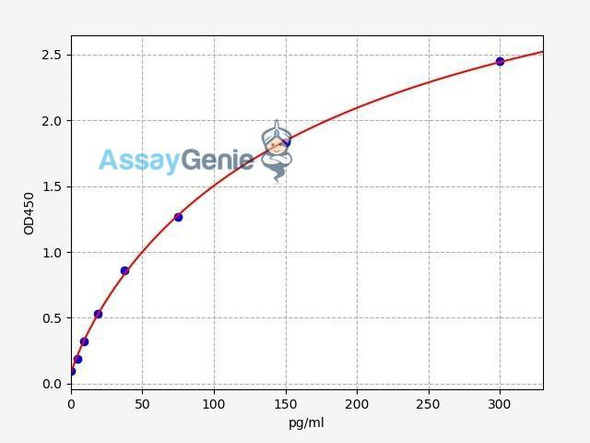
Human IL-6 ELISA Kit (HUFI00180)
- Product Code:
- HUFI00180
- Sensitivity:
- 2.813pg/ml
- Range:
- 4.688-300pg/ml
- ELISA Type:
- Sandwich
