
-
T cell Immunophenotyping - A Guide(Post)
Immunology · Flow CytometryT Cell Immunophenotyping: Markers, Subsets and Panel DesignImmunophenotyping identifies cell populations by the proteins on their surface. For T cells that means resolving n
PD-L1 in Cancer Immunotherapy: Key Insights(Post)PD-L1 in Cancer Immunotherapy: Insights from Recent ResearchRecent advancements in cancer immunotherapy have underscored the critical role of programmed death-ligand 1 (PD-L1) in mediating immune evas
Platelets and Immunothrombosis (Page) TNF cytokines and their Receptors(Post)The human body is a complex and intricate system where various components work together to maintain health and combat potential threats. Among these essential players are the TNF cyt
ICOS: Stimulating the Immune System for Superior Cancer Therapy(Post)Immunotherapy has transformed the landscape of cancer treatment by leveraging the body’s immune system to target and destroy cancer cells. A key player in this process is Inducible T-cell
Physiological and Pathological functions of IL-36(Post)By Charlotte O'Donnell PhD Similar to IL-33, IL-36R ligands are involved in maintaining intestinal homeostasis. Analogous to IL-33, d is locali
Networking tips for scientists(Post)During my PhD I knew how networking was important, it helped me source reagents off other labs, get the best advice and helped me land a post doc at Cambridge University. Its not what y
Cabiralizumab: Unlocking the Potential of Anti-CSF1R Therapy(Post)What You Need to Know About CabiralizumabWhat is Cabiralizumab?Cabiralizumab is a monoclonal antibody targeting the colony-stimulating factor-1 receptor (CSF1R), developed for treating c
Immunometabolism Assays(Page) QuickStep ELISA Kits(Page)QuickStep ELISA Kits | 90-Minute 1-Wash Assays | Assay Genie
One Cytokine, Two Opposite Clinical Effects(Post)Low-dose IL-2 expands regulatory T cells. High-dose IL-2 expands the cells they exist to restrain. Same cytokine, same receptor family, opposite clinical intent — and the explanation is a receptor su
Renal Cell Carcinoma: Understanding, Diagnosing, and Treating Kidney Cancer(Post)Renal Cell Carcinoma (RCC) is the most common form of kidney cancer, originating in the lining of the proximal renal tubules. RCC accounts for approximately 90% of all kidney cancers and
Turning Tumors Against Themselves: In Vivo Reprogramming of Cancer Cells into Dendritic Sentinels(Post)Imagine a future where cancer cells, once masters of disguise, are forced to reveal themselves and even train the body's immune system to fight back. This isn't science fiction; it's the groundbreaki
CD122: Fine-Tuning T Cell Responses in Immunotherapy(Post)Introduction to CD122 in Immunotherapy CD122, also known as the interleukin-2 receptor beta chain (IL-2Rβ), is a critical component of the immune system's response to pathogens and malign
Pyruvate dehydrogenase (PDH)(Post)Pyruvate dehydrogenase is a complex enzyme involved in the conversion of pyruvate, a product of glycolysis, into acetyl-CoA, a crucial molecule in energy production and intermediary
Immunoassays(Page)Immunoassays: ELISA, Multiplex & ELISpot Kits | Assay Genie
B Cells: Function, Types, Activation & Role in Immunity(Post)B Cell Types, Antigen Recognition & Activation A comprehensive guide to B cells! Introduction B cells, a vital component of the immune system, play
Oligodendrocytes: Complete Guide + Functions & Development(Post)Oligodendrocytes are pivotal CNS cells, integral for myelin formation and nerve function, with implications in various neurological disorders. Key Takeaways Oligodendrocytes are specia
CD4 T-Helper Differentiation: Th1, Th2, Th17, Treg and Tfh(Post)The antigen tells a CD4 T cell to respond; the cytokine tells it what kind of response to make. A naive CD4⁺ T cell leaving the thymus is uncommitted. Within about seventy-two hours of engaging TCR/C
p53 Protein: Mutations, Cancer Signalling & Tumour Suppression(Post)Cancer Biology · Cell Signallingp53: Structure, Signalling, Regulation and Mutation in Cancerp53 is the most frequently mutated gene in human cancer, and the reason is structural: a single tetrameric
Featured
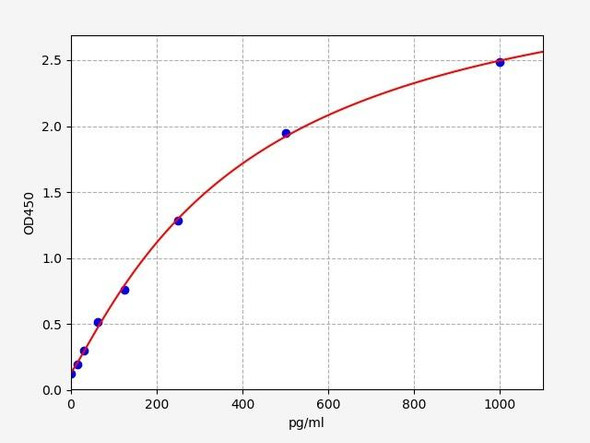

Human CAT (Catalase) ELISA Kit (HUFI07676)
- Product Code:
- HUFI07676
- Detection Method:
- Sandwich ELISA, Double Antibody
- Sensitivity:
- 9.375 pg/mL
- Range:
- 15.625-1000 pg/mL


Human MICA ELISA Kit (HUFI00015)
- Product Code:
- HUFI00015
- Detection Method:
- Sandwich ELISA, Double Antibody
- Sensitivity:
- 46.875 pg/mL
- Range:
- 78.125-5000 pg/mL

Fatty Acid Oxidation (FAO) Assay Kit (BR00001)
- Product Code:
- BR00001
- Instrument:
- Microplate Reader

Anti-Mouse IFNAR-1 In Vivo Antibody - Low Endotoxin (IVMB0202)
- Product Code:
- IVMB0202
- Antibody Type:
- Functional-Grade In Vivo Antibody
- Clone:
- MAR1-5A3
- Protein:
- IFNAR1
- Isotype:
- Mouse IgG1

Anti-Mouse CD25 In Vivo Antibody - Low Endotoxin (IVMB0148)
- Product Code:
- IVMB0148
- Antibody Type:
- Functional-Grade In Vivo Antibody
- Clone:
- PC61
- Protein:
- CD25
- Isotype:
- Rat IgG1 lambda

Anti-Mouse NK1.1 In Vivo Antibody - Low Endotoxin (IVMB0100)
- Product Code:
- IVMB0100
- Antibody Type:
- Functional-Grade In Vivo Antibody
- Clone:
- PK136
- Protein:
- NK1.1
- Isotype:
- Mouse IgG2a kappa
![Anti-Mouse PD-1 (CD279) [RMP1-14] In Vivo Antibody - Low Endotoxin](https://cdn11.bigcommerce.com/s-h68l9z2lnx/images/stencil/590x590/products/214372/569320/anti-mouse-pd-1-cd279-rmp1-14-in-vivo-antibody-low-endotoxin__18202.1743527968.jpg?c=2 "Anti-Mouse PD-1 (CD279) [RMP1-14] In Vivo Antibody - Low Endotoxin")
Anti-Mouse PD-1 Antibody [RMP1-14] In Vivo-Low Endotoxin (IVMB0037)
- Product Code:
- IVMB0037
- Antibody Type:
- Functional-Grade In Vivo Antibody
- Clone:
- RMP1-14
- Protein:
- PD-1
- Isotype:
- Rat IgG2a kappa


LSAMP Rabbit Polyclonal Antibody (CAB14248)
- Product Code:
- CAB14248
- Antibody Type:
- Polyclonal Antibody
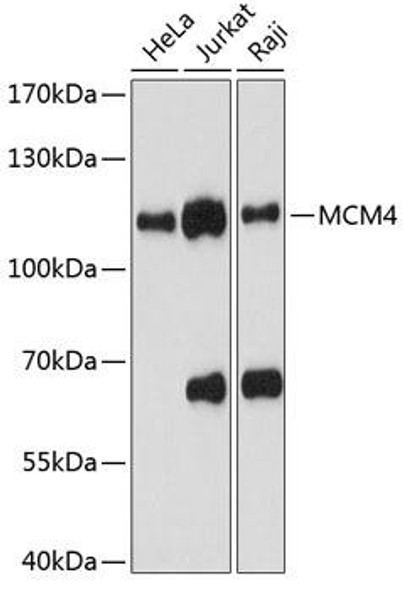
MCM4 Rabbit Polyclonal Antibody (CAB13513)
- Product Code:
- CAB13513
- Antibody Type:
- Polyclonal Antibody

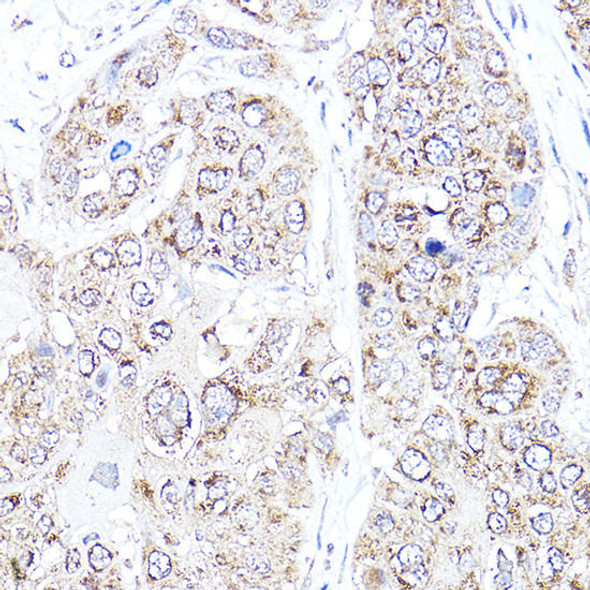
VEGF Rabbit Polyclonal Antibody (CAB12303)
- Product Code:
- CAB12303
- Antibody Type:
- Polyclonal Antibody

MDA ELISA Kit (UNFI0048)
- Product Code:
- UNFI0048
- Detection Method:
- Competitive ELISA, Coated with Antigen
- Sensitivity:
- 4.688 ng/mL
- Range:
- 7.813-500 ng/mL


Dopamine ELISA Kit (UNFI0013)
- Product Code:
- UNFI0013
- Detection Method:
- Competitive ELISA, Coated with Antigen
- Sensitivity:
- 0.938 ng/mL
- Range:
- 1.563-100 ng/mL

Serotonin ELISA Kit (UNFI0018)
- Product Code:
- UNFI0018
- Detection Method:
- Competitive ELISA, Coated with Antigen
- Sensitivity:
- 0.938 ng/mL
- Range:
- 1.563-100 ng/mL

PGE2 ELISA Kit (UNFI0032)
- Product Code:
- UNFI0032
- Detection Method:
- Competitive ELISA, Coated with Antigen
- Sensitivity:
- 18.75 pg/mL
- Range:
- 31.25-2000 pg/mL
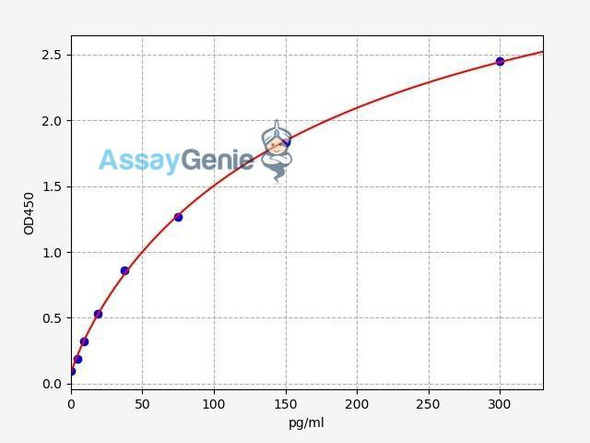
Human IL-6 ELISA Kit (HUFI00180)
- Product Code:
- HUFI00180
- Sensitivity:
- 2.813pg/ml
- Range:
- 4.688-300pg/ml
- ELISA Type:
- Sandwich
