
Immunoassays
Immunoassays for every research question
Validated immunoassay kits that detect and quantify proteins, cytokines, hormones and biomarkers across human and animal samples. Choose from ELISA, multiplex bead-based, ELISpot, cell-based and antibody array formats, all backed by PhD-level support.


What Is an Immunoassay?
The antibody-based test behind most protein measurement in the lab.
An immunoassay is a test that uses the specific binding between an antibody and its antigen to detect or measure a target molecule in a sample. Because antibodies recognise their target so selectively, immunoassays can pick out a single protein, hormone or small molecule from a complex sample such as serum, plasma or cell-culture supernatant.
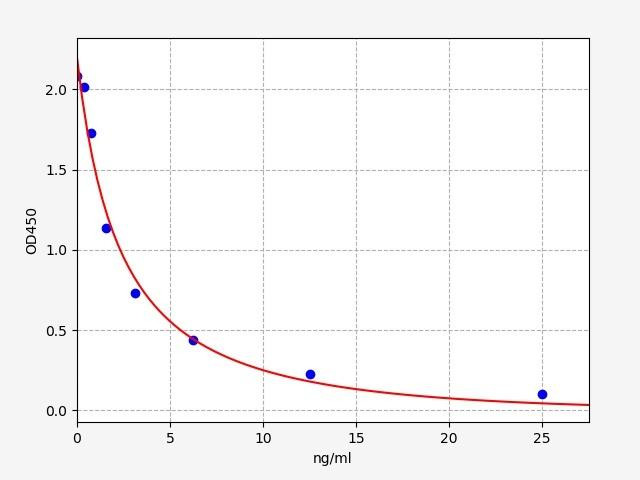
A label on one of the binding partners turns that binding into a readable signal. The label can be an enzyme that produces a colour change, as in an ELISA kit; a fluorescent bead read by flow cytometry, as in a multiplex immunoassay; or a chemiluminescent or coloured-particle label. The signal strength is compared against a standard curve to calculate concentration.
New to the method? Our complete ELISA guide and sandwich ELISA protocol walk through each step.
Every immunoassay has four parts
- Target (antigen) — the protein, hormone or molecule you want to measure.
- Capture and detection antibodies — bind the target specifically, often at two different sites.
- Label — an enzyme, fluorophore, bead or chemiluminescent tag that generates the signal.
- Standard curve — known concentrations that convert signal into a quantitative result.
Types of Immunoassays
Immunoassays differ in where binding happens, how the signal is read and how many targets they measure at once.
ELISA
Antibodies on a 96-well plate capture the target, and an enzyme-linked antibody turns a substrate into a measurable colour. Sandwich ELISA suits proteins such as cytokines; competitive ELISA suits hormones and small molecules.
Multiplex immunoassays
Antibody-coated beads measure many analytes from one small sample and are read on a flow cytometer. Use them for cytokine and biomarker panels when sample volume is limited.
ELISpot
Captures a protein as individual cells secrete it, so each spot is one cell. It reads far lower frequencies of responding cells than an ELISA of the culture supernatant.
Cell-based ELISA
Measures total and phosphorylated proteins directly in fixed cells in the plate, without preparing lysates or running a Western blot.
Antibody arrays
Hundreds of capture antibodies spotted on a membrane profile up to 274 proteins in one experiment, for biomarker discovery before you commit to quantitative assays.
Lateral flow and CLIA
Lateral flow immunoassays give a visual result in minutes on a test strip. Chemiluminescent immunoassays (CLIA) use a light-emitting label for a wide dynamic range on automated analysers.
Choosing the Right Immunoassay Format
Match the format to your target, sample volume and the question you are asking.
| Format | Analytes per sample | Typical sample | Best for | Choose it when you need |
|---|---|---|---|---|
| Sandwich ELISA | One protein per well | 50–100 µL | Proteins, cytokines, growth factors | Quantitative, sensitive single-target measurement |
| Competitive ELISA | One analyte per well | 25–100 µL | Hormones, peptides, small molecules | Targets too small to bind two antibodies |
| Multiplex (GeniePlex) | Up to 24 analytes | From 15 µL | Cytokine and biomarker panels | Profiling many targets from scarce samples |
| ELISpot | One protein, counted per cell | Cell suspension | Secreting immune cells | Frequency of responding cells, e.g. T-cell responses |
| Cell-based ELISA | Total and phospho protein | Cells in the plate | Signalling proteins | Pathway activation without Western blot |
| Antibody array | Up to 274 proteins | Varies by array | Discovery screens | Shortlisting targets before quantitative assays |
Exact sample volumes and sensitivity vary by kit and are listed on each datasheet. Not sure? Ask our technical team.
Browse Immunoassays by Format
From ready-to-use ELISA kits to multiplex, ELISpot and biopharma immunoassays, find the range built for your experiment.
All ELISA Kits
The plate-based immunoassay most labs start with. Browse ready-to-use, highly sensitive ELISA kits across every target and species.
Cytokine ELISA Kits
Accurately measure key cytokines and chemokines down to 1 pg/mL sensitivity.
Hormone & Small Molecule
ELISA kits for peptides, hormones, amino acids, vitamins and other small molecules.
Phosphorylation ELISA
Conveniently screen cell lysates for phosphoproteins without Western blot analysis.
Transcription Factor ELISA
Detect transcription-factor DNA-binding activity via indirect ELISA methods.
Multiplex Immunoassays
GeniePlex bead-based immunoassays quantify up to 24 analytes in as little as 15 µL of sample by flow cytometry.
ELISpot Assays
Up to 400x more sensitive than ELISA — detection and visualisation at the single-cell level.
Antibody Arrays
Detect up to 274 proteins in one experiment — ideal for biomarker discovery and validation.
Cell-Based ELISA
No more Western blots — measure intracellular and phosphorylated proteins in situ.
DIY ELISA Kits
Coat your own ELISA plates for a flexible, cost-effective assay-development solution.
QuickStep ELISA Kits
Save up to 2 hours of experimental time and use less sample volume per assay.
ELISA Sampler Packs
Pre-packaged sets of ELISA kits for studying complete pathways of interest.
PharmaGenie ELISA
Highly validated ELISA kits developed for biopharma R&D scientists.
Therapeutic Drug Monitoring
Quantitative and qualitative free-drug and ADA ELISA for biologics and biosimilars.
Animal ELISA Kits
Accurate analysis of laboratory-animal, livestock and companion-animal samples.
Infectious Disease ELISA
Accurately detect antigens and antibodies in human and animal samples.
Food Safety ELISA
Validated ELISA kits for food-science, contaminant and allergen testing.
Immunoassays by Research Area
Jump straight to the ELISA kits for your field of study.
Most-Requested Immunoassay Kits
Popular ELISA kits across cytokines, hormones, biomarkers and endotoxin detection.


What to Expect From an Assay Genie Immunoassay
Every kit is built to deliver dependable, publication-ready data straight out of the box.
Quick & Simple to Use
Ready-to-use kits with clear, streamlined protocols that get you to results fast.
High Sensitivity & Broad Range
Quantify targets in serum, plasma, supernatant or lysate across a wide assay range.
Reproducible Results
Consistent performance run after run for confident, comparable data.
Standards & Plates Included
ELISA kits include protein standards and strip-well plates, so there is nothing extra to source.
Backed by Thousands of Citations
Assay Genie immunoassays are trusted by researchers and cited in high-impact journals worldwide.


What Researchers Are Saying
Feedback from labs advancing their science with the right immunoassay.
Assay Genie provided a critical ELISA kit that is very difficult to find on the market. Not only did this kit work dependably well, but it also gave me the measurement sensitivity that I needed to evaluate my samples.
— ErikaTheir assays are of top quality, providing accurate and reliable results. The company's customer support is exceptional, always responsive and helpful.
— Ripon DharrAssay Genie has great customer service, and their products are excellent. The team were excellent to deal with throughout our project.
— Amy McGuireWhy Choose Assay Genie
Quality immunoassays backed by a scientific team that supports your research at every step.
Fast Delivery
7–10 business day lead time on ELISA kits after manufacture.
Highly Cited
Thousands of citations across leading peer-reviewed journals.
PhD-Level Support
Our PhD-trained team helps you choose an immunoassay format and troubleshoot your assay.
Immunoassay FAQs
What is an immunoassay?
An immunoassay is a test that uses the specific binding between an antibody and its antigen to detect or measure a target molecule in a sample. A label attached to one of the binding partners, such as an enzyme, fluorophore or chemiluminescent tag, produces a signal proportional to the amount of target. Immunoassays measure proteins, cytokines, hormones, peptides, small molecules and antibodies in serum, plasma, cell-culture supernatant, lysates and other samples.
What are the main types of immunoassays?
The most widely used immunoassay is the ELISA (enzyme-linked immunosorbent assay), run in sandwich, competitive, indirect or direct formats. Other types include multiplex bead-based immunoassays that measure many analytes in one sample, ELISpot assays that count individual secreting cells, cell-based ELISA for proteins in fixed cells, antibody arrays for screening hundreds of proteins at once, chemiluminescent immunoassays (CLIA) and lateral flow immunoassays used in rapid tests.
What is the difference between an immunoassay and an ELISA?
Immunoassay is the umbrella term for any assay built on antibody-antigen binding. An ELISA is one specific type of immunoassay that runs on a microplate and uses an enzyme-linked antibody to generate a colour, fluorescent or luminescent signal. Every ELISA is an immunoassay, but multiplex bead assays, ELISpot, antibody arrays and lateral flow tests are immunoassays that are not ELISAs.
What is the difference between sandwich and competitive immunoassays?
A sandwich immunoassay captures the target between two antibodies that bind different sites, so signal rises with target concentration. It suits larger proteins such as cytokines. A competitive immunoassay has sample target compete with a labelled target for a limited number of antibody sites, so signal falls as concentration rises. It suits small molecules and hormones, such as cortisol or dopamine, that are too small to bind two antibodies at once.
How do I choose the right immunoassay?
Start with your target and species, then decide how many analytes you need to measure, how much sample you have, the sensitivity you need and your sample throughput. A singleplex ELISA suits one well-defined target. A multiplex immunoassay suits cytokine or biomarker panels from small sample volumes. ELISpot suits counting cells that secrete a protein, and antibody arrays suit discovery screens. Our PhD-level technical team can recommend a format for your study.
What is the difference between singleplex and multiplex immunoassays?
A singleplex immunoassay, such as a standard ELISA, measures one analyte per well. A multiplex immunoassay measures many analytes in the same sample. Our GeniePlex multiplex assays quantify up to 24 analytes simultaneously in as little as 15 µL of sample by flow cytometry, saving sample and time when profiling multiple targets.
What sample types are compatible with Assay Genie immunoassays?
Most kits are validated for serum, plasma and cell-culture supernatant, and many also support tissue lysates, urine and other matrices. Validated sample types and recommended dilutions are listed on each product datasheet.
How sensitive are Assay Genie immunoassay kits?
Sensitivity varies by target and format. Our high-sensitivity cytokine ELISA kits measure analytes down to around 1 pg/mL. The sensitivity, detection range and standard-curve data for each kit are on its datasheet.
How quickly are immunoassay kits delivered?
ELISA kits typically ship within a 7–10 business day lead time after manufacture. Orders can be placed online, by email, through your procurement system or through your local distributor.
Not Sure Which Immunoassay You Need?
Tell our PhD-level technical team your target, species, sample type and volume, and we'll recommend the right immunoassay format for your research.
Ask Our Team Shop ELISA Kits