
-
Stem Cells: What Are They and How They Can Help Treat Diseases(Post)
Stem Cells: What are they and how they can help treat diseases Stem cells are a unique population of cells that possess the ability to self-renew and differentiate into specialized ce
Understanding T Cell Fatigue: Implications for Immune Function and Therapeutic Interventions(Post)T cells are central players in adaptive immunity, responsible for recognizing and eliminating infected or aberrant cells. Upon encountering antigens, T cells undergo clonal expansion and differ
Rovalpituzumab Tesirine: Advancing Small Cell Lung Cancer Research(Post)Quick Facts About Rovalpituzumab TesirineWhat is Rovalpituzumab Tesirine?Rovalpituzumab Tesirine (Rova-T) is an antibody-drug conjugate (ADC) designed to target DLL3, a protein overexpre
EGFR Pathway and YAP in Non-Small Cell Lung Cancer(Post)Understanding the EGFR Pathway and YAP in Non-Small Cell Lung CancerThe epidermal growth factor receptor (EGFR) pathway plays a pivotal role in the development and progression of non-small cell lung c
Extracellular Vesicles in Neurodegenerative Disease: From Pathology to Therapeutic Potential(Post)In the intricate landscape of the brain, cells constantly communicate, sending and receiving messages that govern our thoughts, memories, and movements. For decades, scientists believed this communica
The Next Leap in Cancer Treatment: CAR-T Cell Therapy's Journey to Mainstream Medicine(Post)For decades, the fight against cancer has been a grueling battle of attrition, with treatments often as harsh as the disease itself. But a revolutionary approach, chimeric antigen receptor (CAR)-T cel
Immune Cell 'Bloodhounds': Engineering Metabolite-Sensing Receptors to Infiltrate Solid Tumors(Post)Imagine an elite squad of soldiers sent to neutralize a hidden fortress, only to find themselves wandering aimlessly in a thick, disorienting fog just outside the gates. This is the current reality f
Turning Tumors Against Themselves: In Vivo Reprogramming of Cancer Cells into Dendritic Sentinels(Post)Imagine a future where cancer cells, once masters of disguise, are forced to reveal themselves and even train the body's immune system to fight back. This isn't science fiction; it's the groundbreaki
Understanding the mTOR Signaling Pathway: A Key Player in Cell Growth and Metabolism(Post)Cell Signalling · MetabolismThe mTOR Signalling PathwaymTOR is a master regulator of cell growth, metabolism and survival, integrating nutrient, growth-factor and energy signals through two comp
Non-Small Cell Lung Carcinoma: Understanding, Diagnosing, and Treating NSCLC(Post)Non-Small Cell Lung Carcinoma (NSCLC) is the most common type of lung cancer, representing about 85% of all lung cancer cases. NSCLC includes several subtypes, with distinct biological ch
Crizanlizumab: A Comprehensive Overview of Its Role in Sickle Cell Disease and Ongoing Research(Post)Quick Facts About CrizanlizumabWhat is Crizanlizumab?Crizanlizumab is a monoclonal antibody used to treat sickle cell disease by targeting P-selectin, a protein involved in inflammation
3D Organoid Cell Viability Assay: Performance Assessment in Human Colon Organoids(Post)The 3D Organoid Cell Viability Assay (AKES081) demonstrated high sensitivity and low cytotoxicity, making it ideal for long incubation studies (24-48 hours) and high-throughput applicati
How Cancer Cells Hijack Immune Defenses Through Mitochondrial Transfer(Post)Imagine a battlefield where the enemy doesn't just hide from soldiers—it actively sabotages their weapons. In the tumor microenvironment, cancer cells have evolved a devious strategy: they transfer th
Unlocking Cellular Adaptation: The HIF Enhancer Pathway and Its Implications in Hypoxia Response(Post)Hypoxia, or low oxygen levels, poses a significant challenge to cells, necessitating rapid and efficient adaptation mechanisms. The Hypoxia-Inducible Factor (HIF) pathway is a well-known regula
Navigating Cell Culture Supplements: Fetal Bovine Serum vs. Horse Serum in Biomedical Research(Post)The choice of appropriate cell culture supplements emerges as a crucial factor in ensuring the efficacy and consistency of experimental results. Among the various options available, two commonl
Embryonic Induced Pluripotent Stem Cell Differentiation: Pathways and Lineage-Specific Markers(Post)Embryonic induced pluripotent stem cells (iPSCs) hold immense potential in the field of regenerative medicine due to their ability to differentiate into various cell types. Understanding the diffe
Unlocking the Next Wave of Cancer Treatment: The Promise and Progress of CAR-T Cell Therapy(Post)Imagine a living drug, engineered from a patient's own immune system, that can hunt down and destroy cancer cells with remarkable precision. This isn't science fiction; it's the reality of Chimeric An
3D Respiratory Organoids Cell Viability in a High-throughput 384-well Plate Assay(Post)The Assay Genie 3D Organoid Cell Viability Assay (AKES081) provided superior results compared to ThermoScientific PrestoBlue, maintaining over 100% viability at all time points in untrea
3D Organoid Cell Viability Assay: Assessing Environmental Stress on BENOs for Live Delivery(Post)3D Organoid Cell Viability Assay (AKES081) effectively measures BENO model viability across different storage conditions. AKES081 detects significant viability differences, particularly
Metabolic Exhaustion: How Mitochondrial Dysfunction Sabotages CAR-T Cell Therapy in Solid Tumors(Post)Imagine engineering a patient's own immune cells into precision-guided missiles against cancer—cells that can seek out and destroy tumors with remarkable specificity. This is the promise of CAR-T cell
Featured
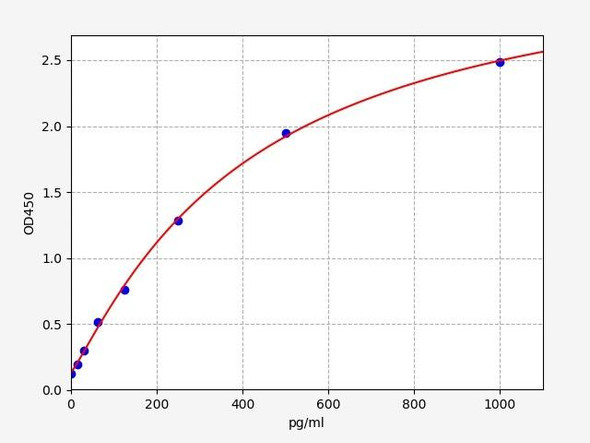

Human CAT (Catalase) ELISA Kit (HUFI07676)
- Product Code:
- HUFI07676
- Detection Method:
- Sandwich ELISA, Double Antibody
- Sensitivity:
- 9.375 pg/mL
- Range:
- 15.625-1000 pg/mL


Human MICA ELISA Kit (HUFI00015)
- Product Code:
- HUFI00015
- Detection Method:
- Sandwich ELISA, Double Antibody
- Sensitivity:
- 46.875 pg/mL
- Range:
- 78.125-5000 pg/mL

Fatty Acid Oxidation (FAO) Assay Kit (BR00001)
- Product Code:
- BR00001
- Instrument:
- Microplate Reader

Anti-Mouse IFNAR-1 In Vivo Antibody - Low Endotoxin (IVMB0202)
- Product Code:
- IVMB0202
- Antibody Type:
- Functional-Grade In Vivo Antibody
- Clone:
- MAR1-5A3
- Protein:
- IFNAR1
- Isotype:
- Mouse IgG1

Anti-Mouse CD25 In Vivo Antibody - Low Endotoxin (IVMB0148)
- Product Code:
- IVMB0148
- Antibody Type:
- Functional-Grade In Vivo Antibody
- Clone:
- PC61
- Protein:
- CD25
- Isotype:
- Rat IgG1 lambda

Anti-Mouse NK1.1 In Vivo Antibody - Low Endotoxin (IVMB0100)
- Product Code:
- IVMB0100
- Antibody Type:
- Functional-Grade In Vivo Antibody
- Clone:
- PK136
- Protein:
- NK1.1
- Isotype:
- Mouse IgG2a kappa

Anti-Mouse PD-1 Antibody [RMP1-14] In Vivo-Low Endotoxin (IVMB0037)
- Product Code:
- IVMB0037
- Antibody Type:
- Functional-Grade In Vivo Antibody
- Clone:
- RMP1-14
- Protein:
- PD-1
- Isotype:
- Rat IgG2a kappa


LSAMP Rabbit Polyclonal Antibody (CAB14248)
- Product Code:
- CAB14248
- Antibody Type:
- Polyclonal Antibody
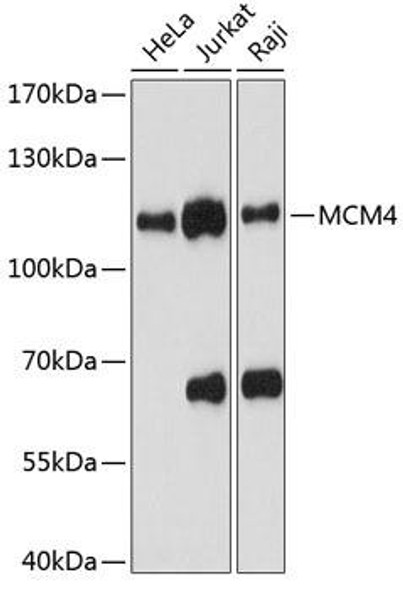
MCM4 Rabbit Polyclonal Antibody (CAB13513)
- Product Code:
- CAB13513
- Antibody Type:
- Polyclonal Antibody

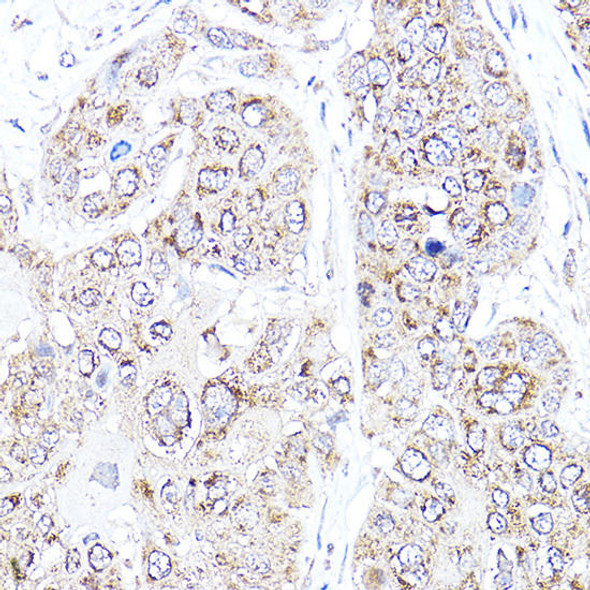
VEGF Rabbit Polyclonal Antibody (CAB12303)
- Product Code:
- CAB12303
- Antibody Type:
- Polyclonal Antibody

MDA ELISA Kit (UNFI0048)
- Product Code:
- UNFI0048
- Detection Method:
- Competitive ELISA, Coated with Antigen
- Sensitivity:
- 4.688 ng/mL
- Range:
- 7.813-500 ng/mL


Dopamine ELISA Kit (UNFI0013)
- Product Code:
- UNFI0013
- Detection Method:
- Competitive ELISA, Coated with Antigen
- Sensitivity:
- 0.938 ng/mL
- Range:
- 1.563-100 ng/mL

Serotonin ELISA Kit (UNFI0018)
- Product Code:
- UNFI0018
- Detection Method:
- Competitive ELISA, Coated with Antigen
- Sensitivity:
- 0.938 ng/mL
- Range:
- 1.563-100 ng/mL

PGE2 ELISA Kit (UNFI0032)
- Product Code:
- UNFI0032
- Detection Method:
- Competitive ELISA, Coated with Antigen
- Sensitivity:
- 18.75 pg/mL
- Range:
- 31.25-2000 pg/mL
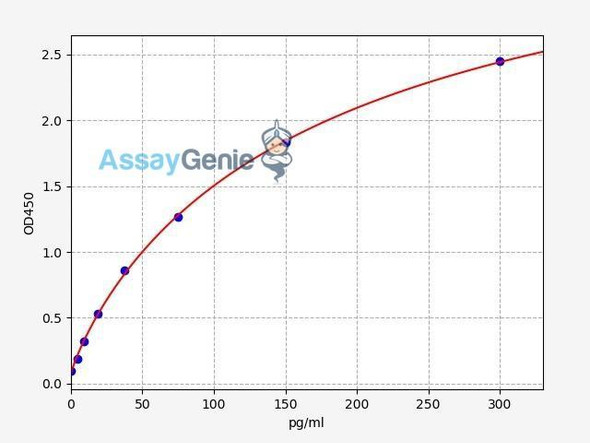
Human IL-6 ELISA Kit (HUFI00180)
- Product Code:
- HUFI00180
- Sensitivity:
- 2.813pg/ml
- Range:
- 4.688-300pg/ml
- ELISA Type:
- Sandwich
